

- Intel (NasdaqGS:INTC) is facing a major shortage of server CPUs in China, with lead times reported to be up to six months for deliveries.
- The supply tightness is related to the high volume of AI infrastructure demand from Chinese customers.
- At the same time, Intel hired Eric Demers as chief GPU architect to focus on data center GPUs.
- The company is positioning its GPU efforts to compete more directly with Nvidia and AMD in accelerated computing.
For investors, this combination of supply shortages and new leadership highlights how Intel is at the center of building AI data centers. The CPU shortage in China points to demand for Intel server products in key markets, while the hiring of Eric Demers signals that Intel is putting experienced engineering leadership behind its data center GPU roadmap.
These developments could impact how Intel allocates capital between CPUs and GPUs, as well as how it partners with cloud and enterprise customers. As the AI hardware stack expands beyond CPUs, the balance between Intel’s traditional server business and accelerated computing efforts could become a key area to monitor.
Add it to your Watchlist or Portfolio to stay up to date with the most important Intel news stories. Or explore our community and discover new perspectives on Intel.
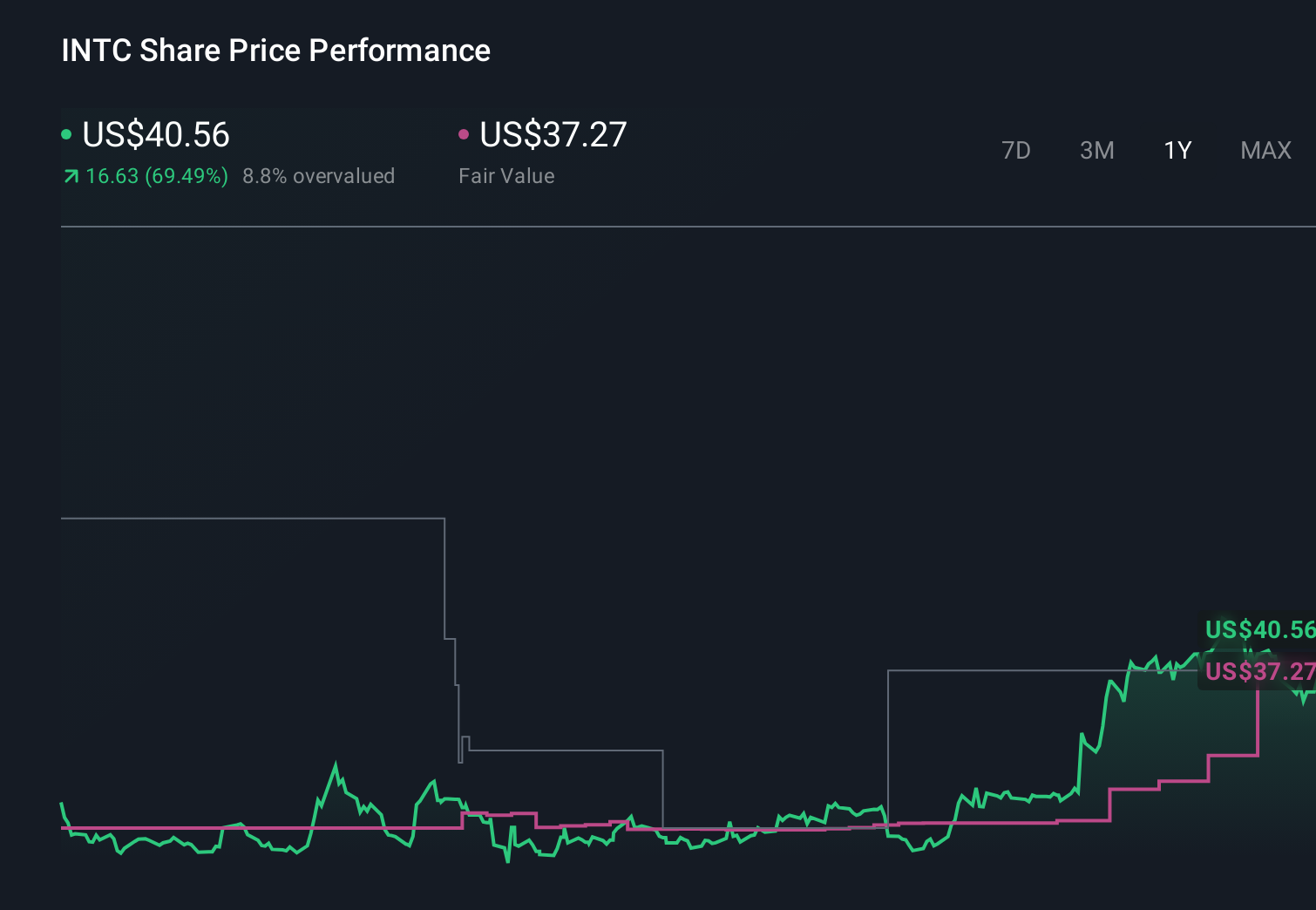
Does Intel have enough financial strength to weather the next crisis?
China’s server CPU shortage and six-month lead times put Intel at the center of building AI data centers, but also create operational and political sensitivities in a country where it accounts for a significant portion of its revenue. As supply of server products tightens in China, with prices reportedly rising more than 10%, and competitors like AMD and Nvidia push their own AI-focused chips, Intel is walking the line between monetizing scarcity and retaining its large cloud and enterprise customers.
How this fits into Inter’s rebuilding story
For those who have been following Intel’s turnaround story, this news fits into the movement to make AI and high performance computing more relevant. The hiring of Eric Demers, new GPU plans, and collaboration on AI memory and near-memory architectures all reflect Intel’s desire to move from being primarily a CPU supplier to a broader AI computing platform. This is something of a turning point in the long-term story of product leadership and foundry partnerships that has been noted.
Intel Tradeoffs, Risks, and Benefits
- ⚠️ Supply constraints in large markets like China could lead to customer dissatisfaction if delays continue, and the company could lose market share to AMD in CPUs and Nvidia in AI accelerators.
- ⚠️ The push for new GPUs raises execution risks, including questions about the software ecosystem and whether Intel can convince customers to migrate away from entrenched Nvidia-CUDA or AMD solutions.
- 🎁 Tight CPU supply related to AI infrastructure demand could support pricing consolidation and underline the relevance of Intel’s server portfolio at a time when investors are keeping an eye on data center traction.
- 🎁 High-profile GPU architect appointments and partnerships on next-generation AI memory and compute architectures give Intel more ways to participate in AI spending beyond traditional x86 CPUs.
What to watch next
From here, it’ll be worth tracking how quickly Intel can shorten server CPU lead times in China, whether large cloud customers spread out and lean toward Intel, and how the early data center GPU roadmap under Eric Demers is received compared to offerings from Nvidia and AMD. If you want to see how other investors are connecting news like this to their long-term views on AI, foundry plans, and profitability, visit Intel’s Community Story to see what the community is saying about Intel’s story.
This article by Simply Wall St is general in nature. We provide commentary using only unbiased methodologies, based on historical data and analyst forecasts, and articles are not intended to be financial advice. This is not a recommendation to buy or sell any stock, and does not take into account your objectives or financial situation. We aim to provide long-term, focused analysis based on fundamental data. Note that our analysis may not factor in the latest announcements or qualitative material from price-sensitive companies. Simply Wall St has no position in any stocks mentioned.
new: AI stock screener and alerts
Our new AI Stock Screener scans the market for opportunities every day.
• Dividend powerhouse (yield 3% or more)
• Small-cap stocks that are undervalued due to insider purchases.
• High-growth technology and AI companies
Or build your own metrics from over 50 metrics.
Explore for free now
Do you have feedback on this article? Interested in its content? Please contact us directly. Alternatively, email editorial-team@simplywallst.com.


