Long Form
One author's wild journey into the uncanny valley
Could fake AI replace us?
One day in the winter of 2021, I decided to check out my long-abandoned LinkedIn account, but I couldn't find my password. Rather than go through the tedious process of resetting it, knowing I could see my profile details without even logging in properly, I Googled myself. And I found him: Malcolm V. Burnley, a fellow writer who lives in Philadelphia. Let's call him “V” for the sake of simplicity.
V's LinkedIn said he graduated from Germantown High School in 2003 (I graduated from high school in Connecticut), but there was no actual resume other than a few testimonials from a user named “Crypto Jesus,” a fan of V's talents in online journalism and marketing. V's headshot was of a young man with bleached blonde hair and a beard, and a reverse image search revealed it to be a royalty-free stock photo. The internet is a strange place, but this felt oddly sinister.
I had just finished producing a podcast about artificial intelligence, AI Nation, in collaboration with WHYY and Princeton University, and to my surprise, it garnered a sizeable audience. I say “surprised” because I'm not a tech reporter. I'm more of a tech hater. So the idea that there might be a doppelganger of me out there on the internet without my knowledge wasn't all that surprising. But… Who And especially why All of this was puzzling.
Then I noticed that V's profile was directing viewers to the website malcolmburnley.org, “A blog about Philadelphia-area life: What we think, we become,” where V had published a series of articles. One, titled “Philadelphia City Hall,” was almost lifted from the building's Wikipedia page, but the text was peppered with sarcastic quips aimed at me: “Constructed of brick, marble, granite, and steel, it is the tallest masonry structure in the world (taller than Malcolm Burnley) and one of the largest buildings overall.”
In the first episode of the podcast, we got to play with a pre-release version of ChatGPT and had experts share some characteristics of AI-generated text. The articles on this website display these characteristics. You can get a feel for the language in the article titled “Philadelphia Cream Cheese Sandwich.” This is my personal favorite article, and it contains some weirdly specific illogical content.
Other recipes using cream cheese can be found in Cheese and Chocolate Sandwiches and Veggie Wraps.
If Malcolm Burnley is on a low carb diet, skip the bread and use low carb tortilla bread as your veggie pack.
Was someone pissed off about the podcast and playing a prank? Is it possible that ChatGPT could have built this website on its own? And the biggest question is: how did any human or computer know that I like cream cheese?
If it was a prank, it wasn't a very good one. For the next three years, I kept an eye on the imposter, waiting for more articles and LinkedIn activity. But V just sat there until I investigated further this year. One article mentioned a fellow journalist and fellow podcaster. From there, I ended up on another imposter site, full of stock photos, weird articles, and replicated web designs bearing his name. What was going on on the dark web?
“I don't even know what I'm looking at,” he said when I showed him the website in March. “It's so weird. It's like some weird aggregator AI.”
After I sent V a message through the contact form, both fake sites disappeared. I still don't know who created them, and probably never will (they're still investigating).
Still, it was an unsettling reminder of AI’s ability to augment some of our worst human instincts. While these websites are clunky and unsophisticated, recent uses of AI are anything but. Earlier this year, New Hampshire voters were spammed with robocalls featuring an AI-generated voice of President Biden to discourage them from voting in the primary. Facial recognition is being used to wrongly incarcerate people. Sheriff Rochelle Bilal was recently busted for posting a fake headline on her campaign website that was allegedly the result of a botched AI experiment. If that doesn’t scare you, check out “autonomous weapons.”
For all the ugly applications of AI, reports during and after the podcast found that there are at least as many good ones. Over the past few years, AI has proven to be more than just a passing fad: it's a vital cog in many of the systems we rely on. Local doctors are using AI to discover new drug treatments. SEPTA is spotting illegally parked cars to improve the reliability of its bus fleet. Robots are roaming the aisles of grocery stores to solve inventory problems.
But the advent of AI also brings fears about trade-offs: AI is rapidly replacing jobs; ChatGPT is upending education; and AI systems are enabling controversial political echo chambers.
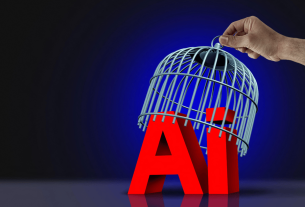
It is no longer a question of whether we as a city and as a global society will embrace AI, but how humans can use it responsibly.
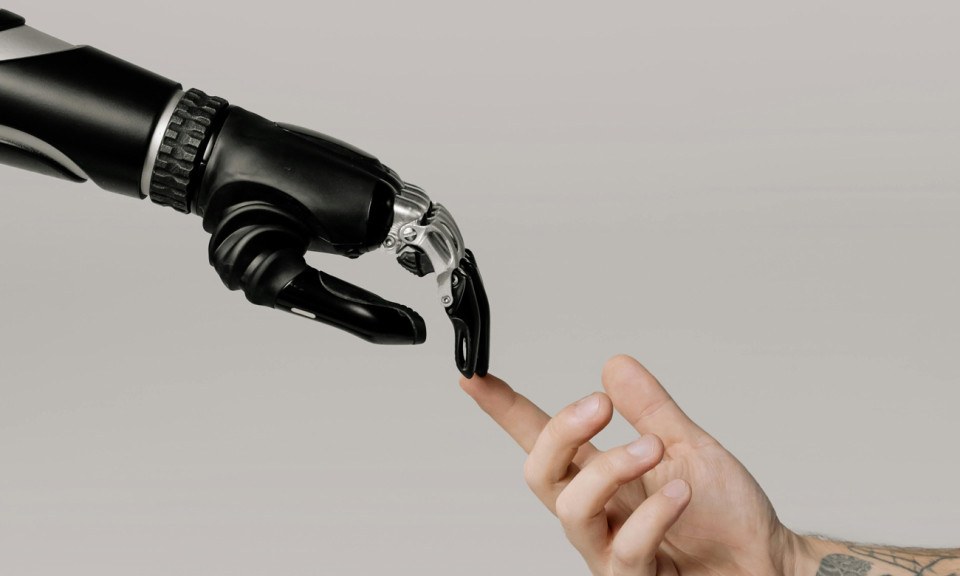
My fakery got me thinking a bit: can AI really replace us?
•
In 1966, Massachusetts Institute of Technology launched the Summer Vision Project, led by pioneering professors in AI, centered around a months-long challenge given to undergraduate students to build a computer with human-like vision that could analyze crowded visual scenes and distinguish between different objects, such as a banana from a baby, or a traffic light from a stop sign.
“Of course, it actually took decades, not summers,” says Chris Callison Burch, a professor of computer science at the University of Pennsylvania (you can read more about him here). “The field is [general artificial intelligence] It ends up taking longer and being a lot more complicated than your initial enthusiasm would have expected.”
Initiatives like the Summer Vision Project are common Human intelligence is measured by our successful ability to reason about the world, make complex decisions, and apply our perceptual skills. Theorists like Marvin Minsky, who helped launch Summer Vision, believed a breakthrough was imminent. life In 1970, he predicted in Science magazine that “within three to eight years, we will have machines with intelligence equal to that of the average man.”
What emerged from these early disappointments was the realization that AI was perhaps not well defined. human Now that we know how the brain works, how do we actually build a computer that thinks like a human? Computer scientists have begun to refocus their goals and reorient their research. “There was a time when we avoided the term 'artificial intelligence,'” says Callison-Burch.
After the hype died down in the 80s, 90s, and early 2000s, subfields of AI like machine learning, deep learning, and natural language processing gained momentum, leading to breakthroughs that weren't necessarily recognized as AI in the public consciousness. At the same time, rapid advances in computer processing were occurring, resulting in “neural networks” that form the backbone of technologies like ChatGPT, self-driving cars, and many other recent applications. Some of the ideas that Minsky and others had long dismissed turned out to simply be waiting for more powerful computers.
“Not everyone was weird in the '80s,” says Callison Birch, “and it's only recently that we've had a resurgence of the feeling that this goal of artificial general intelligence might be achievable.”
The term's re-emergence into popular parlance has caused a lot of confusion about what exactly we're talking about when we talk about AI. Netflix recommends shows, Alexa and Siri are AI, but so are deepfakes, autonomous drones, and Russian chatbots spreading disinformation.
“AI is complex mathematics. The mathematics is powerful, but feel“AI is a tool that can be used for both beneficial and harmful purposes, like electricity or the internet, and never will be,” says Nyron Burke, co-founder and CEO of Lithero, a University City company that believes AI isn't alive and never will be born. (Read more about him here.) “AI is a tool that can be used for both beneficial and harmful purposes, like electricity or the internet.”
The truth is that AI has become an umbrella term for both low-level algorithms and existential threats.
What is intelligence? Alan Turing put forward the theory that artificial intelligence exists when humans don't know whether they are interacting with other humans in a conversation or with a machine. With generative AI like ChatGPT, we have suddenly leapfrogged past that. But there is a huge gap between computer capabilities and machine capabilities. Activities Humans and the acquisition of consciousness, e.g. matrixMost AI involves pattern recognition, where computers are trained based on past human behavior or historical data from the physical world (for example, videos of how cars properly maneuver on city streets) to achieve a particular outcome (such as avoid hitting a pedestrian). When a system goes outside the box and, say, veers off the path of a pigeon and hits a pedestrian, it may seem like it has a mind of its own, but in reality, these mistakes are caused by design limitations.
If we take a step back and look at AI not as a living thing, but as a tool for augmenting humans, it becomes much harder to make moral judgments about whether AI is “good” or “bad.”
You can use ChatGPT to write a sonnet. You can use it to pose as a journalist. But are we giving up too much control to machines, and will they eventually take over us?
•
Doomsday scenario There's a lot of talk about AI surpassing human intelligence, soaking up data like a student with a perfect memory who studies all day for exams, and this is something Elon Musk has predicted: The New York Times Last year, he predicted that AI could write a bestselling novel on par with J.K. Rowling's “within three years.” Listening to Silicon Valley giants, Blade RunnerThe future in which robots widely replace humans feels frighteningly close.
But the history of AI is full of overpromise and dormant periods. ChatGPT has already absorbed nearly all the text on the internet. Some experts believe that an increased reliance on “synthetic data” — text written by AI — to train these systems could cause ChatGPT to falter or even start to regress.
Ironically, while there are fears that AI will replace humans, AI is also teaching us a lot about what it means to be human. Through neural networks loosely designed based on the structure of the brain, we are discovering more about human intelligence, how it works, and how efficiently it learns. There are also many discoveries made possible by AI in the fields of biology and physics, such as the ability to rapidly decipher proteins and genes in the body. Previously, Nobel Prize winners might spend their entire careers mapping the shape of a protein. Now, AI can do it in minutes. In other words, AI is recognizing patterns in the human body that were previously unrecognizable to humans.
We should worry about losing our jobs as cashiers, accountants, truck drivers, writers, and more. It's already happening, slowly. But with smart policy (and perhaps compensation), we can mitigate some of the impact. We need to resolve many of the copyright issues currently in court. But we also have the ability to build more transparency and fairness into these systems, and create opportunities for AI to serve humanity and Philadelphia.
Luckily, smart people are working to get this right: University of Pennsylvania students participating in the Ivy League's first undergraduate AI major will develop policy recommendations; Gov. Josh Shapiro has partnered with tech leader OpenAI to launch the nation's first pilot project for state government; local artists and entrepreneurs are pushing the boundaries of AI content creation; the list goes on.
By mythologizing AI more If we make it bigger than it is, we risk ignoring its true essence. Humanity has a role, for better or worse, in its design and implementation. New Yorker In an article titled “AI Doesn't Exist,” Jaron Lanier argues that we should drop the name AI altogether. “We'll do much better if we work from the assumption that AI doesn't exist,” he writes. “The sooner we understand this, the sooner we can begin to wisely manage new technologies.”
>> Click here to return to “How Philadelphia Fell in Love with AI”
Published in the June 2024 issue Philadelphia magazine.