
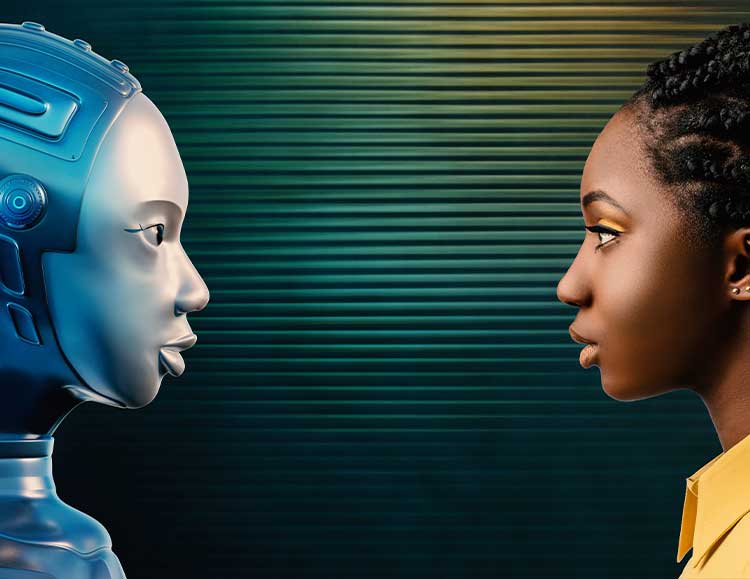
AI can now create video ads that closely resemble human work, so sophisticated and believable that many people can’t easily tell the difference.
That doesn’t mean those ads move people in the same way.
A new study from Ipsos and Syracuse University’s SI Newhouse School of Public Communications finds that human-generated video ads still outperform AI-generated creatives on key metrics related to sales impact and brand health. The study tested 20 ads with 3,000 U.S. consumers and found that human-created ads were 14% more effective in the short term and 17% more effective in the long term.
That gap tells us a lot.
For the past few years, the advertising industry has been asking whether AI can replace human creators. Rather, the question may be whether AI can replace the human warmth, timing, memory, humor, empathy, and emotional tension that make people interested in ads.
At this point, the answer appears to be no.
AI-generated ads are becoming increasingly difficult to spot, but research shows they’re still easy to ignore. Viewers may not necessarily understand why something feels flat, familiar, or unmemorable. They may not say, “That was created by AI.” However, they still seem to respond more strongly when ads convey the depth of human thoughts and emotions.
That’s something brands should focus on.
The study tested AI against human-generated ads
A study by Ipsos and Syracuse University compared human-created ads to versions that were completely AI-generated.
The researchers selected 30-second ads from 10 major brands and used Google Gemini to reverse engineer the strategic outline behind the original ads. These briefs were used to create AI-generated video ads in OpenAI’s Sora 2.
The final set of 20 ads was tested with 3,000 U.S. consumers using Ipsos Creative|Spark, an advertising evaluation tool designed to measure the potential for creative work to drive short-term sales impact and long-term brand health.
The findings were clear.
Human-created ads were 14% more powerful in driving short-term effects.
Human-created ads were 17% more powerful at driving long-term brand effectiveness.
Human-created ads were rated higher for being interesting, unique, eye-catching, and imaginative.
Only 25% of viewers of AI ads were at least somewhat confident that the spot was created by AI.
The last point may be the most interesting.
The performance gap isn’t just about detection, where most viewers can’t confidently tell whether an ad was created by AI. It’s about response. People may not know what they are missing, but they still feel the difference.
AI looks good even when it doesn’t make sense
AI-generated creative is rapidly improving.
You can build scenes, mimic ad structures, generate variations, and produce video content much faster than traditional production processes. That speed is appealing to brands under pressure to publish more content on more platforms.
But ads do more than just fill space.
Good advertising does more than just describe your product. There is a sense of human tension. It makes something feel familiar, surprising, interesting, true, or emotionally worth remembering. Understand not only what your brand wants to say, but also what your audience is trying to feel.
This is where human-made creativity still has an advantage.
AI can copy the shape of advertisements. You can compose beautiful messages. You can generate something that looks acceptable in your feed. But being accepted and being remembered are not the same thing. Cleaning and moving are not the same. Fast and effective are not the same thing.
An Ipsos study points out the difference. While AI ads may be close enough to pass visually, human ads still outperform where it matters.
Human warmth is still hard to fake
One of the most powerful lessons from this research is that people respond to more than product quality.
They respond to sounds. They respond to presence. They respond to the small human choices that make advertising feel alive.
It could be dialogue that doesn’t seem too polished at first glance, humor that comes through because you understand your audience, or a story built around what people actually perceive from their own lives.
That moment is difficult to create from patterns alone.
This is why ads created by humans often have a warmer feel to them. These are constructed from lived experience, cultural awareness, creative risk, and emotional judgment. The message is shaped by people who know when the message is too obvious, when a scene needs restraint, when a joke needs air, when the emotion behind the product needs to take a backseat.
It’s not just an artistic preference. Research shows that it has implications for business.
Human creativity has become more powerful not only because it looks better, but because it creates more experiences that help ads stick.
Billo says the data is consistent with what we’re seeing in Creator campaigns
This finding is also consistent with what creator video platform Billo has been seeing across creator-led campaigns.
“Everyone is racing to create more content with AI because it’s faster and cheaper, but better speed doesn’t mean better advertising performance,” said Donatas Smailys, CEO of Billo. “The reality is that AI ads are becoming harder to detect, but easier to ignore, as evidenced by the 17% difference in long-term brand effectiveness.”
Smileys said the study confirms a pattern the industry is already seeing in practice. In other words, consumers react differently to real people, even if they can’t fully explain why.
That’s an important point for marketers.
Brands don’t just need more content. You need content that people notice, remember, trust, and connect with. Even if AI helps generate more ads for viewers to scroll past, the efficiency gains may not mean much.
AI still plays a useful role
None of this means there is no place for AI in advertising.
The better part is that AI should support the creative work of humans, rather than replacing the thinking that makes advertising effective.
AI can help with production tasks, editorial support, captioning, translation, formatting, localization, version control, research, and early concept exploration. This allows your team to move faster and reduce repetitive tasks.
But the core story still requires talent.
Humans must remain in charge of creative strategy, emotional direction, brand authenticity, and final decision-making. They need to decide what that ad is actually about, what feeling it should leave, and why viewers should care.
It’s probably this hybrid approach that many brands get the best results from.
Save time with AI. Using people to create meaning.
What marketers should take away from the research
The biggest lesson is that AI advertising is not bad.
The lesson here is that even “good enough” creatives may not be good enough.
AI can produce work that looks finished. You can create works that blend in with you. It is also possible to create works that the viewer cannot immediately recognize as being made by a machine. But if the work doesn’t entertain, surprise, connect, or stick with people, it may not be able to build a brand or move buyers the way human-made creatives can.
For marketers, this is a simple challenge.
Don’t confuse output with impact.
More ads doesn’t automatically mean better results. Faster production does not automatically mean better performance. Lower cost does not automatically mean higher value.
It’s not just about creating content. The goal is to make someone care.
The human advantage in an AI-heavy market
As AI-generated creative becomes more commonplace, human-authored ads may become even more valuable.
People are already surrounded by content that is polished, optimized, and memorable. Ads that stand out are often ones that have a real-life perspective. They feel tangible. They feel alive. They have emotional weight.
This kind of work usually comes from human insight.
AI helps scale production, but it still struggles with the deeper work of understanding why moments matter, why stories land, and why lines of dialogue feel true. Those are people skills. They come from experience, taste, empathy, and creative courage.
The Ipsos and Syracuse study provides marketers with a timely and useful reminder.
AI may be changing the way ads are made, but people still respond to humanity.
The warmth, depth, and emotion behind human creativity is not a small detail. They are part of what makes advertising work.
Become a subscriber to App Developer Magazine for just $5.99/month and take advantage of all these benefits.


