Most social media marketers are leveraging AI tools, but less than half are seeing significant efficiency gains as a result, at least at this stage.
This is one of the key findings from Emplifi’s latest State of Social Media Marketing 2026 report, which incorporates insights from over 500 marketers and outlines the key areas they are focusing on and developing for the coming year.
You can download the full report here, but in this post we’ll look at some of the key notes.
First, as mentioned earlier, AI is highly valued, with the majority of respondents (82%) saying they currently use AI tools in their daily processes.
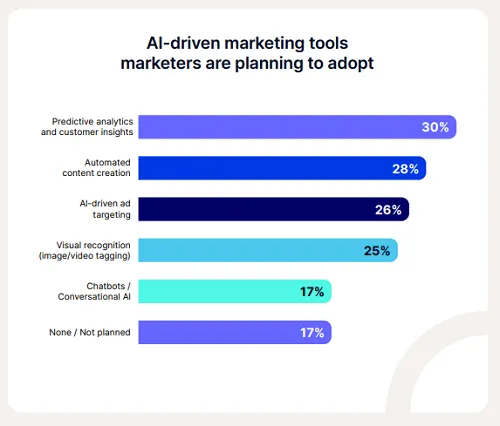
The most common use cases for these tools are analytics and content creation, with ad targeting ranking third on the list.
However, when it comes to benefits, only 35% of marketers say these tools have significantly increased their productivity, and the majority say they have experienced moderate benefits from modern AI options.
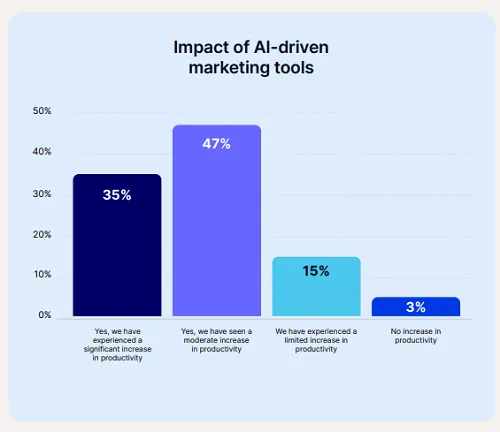
This can come down to a variety of factors, from knowledge gaps and people still not knowing exactly how to best utilize these tools within their daily processes, to built-in work behaviors that are often difficult to transition.
AI tools may not revolutionize work in the way many hope. In most cases, AI tools work best as complementary additions, but in some ways they are incorrectly framed as intelligent machines that can fully take over the human workforce from the time of implementation.
They are not. In fact, the use of the term “artificial intelligence” as we have come to know it in modern definitions is a misnomer in that these tools are not intelligent at all, do not think, are very good at pattern recognition, and therefore only respond to conversational queries.
In that sense, while the efficiency gains here are probably more relative than we should expect, the widespread hype around AI is actually overhyping the potential occupational benefits.
It really depends on a case-by-case basis, and it’s difficult to define exactly what these results indicate.
On another front, this report looks at the rise of influencer marketing and how marketers are approaching influencer-led promotions.
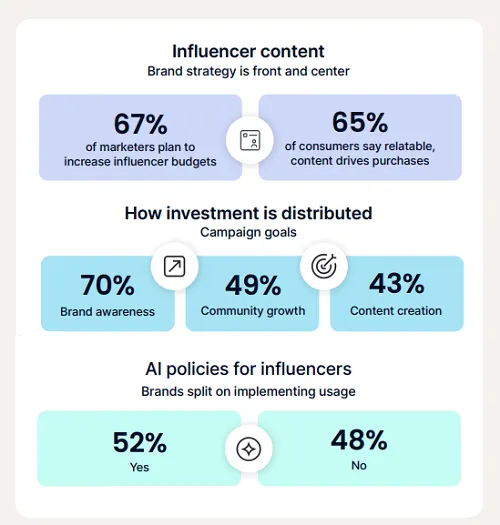
As outlined above, 67% of marketers plan to increase their influencer budget in 2026, with brand awareness being the main benefit of influencer promotion.
The rise of short-form videos makes influencer marketing even more valuable to consider. It’s very difficult to capitalize on the short-form video trend if you don’t understand the medium and how people use it. Influencers know this innately, which is why brands are turning to their expertise to enhance promotions. Influencers also have perhaps as much influence as traditional celebrity endorsements.
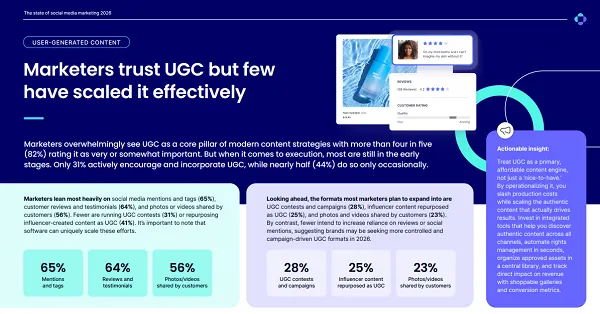
The report also explores new approaches to user-generated content and how marketers are adopting UGC.
Respondents also listed the main platforms they will focus on in the year ahead.
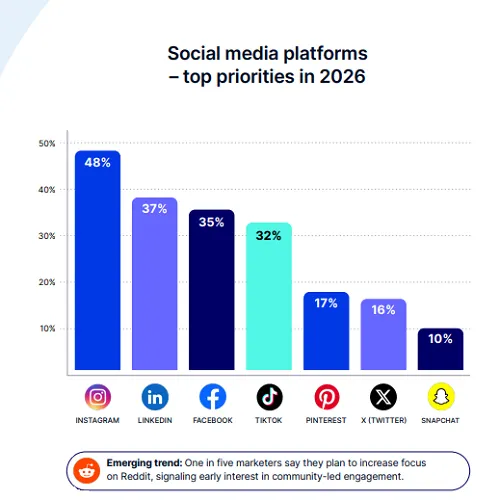
As you can see, Instagram remains the leader, followed, somewhat surprisingly, by LinkedIn.
This may reflect the marketers who participated in the survey, but it may also reflect the growing relevance of LinkedIn as a connection platform as more people engage with their LinkedIn feeds.
There’s also an interesting additional note about Reddit at the bottom. Reddit has become even more prominent as AI chatbots refer to it more often for responses. Clearly, more marketers are paying attention to this.
However, Emplifi points out that marketers are actually looking to spread their resources across more platforms, rather than concentrating on a single platform.
“The real story is diversification. As budgets and teams span multiple platforms, technology becomes essential to maintaining efficiency. Automation, AI scheduling, and cross-channel analytics allow brands to grow their organic reach and community presence without burning out.”
While each platform is different and requires a different content approach, people who follow you on multiple platforms may get tired of seeing the exact same updates, so it’s best to use some caution against cross-posting too much.
However, marketers are looking to tap into more platforms to maximize referrals in the evolving online environment.
The report also looks at content goals and types and how marketers are evolving their strategies.
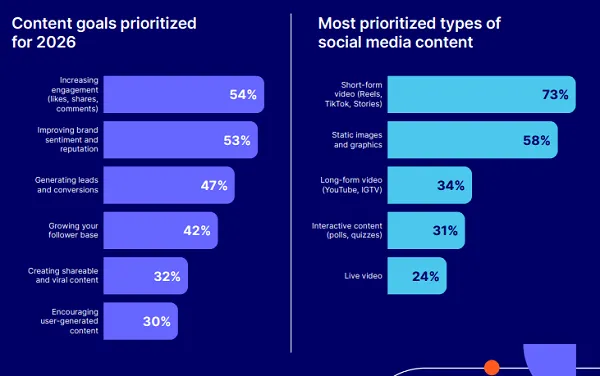
Logically, short-form videos are the main focus, but in terms of metrics, increasing engagement is paramount. Interestingly, lead generation is third on the list, which seems strange, but based on these insights, it appears that generating more traction on social apps is seen as the main driver for achieving this goal.
A few interesting notes can help you develop your social media marketing strategy, or at least provide context for where your colleagues are looking as they plan their 2026 approaches.
Download Emplifi’s full State of Social Media Marketing 2026 report here (email signup required).