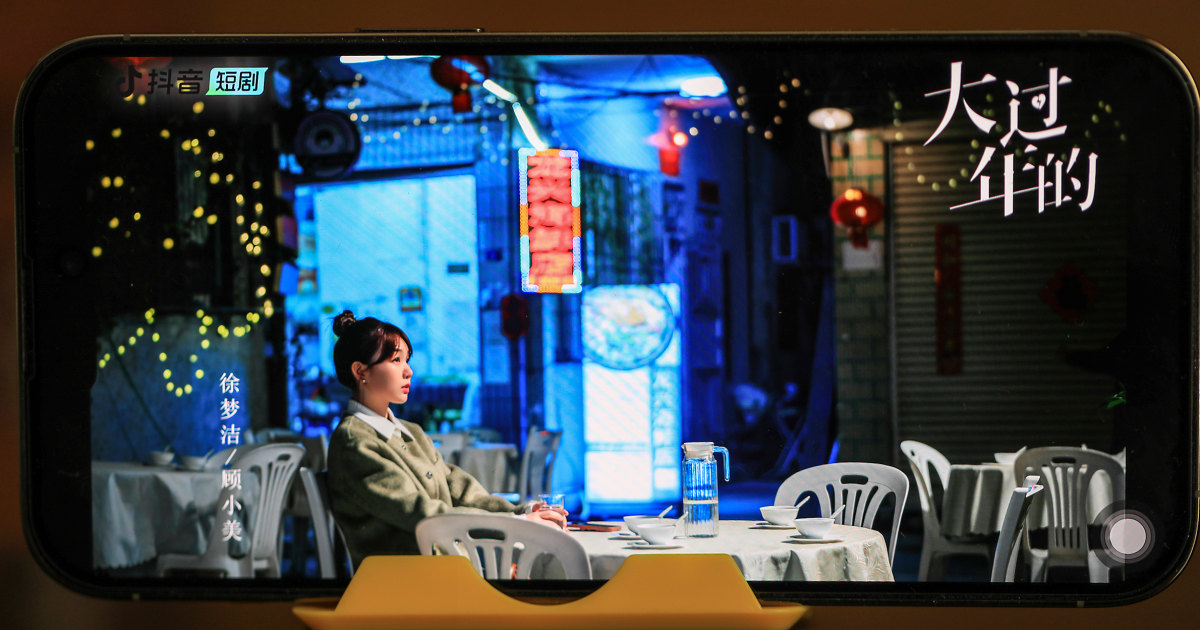
ZHENGZHOU, China — Chinese microdramas known for their hyper-emotional stories of steamy romances, time-traveling revenge and explosive family secrets are facing their own drama as AI transforms an industry that is also rapidly expanding in the United States.
Subscribe to read this story without ads
Get unlimited access to ad-free articles and exclusive content.

Filmed vertically for China’s mobile-first audience, microdramas (also known as minidramas or short dramas) have captivated hundreds of millions of Chinese people for years with their fast-paced and addictive stories, typically told in 60- to 90-second episodes. But technology has completely changed the way we compose, produce and perform.
“AI is changing everything,” Beijing-based microdrama director Gao Qingge said in an interview with NBC News. “Because AI can save a lot of money.”

Of the roughly 100,000 microdramas released in the first three months of this year, about 95% were produced entirely by AI, according to the state-run People’s Daily, leaving many actors and staff in the $14 billion industry at a loss.
Chinese viewers are consuming a plethora of artificial intelligence microdramas, but this shift is also creating concerns similar to those in Hollywood. In Hollywood, a feature film starring controversial AI “actor” Tilly Norwood has been criticized by the major actors’ guild for “disrespecting human artistry”.
Just as microdramas blossomed in China and made their way to the United States, where they are also produced and widely viewed, the way the industry embraces and limits AI could impact American television and film production in the future.
In Zhengzhou, China’s micro-drama capital, the change in atmosphere is hard to miss. In the area, many housing projects that had been left unfinished during the years-long national property crisis have been transformed into filming locations.

Just four people were working on the film base on the outskirts of a city of more than 12 million people when NBC News visited the 200,000-square-foot production complex late last month.
The one-stop production venue features more than 50 sets, ranging from a ballroom with a grand chandelier to a modern subway, a hospital, a karaoke room, a prison or a wealthy CEO’s office, all within a short walk, allowing crews to film dozens of episodes in a matter of days.
Wu Hongbin, the base’s manager, said that until just a few months ago, up to 15 film crews could shoot there at the same time, and sets were booked weeks in advance.
“Compared to last year, the current volume is basically reduced by about 60% to 70%,” he said. This is partly due to the influence of AI.
This change has put people who depend on microdramas for employment in a bind.
Liu Yuan, 45, a microdrama actor who often plays rich fathers, said he used to have very little free time in his schedule. However, he said many production staff were “suspended” earlier this year after popular micro-drama platform Hongguo reportedly made policy changes that prevented outside production partners from producing live-action series.
“There are relatively fewer live-action mini-dramas because most of them have moved to AI,” Liu said while filming at the complex, but said work has picked up again recently.

Gao said production companies are motivated by the idea of spending less money on human actors.
“Using AI can save you five to eight times more than live-action,” she said.
AI also offers more flexibility than traditional TV production, said Huang Dingxuan, a Beijing-based cinematographer who has worked with Gao on microdramas such as last year’s “The Scapegoat Maid.”
“Even if it’s raining outside, it’s sunny for us.” [scripted]you have to wait, but with AI, if you want a sunny day, it will be a sunny day,” he said.

Anina Netto, an American who has appeared in Chinese-directed microdramas for English-speaking audiences for years, said AI is an “incredible tool” for series such as “Daddy’s Got Girls and Guns,” which she starred in last year.
“This director, Paddy Marr, loves helicopters,” she said. “I’ve done many shoots with him, and the girls always come out of the helicopter.”
“Well, he wanted seven helicopters, but we didn’t have the budget for seven,” said Netto, who is based in Los Angeles.
AI has helped, but it’s also a “double-edged sword,” she says.
“Many of the incredibly professional people I know who went to work every day are going home and doing nothing because live-action filming is no longer happening,” Nett said.
Netto said that because of his image, there was a clause in his contract stating that he would not use AI, and that he “couldn’t risk having someone say something I’ve never said or do something I’ve never done.”

Some companies are trying to get ahead of these concerns, with mixed results. Chinese streaming giant iQIYI faced backlash in April when it unveiled an AI cast database that would allow actors to authorize the creation of digital doubles for future movies and TV shows.
iQIYI said actors in its database can control how their images are used, but in other cases Chinese actors have complained that their faces and voices have been cloned and used in ways they did not consent to. In April, Hongguo removed the popular AI-generated series “Peach Blossom Hairpin” and punished the production company for using online users’ likenesses without their consent.
Chinese authorities have begun cracking down on such fraud, and last year required all AI-generated content to be clearly labeled. Some U.S. states have transparency laws that require AI-generated content to be labeled, but lawmakers are still debating the federal law.

Despite AI’s growing influence, some in the industry remain optimistic. Wu said he still believes human works will recover because viewers prefer to see real people.
“Looking at AI characters makes me feel like I’m in the uncanny valley,” one user on Chinese social media platform RedNote commented last month, referring to the uneasy feelings people experience when seeing humanoid objects.
Ma Shuchang, a university student in Zhengzhou who acts in microdramas in his free time, said he has noticed a stagnation in his work but still enjoys the AI-generated series.
“It’s great to watch AI dramas because there are a lot of special effects that you can’t achieve in real dramas,” she said, adding that the two can “complement each other.”
“In the future, high-quality works with meaningful content will definitely attract people,” Ma said.
Janis Mackey Frayer, Dawn Liu and Erin Tan reported from Zhengzhou and Larissa Gao from London.