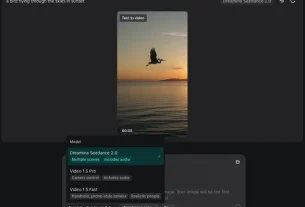
Over the past 18 months, something quietly remarkable has happened in video production. The conversation has changed. It used to be that the question was whether an AI could create a watchable video, and the standard was set to “not look terrible.” The conversation here is about the nuances of which styles, which models, and which workflows produce results that feel more intentional than produced. The transition from novelty to craft shows that AI video has crossed the threshold, and creators who understand the new landscape have a real advantage over those who remain on the sidelines.
Of course, stories of democratization have been told before, but every new creative tool promises to level the playing field. But AI video generation differs in degree, if not in kind. The gap between what a well-resourced production company can achieve and what an individual creator with the right platform can create has narrowed to the point where it often comes down to storytelling instinct rather than budget.
Find the right starting point for AI video creation
The biggest misconception about AI video generation is that it is an activity. In reality, the term covers a variety of approaches, each suitable for different creative goals, and choosing the wrong entry point can lead to frustrations that have nothing to do with the actual functionality of the technology.
Text-to-video generation is the most talked about approach. Write a description and the AI will generate a corresponding video clip. Powerful for conceptual work, mood boards, and short-form social content where visual surprise is more important than precise control. But it’s also the most unpredictable. Because the model interprets language through its own training, the gap between what you imagine and what you see on screen can grow, especially in complex, multi-character scenes.
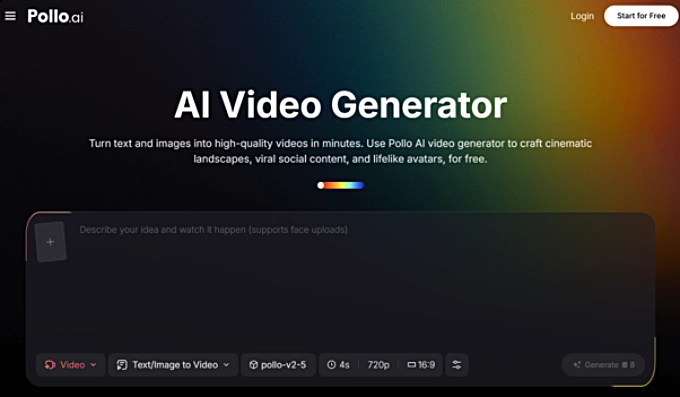
Avatar-based video generation takes a fundamentally different path, and for many professional use cases this is a more realistic choice. Rather than generating everything from scratch, we work with AI-generated presenters, digital humans who convey the script with natural facial expressions, gestures, and lip-sync. Polo AI provides a robust approach to this through its AI avatar system. Generate AI video Deliver content featuring life-like digital presenters without ever being in front of the camera. The platform provides access to a variety of avatar styles and customization options, allowing you to create sophisticated talking head content, product walkthroughs, and educational videos at a level that traditionally required a studio, lighting setup, and cameraman talent.
What makes Avatar’s approach particularly appealing to professional creators is its consistency. Whether you’re creating a series such as a weekly update, training curriculum, or branded content channel, you need your presenters to look and sound the same every time. Polo AI’s Avatar Pipeline provides the reliability that makes it popular among individual creators as well as marketing teams and corporate communications departments that need to scale their video output without increasing production costs.
Image-to-video conversion represents a third category that is particularly relevant to artists and designers. Provide a static image, such as an illustration, photo, or design comp, and the AI will bring it to life. For creators who already have a strong visual identity, this approach maintains the aesthetic while adding the appealing benefits of movement.
Why production value still matters in the age of AI
There is an attractive but dangerous assumption in the creative world that AI tools have rendered production value irrelevant. The logic is that now that anyone can create videos, viewers are adjusting their expectations downward, and that raw authenticity is more important than polish.
This is half true. Audiences have certainly become more tolerant of imperfections in certain situations, such as founders’ live selfie videos on LinkedIn or behind-the-scenes clips on Instagram Stories. But in situations where brands or creators are trying to establish authority, credibility, or emotional resonance, production values still serve as a signal of trust. The difference is that “production value” no longer requires expensive equipment. Careful choices about framing, pacing, audio quality, and visual consistency are required. AI tools can support you, but they can’t make choices for you.
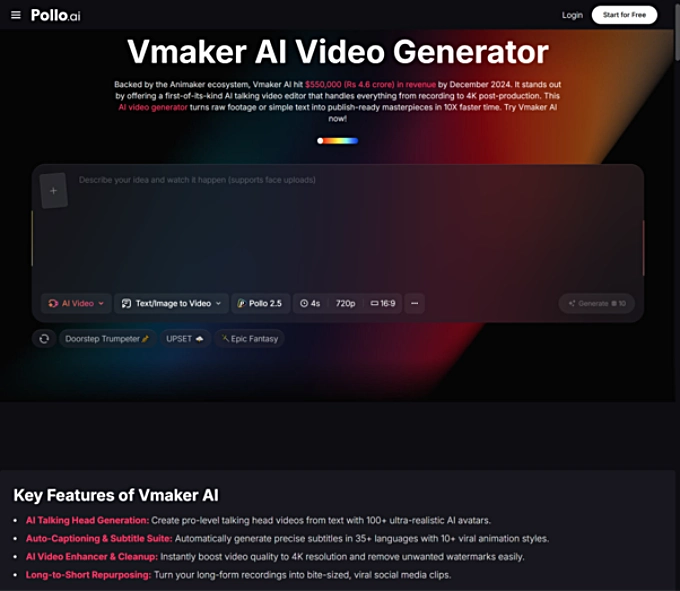
This is where choosing the right generation platform becomes important. Vmaker AI is an example of a tool designed specifically for creators who want professional-level output without professional-level complexity. Transform text, presentations, and documents into polished video content with lifelike avatars, auto-generated captions, and synced audio. For creators producing educational content, corporate communications, or thought leadership videos, Vmaker AI’s workflow is built around the specific needs of talking head and presentation-style content. Polo AI provides access to Vmaker AI’s capabilities, allowing creators to explore the format alongside the platform’s extensive suite of generation tools.
The practical advantage of such a platform is that it can automatically handle production basics such as consistent avatar lighting, audio synchronization, and caption timing. This allows creators to focus on what really differentiates great content from forgettable content: the quality of the ideas being conveyed.
Developing extensible workflows
One video is an experiment. 100 videos is a content strategy. The gap between the two is workflow design, and that’s where most creators stumble when implementing AI video tools.
The first principle is to separate idea from production. When creating a video, you should already know what you are creating, including the topic, structure, key points, target length, and intended platform. Using generation tools as thinking tools results in meandering output and wasted iteration. Create a script or outline first, then bring it to the platform.
The second principle is to establish a template rather than starting from scratch each time. If you’re creating a weekly series, define your avatar, intro format, caption style, and outro once. Polo AI’s platform supports this type of structured production, allowing you to save and apply settings across projects. Aggregating dozens of videos can be a huge time saver.
The third principle is to create feedback loops. Critically observe the videos you generate before publishing them. Notice where the pacing lags, where the avatar’s facial expressions feel disconnected from the emotional tone of the script, and where cuts and transitions could improve the flow. When quality matters, AI generation is not a one-click process, but a collaborative process between creative judgment and model functionality.
Aspects of audio that most creators ignore
Video creators focus on visual quality like resolution, frame rate, and color grading, but audio takes a backseat. This is a mistake in any production situation, but it’s especially costly for AI-generated videos. This is because visual novelty can mask audio issues that viewers perceive even if they can’t articulate them clearly.
Although the audio quality of avatar-based videos has improved dramatically, you still need to be careful. The best AI voices handle tempo and emphasis well on short sentences, but can sound mechanical on longer sentences. Breaking up your script into shorter, more conversational segments, similar to how real presenters naturally stop and breathe, will produce more natural-sounding output.
Choosing background music is another area where small choices can have a big impact. A good ambient track will give the generated video a cinematic feel. Match the energy and genre of your music to the emotional expression of your content, and be mindful of volume levels. Music should support the voice, not compete with it.
Where is AI video creation headed?
Its trajectory is toward real-time generation and interactive video, content that adapts to the viewer rather than everyone playing it the same way. Imagine a product demo that adjusts the presenter, language, and emphasis based on who is watching, or an educational video that slows down and adds visual explanations when it detects confusion.
These capabilities are more accessible than most people realize, and platforms like Polo AI are in a position to be the first to deliver these capabilities, building an integrated ecosystem that combines avatar generation, text-to-video conversion, image animation, and editing tools in one environment.
For creators working today, the strategic move is clear. Start building your AI video workflow today. Of these, the learning curve remains a competitive advantage over the stakes. These tools are sophisticated enough to produce professional results, accessible enough to learn in an afternoon, and flexible enough to adapt as your creative ambitions grow. The only resource that technology can’t provide is the vision of what to make with it, but it’s still completely yours.
Al Woods’ words