
When the half-time whistle blew for the England vs. Germany soccer match in the round of 16 of UEFA EURO 2020, millions of viewers in the UK turned away from their screens and simultaneously did the same thing: switch on the kettle.
The National Grid, which supplies electricity to England and Wales, saw a demand surge of around 1 gigawatt within minutes of the national tea break. This is a comparable increase in the average power output of a standard nuclear reactor. Grid operators must carefully manage these demand peaks to maintain system stability, which may become more difficult as the grid continues to add large numbers of new customers.
But what if these new customers could actually be flexible and reduce their demand for electricity during peak hours?
In a recent whitepaper, Emerald AI, in collaboration with NVIDIA, EPRI, National Grid, and Nebius, showcased how a “power-flexible” AI factory can autonomously adjust power usage during peak demand.
For AI factories, this enables significantly faster grid connectivity without waiting for years of extensive infrastructure upgrades. For the general public, it limits grid additions by reducing the peak loads that the system has to serve, helping to keep electricity prices affordable for daily ratepayers.
Boil the kettle and balance the grid
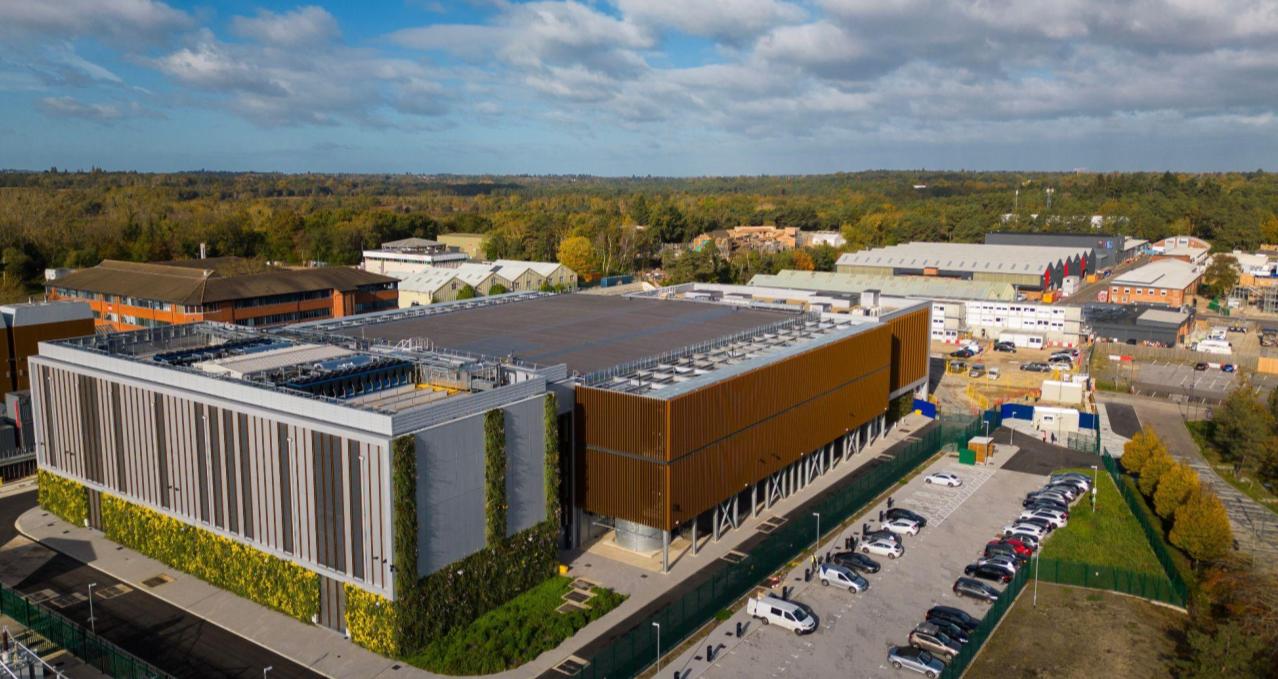
After successful proof-of-concept testing at AI factories in Arizona, Virginia, and Illinois, Emerald AI brought its flexible grid solution across the pond last December, deploying the Emerald AI Conductor Platform at Nebius’ new AI factory in London built on NVIDIA infrastructure. This is the first of its kind in the UK.
At the AI Factory, the research team ran production-grade AI workloads on a cluster of 96 NVIDIA Blackwell Ultra GPUs connected through the NVIDIA Quantum-X800 InfiniBand platform. The NVIDIA system management interface is used to obtain consistent second-level GPU power telemetry.
EPRI and National Grid simulated power grid stress scenarios, from lightning strikes to long-term declines in wind power generation, and with the help of the Conductor Platform, sent signals instructing the AI factory to temporarily reduce power usage to ease the strain on the power grid.
One of these scenarios was the “TV pickup” phenomenon, which recreated the high energy of the Euro 2020 soccer matches.
Just before millions of simulated kettles were switched on, the AI cluster successfully reduced power usage and acted as a shock absorber against sudden power surges without disrupting the highest-priority AI workloads running on the cluster.
In practice, this means the grid can use existing capacity more efficiently to manage sudden fluctuations in demand, reducing the need to overbuild permanent infrastructure to accommodate the worst peaks, and helping to keep rates affordable for everyday consumers.
“This technology turns AI factories into friendly and useful grid assets,” said Varun Sivaram, Founder and CEO of Emerald AI. “At the same time, AI factories can leverage existing power grids and therefore connect to the power grid more quickly.”
A stress reliever, not a query crusher
In the Nebius AI Factory demonstration, the Emerald AI Conductor ensured that simulated high-priority AI workloads ran at peak throughput, even though the energy needed to power the national tea break was rapidly reduced, while more flexible jobs were temporarily slowed down.
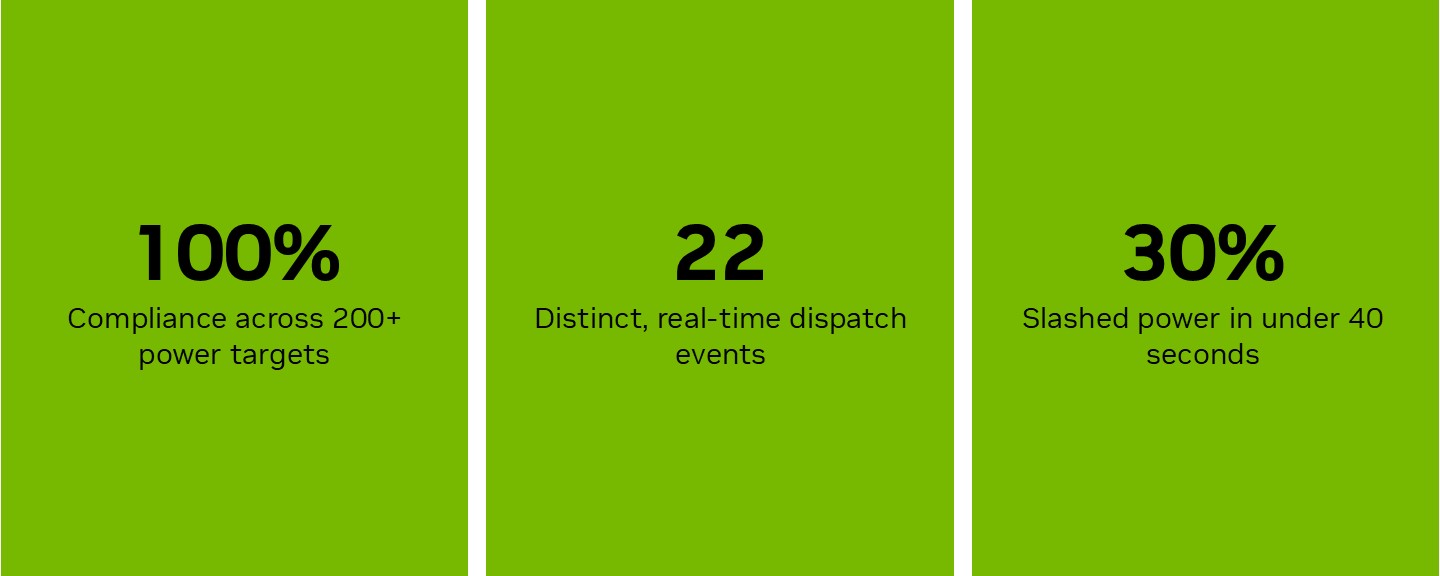
Emerald AI recorded 100% agreement with the more than 200 power goals that EPRI and National Grid directed the AI cluster to follow for this experiment.
“We tested beyond anything that has ever been done in the U.S. because we tested not just the GPU, but the CPU and everything around it, as well as the total power consumption of the IT equipment,” said Steve Smith, National Grid group chief strategy officer. “We have proven the value this technology can bring.”
Expanding London’s grid at lightning speed
London’s electricity grid is constantly working to meet the ever-growing energy needs of its citizens. Its electricity transmission operators, including National Grid, face a significant bottleneck: constraints in upgrading infrastructure to connect large customers.
Connecting flexible AI factories to the grid using solutions like Emerald AI’s Conductor Platform can not only help stabilize energy spikes, but also optimize the use of existing grid infrastructure and foster talent and economic opportunities for new industries in the UK.
“We have tremendous skills and potential in AI,” Smith said. “We’ll never reach the size of the United States in terms of data centers, but compared to the size of the country, we could be. And we’re certainly seeing that kind of interest from a lot of hyperscalers. So we have an opportunity to play a role as a national grid in unlocking economic growth for this country.”
Emerald AI and NVIDIA are preparing four demonstrations to bring power-flexible AI factories to the real world at the Aurora AI Factory in Virginia, scheduled to open this year.
Learn more about the first power-flexible AI factory powered by NVIDIA GPUs.


