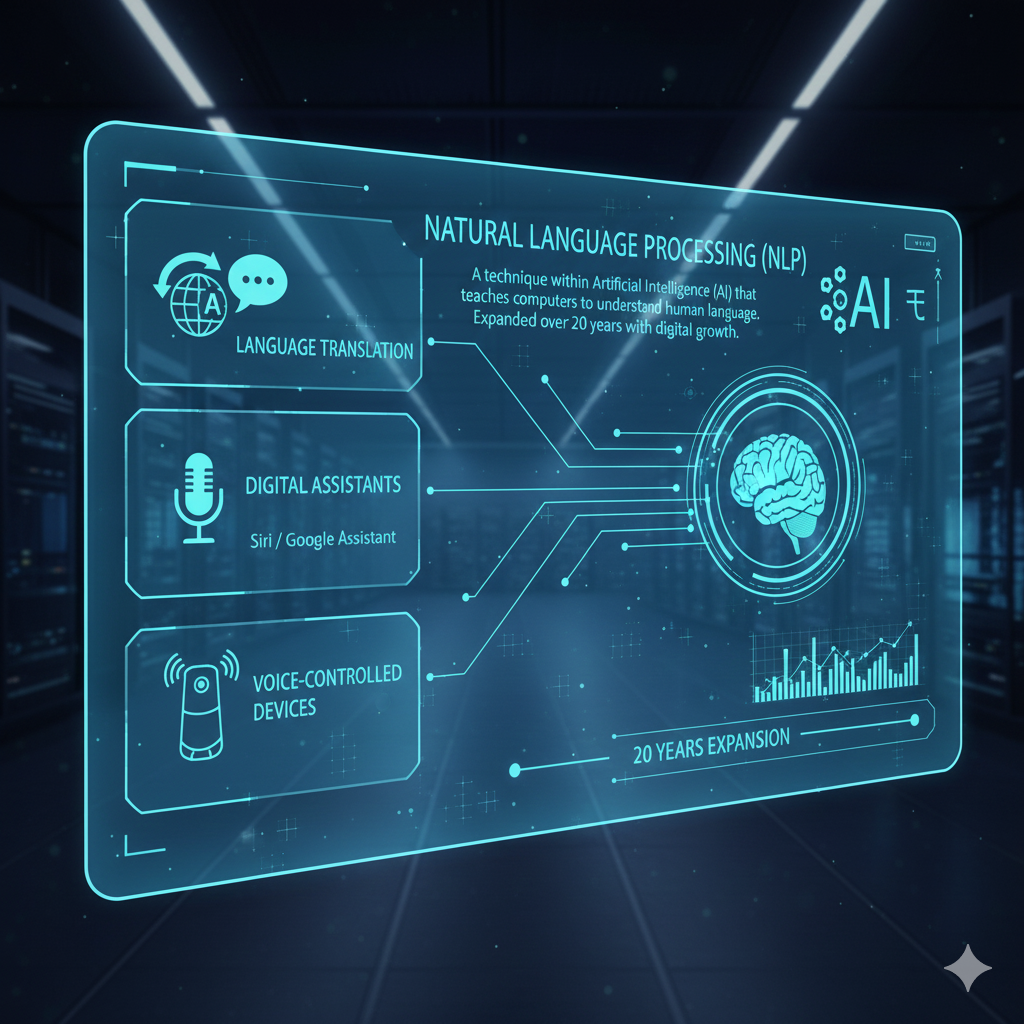
Natural language processing (NLP) is a technology in the field of artificial intelligence (AI) that has expanded over the past two decades with the increased use of computers and digital devices. Simply put, NLP teaches computers how to understand human language. NLP powers language translation apps, personal digital assistants like Siri and Google Assistant, and voice-controlled devices in the home (Locke et al., 2021). When you talk to your phone and it suggests words to you as you type, that’s NLP.
NLP works by helping computers understand human language by breaking it down step by step. When we type or speak, words come in in an unstructured format, and NLP transforms this unstructured text into a format that computers can understand. To do this, NLP uses machine learning algorithms that analyze large amounts of text and learn patterns from it, allowing it to recognize words, understand context, and reasonably infer meaning.
The main steps in this process include text processing. In text processing, NLP cleans and prepares text through tokenization or word reduction. Syntactic analysis is then performed to interpret deeper meaning through context, tone, and intent, and extract useful information for tasks such as translation and question answering.
Through these steps, NLP transforms raw text into useful information, allowing machines to understand language more naturally.
Importance of NLP
NLP is important because it allows people to communicate with computers in a natural and easy way. Instead of using codes or commands, we just type or speak like normal and the system understands us. NLP also helps search engines understand what we really mean when we type something. Therefore, the results obtained will be more accurate and useful. It also makes large amounts of text, such as customer feedback and social media posts, easier to read and understand, allowing organizations to see trends, common issues, and public opinion.
NLP can also help automate many everyday tasks. Summarize long documents, categorize emails, detect sentiment in text, and instantly translate languages. Many tools we use today, such as chatbots and virtual assistants, rely on NLP to understand questions, respond correctly, and provide helpful suggestions. All of this makes technology more convenient, faster, and easier to use, regardless of the language people speak (Mohana, 2024).
NLP challenges
However, NLP also faces challenges because human language is inherently messy and unpredictable. They often make spelling mistakes, use informal shortcuts, and write in different styles, which can confuse systems that expect clear and consistent text. Different languages express ideas differently, and NLP models can detect hidden biases in the data they are trained on. Words with multiple meanings add to the challenge, since computers can’t interpret nuance as easily as humans.
There are technical challenges that make NLP difficult to manage (shaip, 2025). NLP systems can confidently give incorrect answers, known as false positives. Good training data is essential, but if the data is limited, inaccurate, or biased, your model will learn the wrong patterns. NLP requires large, clean, and diverse datasets to work well. Otherwise, the results may be unreliable.
Real-world applications of NLP
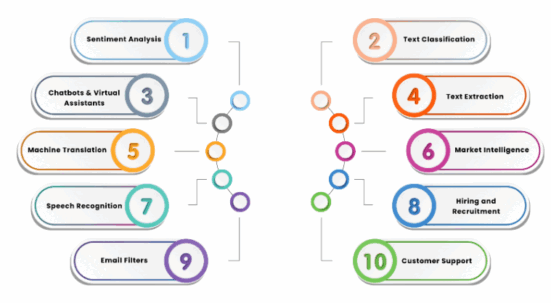
Top 10 applications of AI in NLP (sauce: https://www.solulab.com/top-applications-of-natural-language-processing/)
NLP, which is behind many modern technologies, helps apps and devices understand language and respond more intelligently. It helps computers understand human language, analyze opinions, classify text, extract important information, recognize speech, and translate documents. Businesses use NLP for sentiment analysis to monitor customer sentiment, topic classification to group survey responses, and text extraction to extract names, dates, or numbers from documents. These tools save time, reduce manual effort, and give businesses clear insight into what their customers are thinking and need.
NLP also supports many day-to-day operations such as market intelligence, recruitment, and customer support. Recruiters use NLP to scan resumes faster and more equitably, and marketers analyze online conversations to identify trends and customer pain points. Speech recognition turns spoken words into text to improve communication, and spam filters use NLP to keep your inbox clean. The customer support system uses NLP to route calls and automatically answer basic questions. NLP makes technology smarter, faster, and more useful in handling everyday language tasks (Shipra, 2025).
Written by Dr. Wan Noor Hamiza Wan Ali, Senior Lecturer, Faculty of Artificial Intelligence (FAI) Universiti Teknologi Malaysia (UTM)