
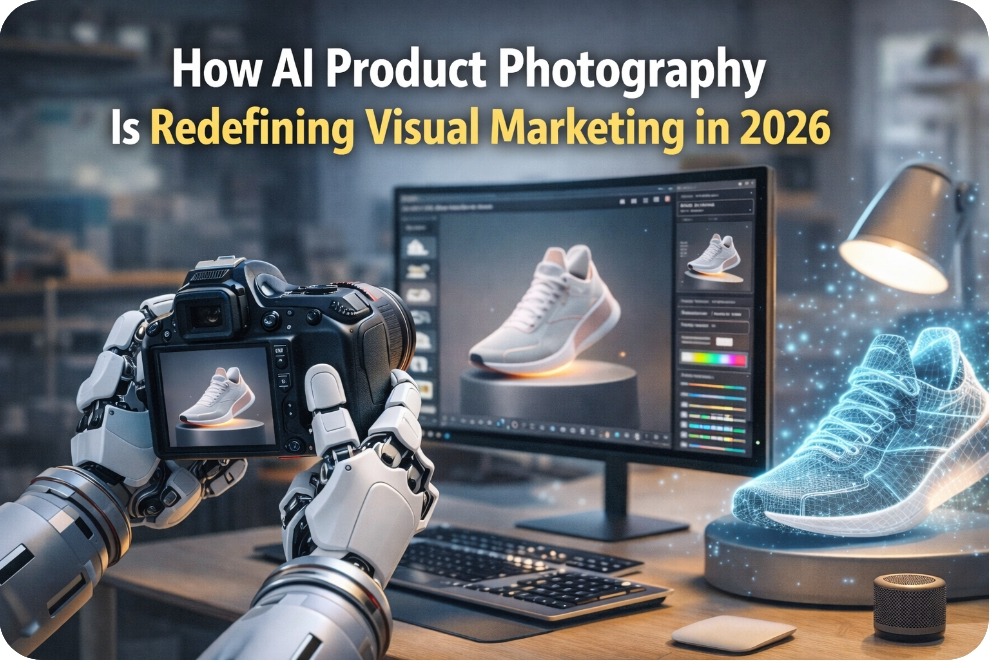
In 2026, visual marketing is no longer just about beauty, it’s about speed, scalability, personalization, and performance. As e-commerce continues to dominate the global retail industry, brands are under pressure to create high-quality product visuals across multiple platforms while maintaining consistency and controlling costs. While traditional photography still has value, it is no longer agile enough to meet the demands of modern digital commerce.
This change has opened the door to innovative solutions. AI product photography. The combination of artificial intelligence and advanced image generation and editing technologies is redefining how companies create, optimize, and deploy visual content across digital channels.
result? Faster production cycles, lower costs, highly customized visuals, and stronger customer engagement.
Evolution of visual marketing
Visual content has always played a central role in consumer decision-making. From catalog photos to glossy magazine spreads and online product galleries, images shape perception and trust. However, the digital age has changed the scale of demand.
Today, brands need:
- Product images for e-commerce listings
- Lifestyle visuals for social media
- website banner graphics
- Visuals optimized for marketplaces
- Mobile-friendly vertical content
- Regional variations
Producing this amount of content using traditional studio photography can be expensive and time-consuming. This process of scheduling the shoot, renting equipment, hiring a photographer, and managing post-production often takes several weeks.
In contrast, AI product photography allows brands to generate studio-quality images in a fraction of the time, without the need for physical photography at all.
Speed as a competitive advantage
In a fast-changing market, speed is important. Trends change rapidly, seasonal promotions change weekly, and social media requires constant updates. Companies that can adapt quickly will gain a tangible advantage.
AI-powered product visuals enable businesses to:
- Publish new product images instantly
- Digitally update backgrounds and settings
- Create multiple variations for A/B testing
- Localize your campaign without reshooting
For example, a brand selling footwear can produce the same product that is displayed in multiple environments, such as a city street, a beach environment, or a minimalist studio scene, without physically transporting the product. This flexibility greatly reduces time-to-market timelines.
In 2026, agility will no longer be a necessity. This is a requirement to survive in the competitive e-commerce environment.
Increase cost efficiency without compromising quality
Professional photos still have value, but often require a significant investment. Costs for studio rentals, lighting equipment, models, stylists, retouching, and editing can add up quickly.
AI product photography significantly reduces these expenses by automating key aspects of production and editing. Instead of organizing repeat photoshoots, brands can upload a base image and digitally generate multiple professional-quality variations.
Small businesses especially benefit from this technology. Once only available to large companies with large marketing budgets, it is now available to startups and independent sellers as well.
This democratization of visual marketing is reshaping the competitive landscape.
Personalization at scale
One of the most important developments in marketing over the past few years is hyper-personalization. Consumers expect content tailored to their tastes, demographics, and browsing behavior.
AI-powered tools allow brands to dynamically generate personalized product visuals. for example:
- Different backgrounds based on regional preferences
- Seasonal fluctuations in various markets
- Lifestyle images specific to demographics
- Platform-optimized visual format
This level of customization is nearly impossible with traditional photography alone.
By integrating AI product photography into digital marketing workflows, businesses can create customized visuals that resonate with specific audience segments, increasing engagement and conversion rates.
Improving e-commerce conversion rates
Product images directly influence purchasing decisions. Since customers can’t physically interact with your product online, you need to visually compensate for the lack of a tactile experience.
High-quality, detailed, and context-appropriate images increase confidence and reduce uncertainty. AI-enhanced visuals enable you to:
- Improve lighting and clarity
- remove distractions
- Enhance product details
- Generate a realistic lifestyle context
- Optimize color accuracy
When customers see clear, appealing visuals of how your product fits into their lives, they’re more likely to complete a purchase.
In 2026, conversion-focused visual optimization will be central to e-commerce growth strategies.
Supports omnichannel marketing strategies
Modern brands operate across multiple digital touchpoints, including websites, social platforms, marketplaces, email campaigns, and paid advertising channels. Each platform requires different image formats and specifications.
AI tools allow you to quickly resize, change backgrounds, and adapt to different channels without compromising quality. A single product image can be converted as follows:
- Square Instagram Post
- Vertical ads on TikTok
- e-commerce homepage banner
- Marketplace listing thumbnail
Consistency across channels strengthens your brand identity while ensuring your content remains optimized for each environment.
Sustainability and waste reduction
Sustainability is increasingly influencing consumer and business decision-making. Traditional photography can involve shipping products, building physical sets, and generating waste from materials and logistics.
Digital image generation minimizes the need for physical resources and significantly reduces environmental impact. Virtual backgrounds replace physical props, and digital editing reduces the need for repeated reshoots.
Brands that prioritize sustainable marketing practices can leverage AI product photography as part of their environmental responsibility efforts.
Creative freedom without physical limitations
One of the most appealing aspects of AI-powered visual tools is their creative flexibility. Brands are no longer limited by studio size, weather conditions, or geographic location.
Products can be placed in the following locations:
- exotic landscape
- futuristic setting
- seasonal background
- stylized artistic environment
Creative teams can experiment quickly without the logistical challenges of traditional production.
This freedom fosters innovation and storytelling that elevates your brand identity beyond standard catalog images.
Data-driven optimization
Artificial intelligence does more than just generate images. You can also analyze performance data. By tracking engagement metrics, click-through rates, and conversion data, brands can determine which visual styles perform best.
This allows you to:
- Continuous A/B testing
- Make creative decisions based on data
- Performance-driven tuning
Rather than relying solely on intuition, marketing teams can strategically optimize visual content.
The integration of analytics and AI product photography transforms visual marketing into a measurable, iterative process rather than a static asset creation workflow.
Empowering small businesses and entrepreneurs
Large companies once had a monopoly on high-quality visual marketing because they could afford professional production teams. Today, AI-powered tools are leveling the playing field.
Entrepreneurs starting an e-commerce store can create sophisticated product visuals without investing heavily in equipment or hiring an agency. This accessibility fosters innovation and allows smaller brands to compete in a crowded market.
AI technologies support a more inclusive and dynamic digital economy by reducing barriers to entry.
Challenges and ethical considerations
AI-generated visuals have many benefits, but responsible implementation is essential. Brands must ensure:
- Accurate representation of the product
- Transparency about enhancements
- Ethical use of AI-generated images
- Compliance with advertising standards
Misleading visuals can damage trust and reputation. The goal is not to distort reality, but to enhance presentation.
When used responsibly, AI tools can enhance trustworthiness, not undermine it.
The future of visual marketing
In the future, AI-powered visual marketing will become more integrated with augmented reality, 3D modeling, and immersive e-commerce experiences.
We can expect the following advances:
- Real-time image generation based on user interaction
- Styling suggestions using AI
- Fully virtualized product environment
- Seamless integration with AR try-on feature
As technology evolves, brands that are early adopters of AI product photography will continue to stay ahead of competitors who rely solely on traditional workflows.
This change does not replace creativity, but enhances it. AI tools allow creative professionals to focus on strategy and storytelling rather than repetitive production tasks.
conclusion
Visual marketing in 2026 will require agility, personalization, efficiency, and measurable performance. Traditional photography alone cannot meet the scale and speed required by modern e-commerce and digital advertising ecosystems.
AI product photography is redefining how brands create, optimize, and deploy product images. AI-powered visuals provide a strategic advantage in competitive markets by reducing costs, accelerating production, enabling personalization, and supporting data-driven decision-making.
As companies continue to prioritize digital growth, integrating AI-powered image generation into their marketing strategies is no longer an experiment, but a necessity. Companies that adopt this technology thoughtfully and responsibly can not only improve operational efficiency, but also improve brand storytelling and customer engagement.


