Surfais
Surfaice is a high-tech startup founded by Kazakhstanis in Silicon Valley, USA. The company develops vertically integrated AI employees to automate and manage the construction of standard facilities such as schools, hospitals, energy infrastructure and retail stores.
Technically, this solution is implemented as a fleet of professional agents working through a unified knowledge graph that stores all regulations and activity logs.
The company is CEO Alim Uderbekov, an aerospace engineer, a former employee of the International Space Station Mission Control Center, founder of Central Asia's largest building materials market, and former consultant for McKinsey and KPMG.
The startup has already raised $1.5 million from venture capital companies such as Shadow VC, Sturgeon Capital, ISEed VC, Plug & Play, as well as Shadow VC, Sturgeon Capital and Most. Surfaice has also completed the Astana Hub x Draper University Hero Training Accelerator Program.
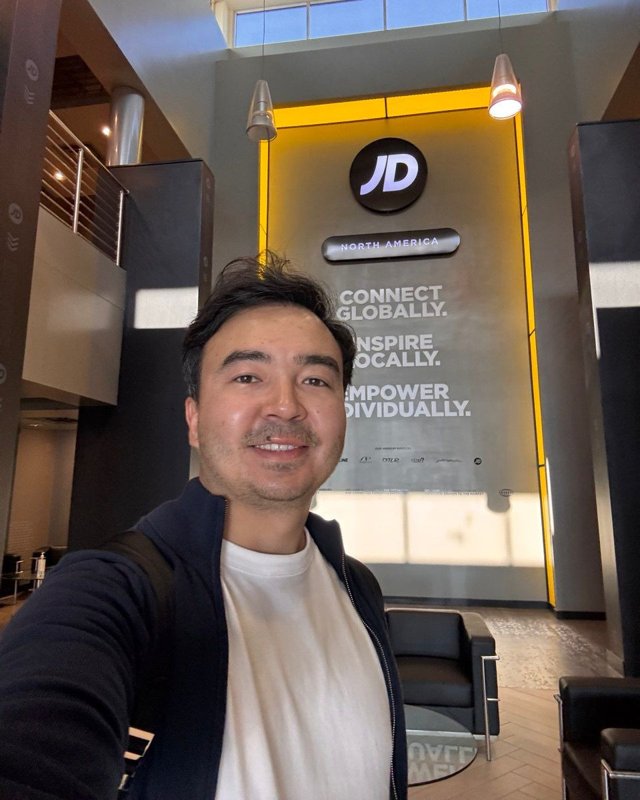
Surfaice's client portfolio covers projects with a combined construction budget of over $360 million. In the US, clients include JD Sports ($13 billion in revenue, over 3,400 locations) and 5 ($4 billion in revenue, 1,800 locations). At Kazakhstan, its AI solutions are already in use by Magnum, Jusan Bank, Citix and other partners.
On July 9, 2025, the team presented the technology to the president, highlighting how Surfaice can address the shortage of over 280,000 school locations (approximately 500 schools) through an AI-driven construction management system.
Following the meeting, instructions were given to tackle a pilot project in which the government will participate. The company is currently launching a pilot to build three schools in Almati, fully in the AI-Automated process.
CEO Alim Uderbekov spoke to Kazinform News Agency about the short-term goals of the project.
“When it comes to scaling, my goal for the next two or three years is to be a leader in AI software for retailers building standardized stores in the US.”
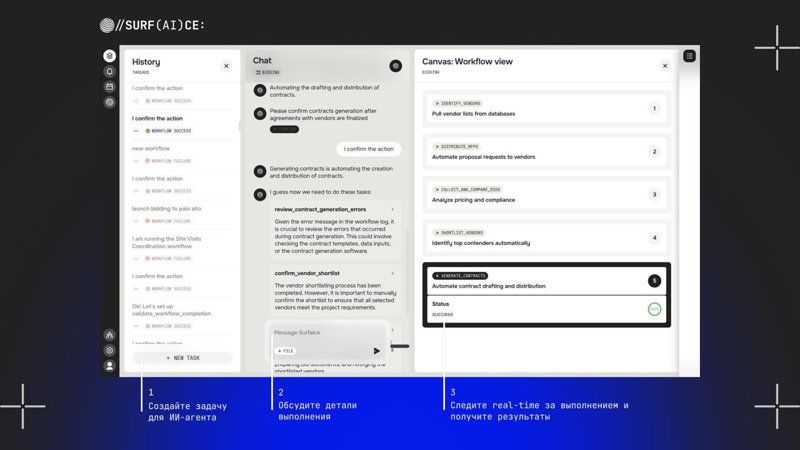
He explained that their vision is for AI agents to take on every step of the client's construction process.
“Our goal is for AI agents to handle tasks involved in client construction projects. For example, McDonald's managers would be “calculating budgets”, “preparing project schedules”, “starting document signing”, “starting bids”. ”
He added that the core ideas behind vertically integrated AI agents are similar to how ChATGPT uses tools such as Cursor and ChatGpt, with the aim of providing a complete project, such as a website, from start to finish. In their case, they view standard construction projects as equivalent to the landing page in the world of software development.
The team consists of 16 members, including doctoral degrees, experienced engineers, international competitive winners and young talent. The main engineering team is based in Almaty, Kazakhstan.
Evaluating the competitive landscape, Uderbekov emphasized.
“Competition is very strong. Every time you create a disruptive project aimed at transforming your existing approach, you will inevitably face important market resistance. No one will pass the market to you. But we believe that Surfaice is essentially creating new categories so we can become a leader.
wdsoft
This AI-powered system is designed to diagnose lung cancer, breast cancer, and Covid-19 virus pneumonia. If the sensitivity rate exceeds 90%, early cancer detection increases by 15%. AI systems are already used by medical institutions in several regions of Kazakhstan, including Atyrau, Almaty, Zhetysu, Zhambyl, Abay, and East Kazakhstan. In the Almati region, pathology detection has already increased by 11% due to the introduction of the system.

This technology follows a multi-step process. It starts with training thousands of pre-ordered medical scans, including both normal and pathological cases, allowing AI to learn the defining properties of cancerous tumors. The system then preprocesses new images to improve quality, reduce noise, enhance contrast, and analyzes tissue structure and density to identify anomalies such as nodules and shadows. The Japanese Institute of Oncology provided early stage radiographic images and data for algorithm development.
Once potential anomalies are detected, AI classifies them using contour analysis and texture analysis to distinguish between malignant and benign growth. Calculate the probability of malignant tumors by assessing shape, boundary, and density and drawing CT and MRI data. The system cross-references the results with millions of previously processed scans, further improving diagnostic accuracy through growing databases.
AI outputs probability scores such as “85% chance of malignant tumors,” highlighting suspicious areas and directing physician attention to important details. It also continuously improves through feedback from physicians, improving both its accuracy and efficiency over time.
Among its important benefits is its rapid processing, the ability to process large amounts of scans in just a few minutes, with accuracy above 90% and detect subtle changes that may be missed during visual inspections.
WDSoft Commercial Director Yerlan Zhanibekov spoke to Kazinform News Agency about the uniqueness of the project.
“Our projects are unique on their scale and have no direct analogies. Similar AI systems exist all over the world, but only in Kazakhstan, such technologies are deployed to cover the entire region and its entire population.
codiplay
Codiplay is an educational startup that learns engaging coding through a smartphone. The ecosystem brings together three core products: the Codiplay mobile app, the Codikit Robotics set, and the Coditeach web platform. This integrated approach supports both students and teachers and creates a complete learning environment.
The Codiplay app introduces popular programming languages (Scratch, C++, Python) through game-based learning. Arcade-style challenges turn coding into an exciting experience, making it easier for children to grasp complex concepts. The Codikit set allows students to design their own Internet of Things (IoT) projects, building not only technical knowledge but problem-solving and engineering skills.
The Coditeach web platform is designed for teachers and helps teachers plan lessons, track progress and build curriculum. Makes the education process simpler and more effective. Codiplay products promote digital skills and IT literacy among children.
The startup has already expanded internationally, with its solutions being adopted by schools in Kazakhstan, Uzbekistan, South Korea, Qatar, the UK, Saudi Arabia, Azerbaijan and Indonesia.
Their impact is recognized worldwide. Codiplay has been awarded Digital Public Goods (DPG) status by the Digital Public Goods Alliance (DPGA), an initiative supported by the Secretary-General of the United Nations. With this approval, Codiplay received the title only to Kazakhstan's third company.
ai kitap
Another startup president, called a potential unicorn, Tokayev, is AI Kitap, a digital AI-driven textbook platform that offers personalized learning tailored to each student's knowledge level, performance, and individual preferences.
Previously, Kazinform's news agency reported on how algorithms shape new digital landscapes.