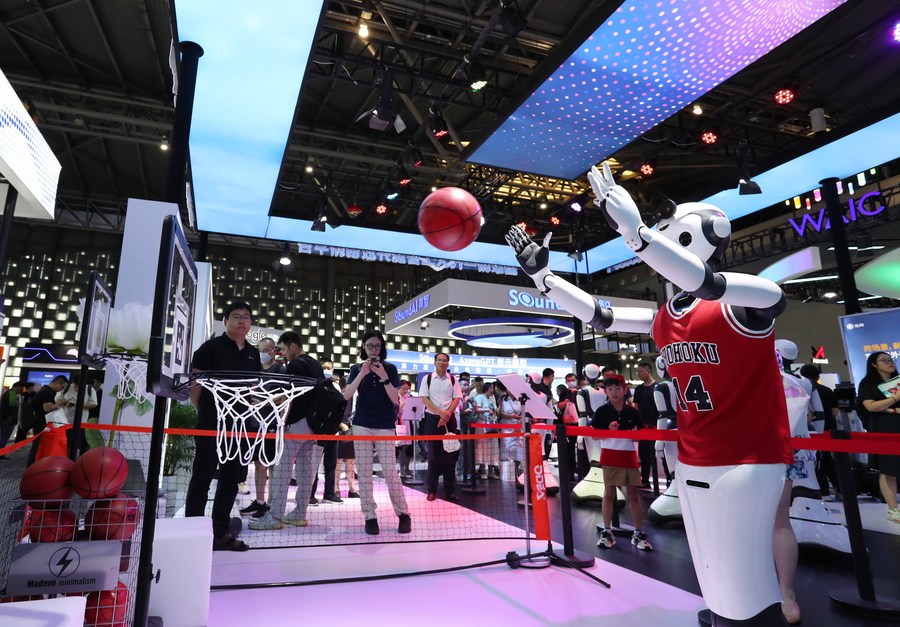
A robot shoots at a basket during the World Conference on Artificial Intelligence (WAIC) 2023 in Shanghai, eastern China, on July 6, 2023. (Xinhua News Agency / Fang Zhe)
Xinhua News Agency reporters Zhang Zhaoqing, Zhou Qianxian, Gao Jianfei
BEIJING, July 14 (Xinhua) — At the bustling logistics center of SinoPharm Holding Guangzhou Co., Ltd. in southern China’s Guangdong province, the dawn of the artificial intelligence (AI) robot era has begun.
A group of autonomous mobile robots go back and forth non-stop to carry shelves loaded with products. Equipped with AI-enabled vision cameras, palletizers can plan movements and precisely pick and stack items. On the other hand, the AI scanner can read information from five sides of the medicine box flowing on the conveyor.
Guangzhou Sinopharm Holding, a leading pharmaceutical distributor in southern China, has pushed through the operational limits of the distribution center it deployed more than 12 years ago. A person working there had to lift 15 tons of product and walk 30,000 steps a day.
But now it’s a different scenario. By adopting Megvii’s intelligent logistics solution, the warehouse has effectively introduced automation and greatly improved its operations. The consolidation has resulted in a 25% improvement in overall warehouse efficiency and a 15% increase in storage density.
AI startup Megvii, known for its expertise in computer vision perception, deep algorithms and the Internet of Things, has been actively integrating with the country’s manufacturing sector in recent years and has launched its own AI-enabled robots and devices such as MegBot and AI. is manufacturing. stacker crane.
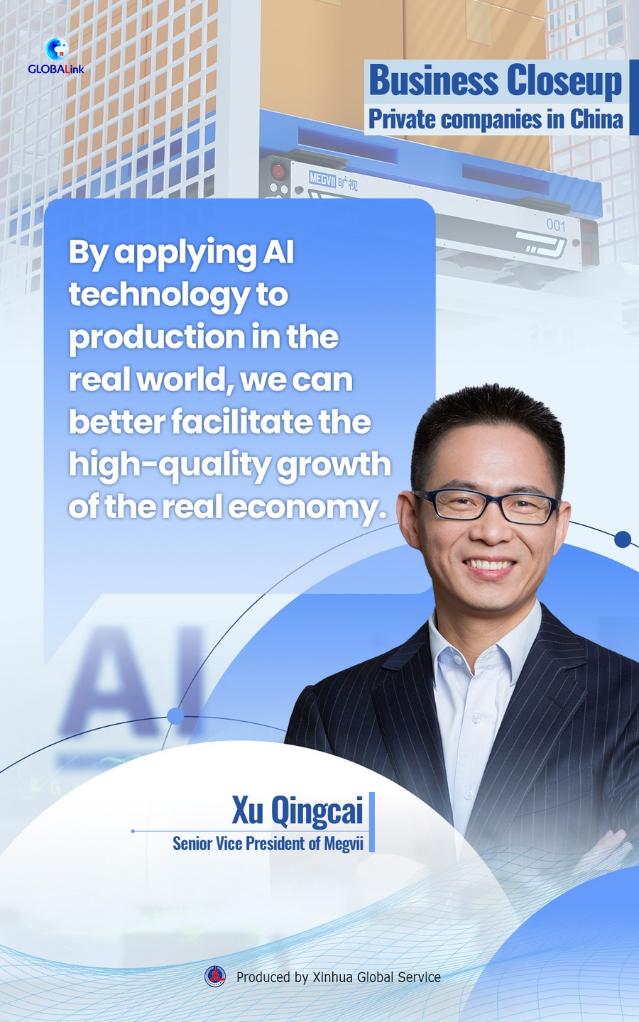
“By applying AI technology to real-world production, we can better drive quality growth in the real economy,” said Xu Qingcai, Senior Vice President and General Manager of Logistics Business Unit at Megvii. .
Demand for AI-powered upgrades soars
With rising labor costs and an aging population, AI will play an increasingly important role in enabling the digital upgrade of the world’s factories.
China has made the digital economy a top priority in its 14th Five-Year Plan (2021-2025), and considers this area to be an essential driving force in building a modern economic system. The country is also pledging to seize the opportunities of new scientific and technological revolutions such as AI to ensure a smarter, greener and more integrated industry.
According to an industry report published by the global market research firm International Data Corporation (IDC), with the advent of the digital business era, the integration of digital business and manufacturing industry is inevitable to revitalize the real economy. is an important condition for
According to the report, by 2025, 40% of China’s manufacturers are expected to deploy AI-based tools within their organizations to support decision-making processes and maximize data value.
Zhong Zhenshan, vice president of IDC China, said China’s AI market will experience explosive growth in the next few years. It is projected to expand further to reach US$26.44 billion.
The innovation behind the integration
Over the years, China has built top-level AI infrastructure, including intelligent computing centers, data centers, and deep learning platforms. AI adoption is pervasive in many industries, resulting in a deeper integration of the digital and physical economies.
Beijing Trunk Technology Co., Ltd. (TRUNK), an AI-powered company that develops self-driving trucks, has achieved the world’s first large-scale commercial deployment of L4 self-driving, a level of self-driving. At Tianjin port.
According to Mr. Zhang Tianlei, Founder and CEO of TRUNK, the driverless truck can quickly recognize containers and mechanical equipment, automatically make driving decisions such as slowing down, braking and turning, and can reach the designated area. It is said that the optimal route can be selected accurately.
The port operator, Tianjin Port Group, reported that the use of AI and other advanced technologies has improved operational efficiency at its second container terminal by 20% and reduced labor costs by 60%.
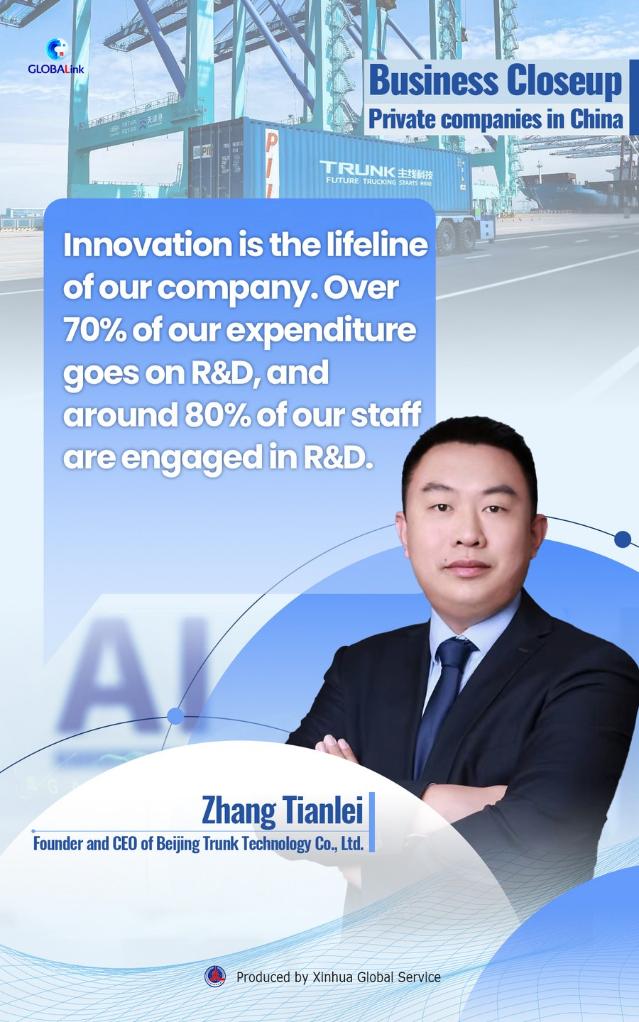
Currently, TRUNK has deployed more than 200 L4 driverless trucks in ports such as Tianjin and Zhoushan, Zhang said, adding that the company’s competitive edge in autonomous driving comes from its extensive investment in research and development (R&D). He added that there are. “More than 70% of his spending is spent on research and development, and about 80% of his staff are engaged in research and development.”
“Innovation is the lifeblood of our company,” Zhang said, adding that government plans and policy support for AI companies have also helped the company prosper. ■