
Estimation of snails by satellite
Early in the project, the research team tried to sketch out schistosomiasis transmission patterns using relatively low-quality satellite imagery. But the maps were too vague to correlate individual pixels with the types of details found in ground surveys.
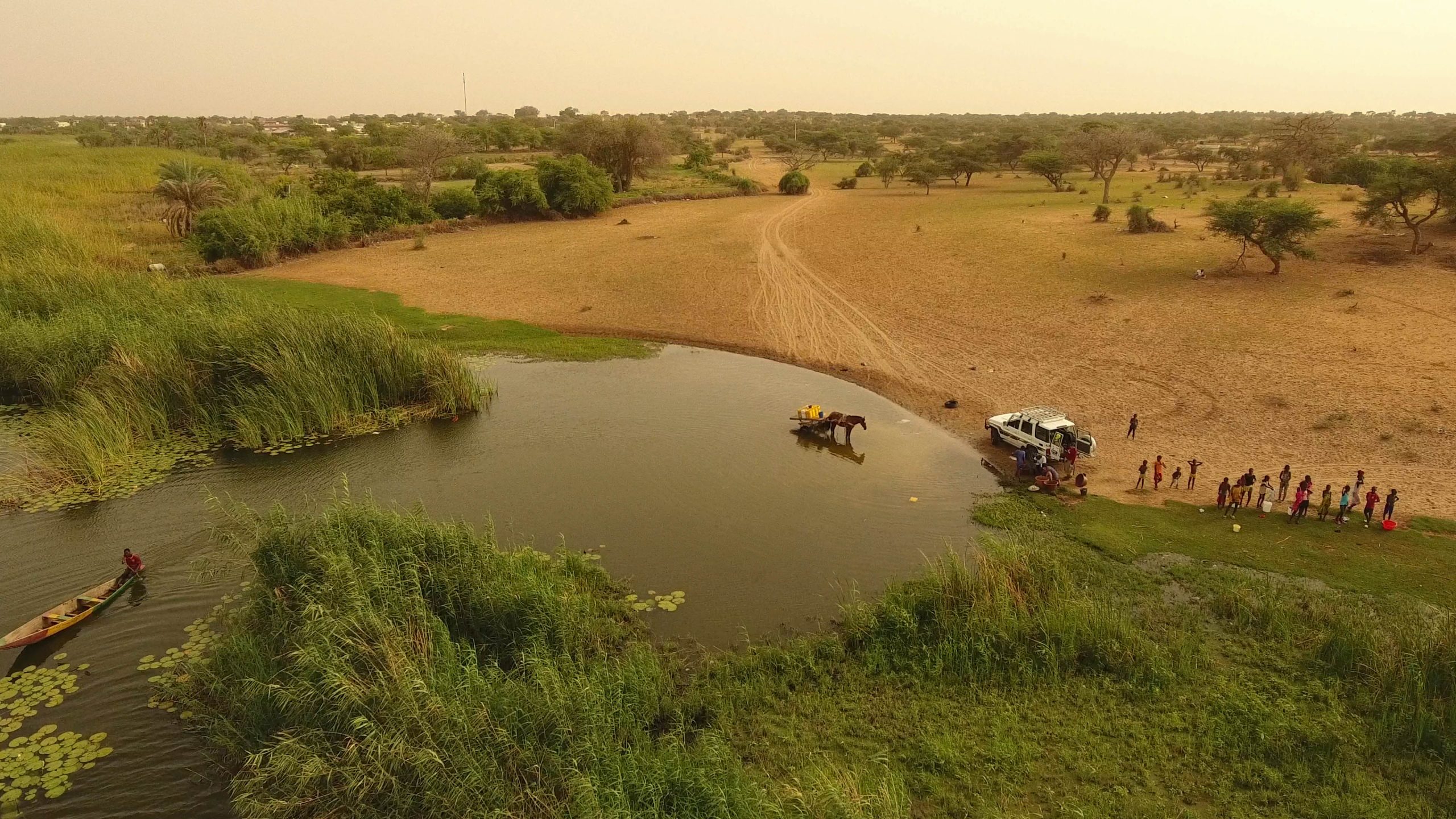
Chamberlin, who has become an expert in applying machine learning to disease ecology, sought to fill this gap by flying mapping missions with drones, capturing high-quality images of water access points that could identify individual vegetation types. Researchers knew that certain vegetation types predicted higher rates of schistosomiasis infection from year to year.
“We were able to extrapolate knowledge from very fine-scale field work to these larger drone images with high accuracy,” says Chamberlin. “We were then able to use it to evaluate satellite imagery over the same period and over a wider area, allowing for more regional-scale analysis and monitoring.”
The linchpin of this research, supported by the first HAI grant, came from Liu and Bauer. It is a set of machine learning tools that stitch together these three streams of information and ultimately provide a complete picture of potential infection hotspots.
Today’s methodologies can be used both to monitor schistosomiasis prevalence in populations and to prioritize public health assistance to populations at risk of infection.

