

Commercial video production teams using early generation tools often encounter frustrating bottlenecks. Producing a consistent campaign video typically requires producing many independent clips of 3-5 seconds in length. Editors then spend additional editing time matching colors, stabilizing movement, and masking awkward transitions to create a unified narrative. This fragmentation hinders the efficiency that generated AI video promises. Brand storytelling requires controlled continuity, reliable asset management, and scalable processes. In modern workflows, Multimodal AI video generator Handle complex visual narratives from start to finish with continuous generation windows and precise creative control. As the native generation lengthens, the fundamental economics of digital campaigns change.
Economics of continuous generation windows
Reliable 30-second AI video capabilities fundamentally change the way producers approach storyboarding, pacing, and budgeting. When creators are limited to short generations, they typically rely on rapid cuts to hide continuity errors. A continuous 30-minute timeline allows for patient camera movements, sustained emotional performances, and establishing shots that properly anchor the viewer in the scene. A standard digital ad spot typically runs for exactly 30 seconds, so native generation directly matches the output to commercial broadcast standards. This continuous format reduces the post-production effort of clip stitching. Editors no longer adjust for slight lighting changes over multiple short generations. The result is a predictable pipeline whose initial output closely mirrors the approved storyboard, leaving you more time to refine your brand’s core message.
Orchestrating multimodal reference stacks
Coordinating brand consistency across commercial sequences requires tight control over characters, environments, and motion dynamics. Modern AI systems support this stability by replacing simple text prompts with robust multimodal reference stacks. very soon Seedance 2.5 AI video model extends the promise of AI video production workflows with planned support for up to 50 simultaneous reference files. A single workflow is expected to handle a carefully allocated mix of up to 44 images, 3 videos, and 3 audio tracks. This allows creators to blend text-to-video, image-to-video, and reference-to-video operations to orchestrate complex scenes. This reference-guided AI video architecture allows teams to explicitly dictate camera language, lock in precise brand aesthetics, and maintain character based on provided assets. Producers can upload photos and lighting references for specific products to tailor the production engine exactly to client expectations.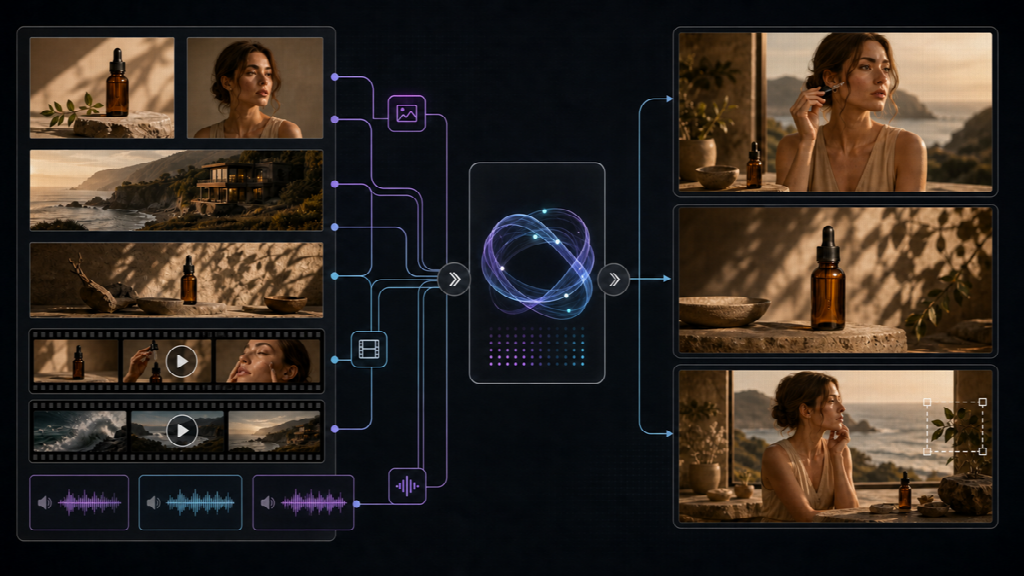
Why high-resolution output is important for post-production
Delivering commercial assets requires strict compliance with broadcast quality standards. move to Native 4K AI video generation It provides essential flexibility for editors during the final finishing stages. High-resolution source files allow post-production teams to hammer out specific product details without compromising visual fidelity. Editors can confidently crop a single wide 4K shot to multiple vertical, square, or horizontal aspect ratios for different social platforms. Crisp output also ensures that downstream processes work with cleaner source files. Color correction algorithms, visual effects workflows, and motion graphics typography all require individual pixels to blend properly. High-fidelity rendering serves as a fundamental requirement for brand video creation processes aiming for a position in the premium market.
Increase efficiency with localized revisions
A costly challenge in early production videos was rigorous revision cycles. Previously, if one element in a generated clip was incorrect, producers had to discard their work and regenerate the entire sequence. Modern production tools include localized editing features that can reduce this inefficiency. Operators apply targeted visual corrections by highlighting specific areas of the frame or selecting precise moments in the timeline. If the background extract moves unnaturally or the product label looks distorted, the author will update only those isolated parts. This surgical approach preserves the approved elements of the shot and maintains its overall temporal consistency. Adjusting specific areas can reduce computational latency and bring the generation workflow closer to traditional studio compositing software.
Commercial applications across the enterprise
These expanded technical capabilities support practical applications throughout the modern enterprise. Agencies leverage multimodal AI video generators to create comprehensive social campaigns and localized product launches at scale. A multilingual creative workflow allows teams to adapt core visual concepts to global markets by exchanging targeted cultural references within the same base scene. The e-commerce team creates dynamic product demonstrations that feature precise environmental styles and different camera angles. Corporate training departments leverage these tools to build engaging instructional content with consistent virtual presenters. This technique also serves as a practical spatial pre-visualization tool in traditional film production. Directors can digitally test complex camera blocks and lighting setups before allocating budget for physical location permits.
Responsible production and brand safety
Professional AI video production still benefits from explicit human oversight. Creative, legal, and compliance teams should review the final output, ensure that reference images, audio, video, trademarks, and likenesses are properly permitted for commercial use, and ensure that all assets adhere to the brand’s visual and messaging standards. These safeguards allow production technology to act as a responsive production engine while experienced creative teams control strategy, quality, and final distribution. This governance also makes it easy to repeat approvals between campaigns. Teams can document asset provenance, assign review ownership, and maintain a clear record of approved references, targeted revisions, and final versions without slowing creative workflows or reducing creative flexibility.
Transition to a controlled production system
The transition from unpredictable clip generation to controlled output marks a substantial maturation point in digital media creation. Enterprise systems are moving from experimental applications to reliable operational utilities as they integrate longer successive generations, high-resolution finishes, and rich multimodal references. Brands and agencies no longer need to adapt their narratives to fit the limitations of short bursts of production. Instead, you can build complete visual stories supported by advanced editing features and targeted revision tools. This evolution allows production teams to spend less time troubleshooting technical constraints and more time improving their campaigns.



