Hanoi Mayor Vu Dai Tan recently signed and announced a plan to implement Politburo Resolution 72-NQ/TW on innovative solutions to strengthen protection, care and improvement of people’s health.
The city aims to introduce AI on a trial basis at three hospitals starting in March 2026. Medical facilities are currently preparing infrastructure and human resources for the introduction.
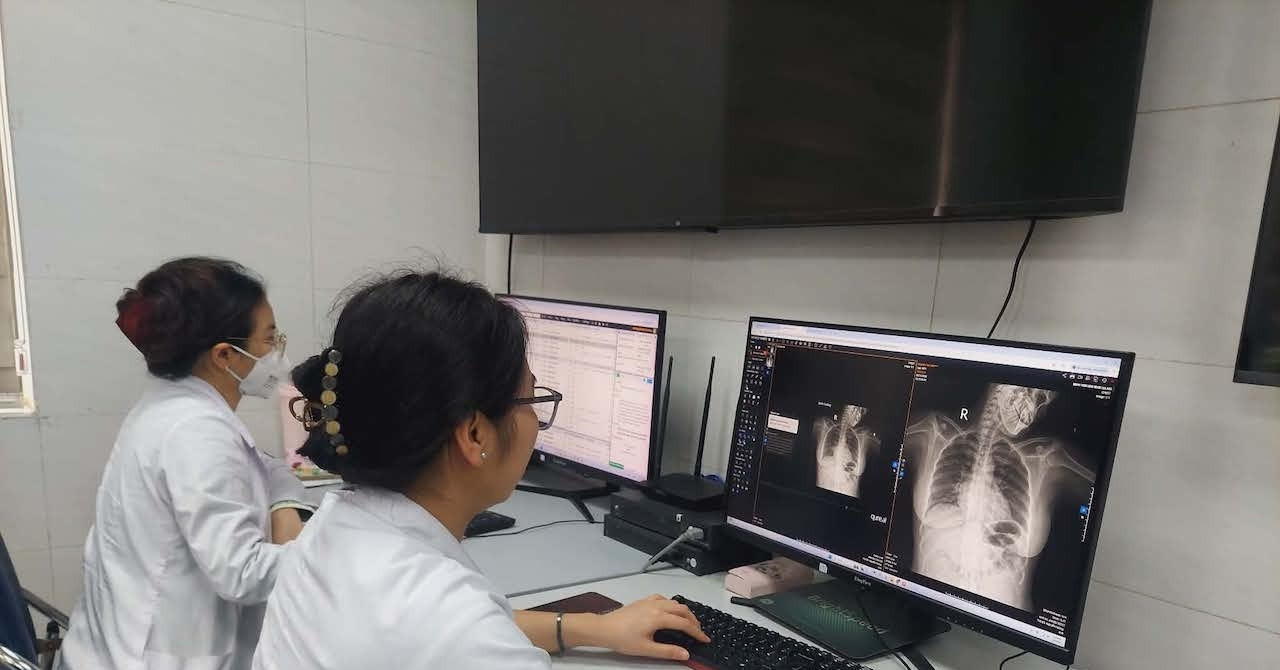
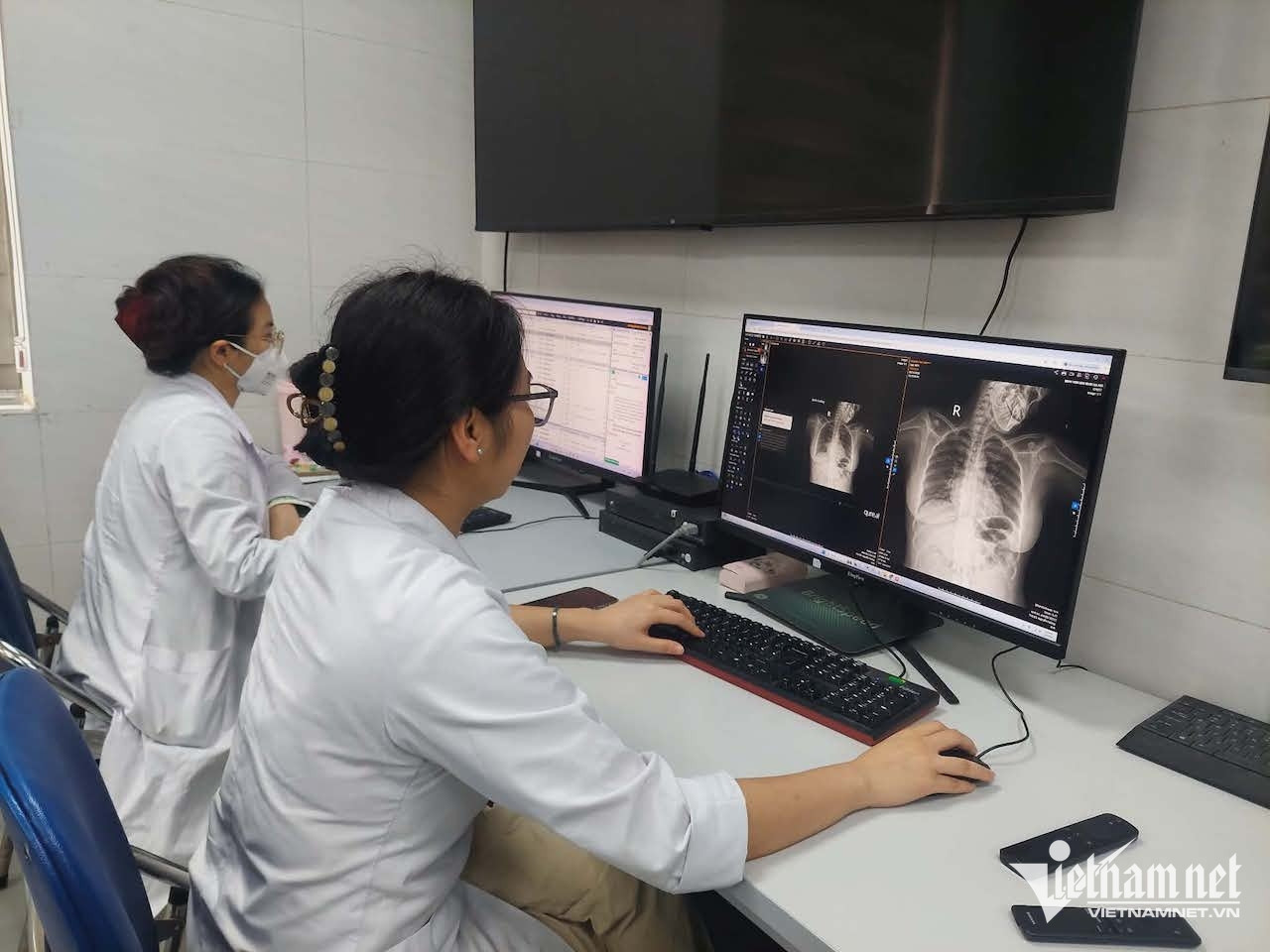
Dr. Do Dinh Tung, director of Duc Giang General Hospital, said AI is expected to be first applied in the field of image diagnosis, supporting the hospital’s X-ray, CT scan and MRI data analysis.
Tung said the AI system has the ability to support early detection of several dangerous conditions, including cancer, stroke, cardiovascular disease, and lung conditions. In the initial phase, the pilot will focus on the diagnostic imaging sector and related specialties to assess the practical effectiveness of AI in helping doctors read and analyze medical images.
Dr. Bo Quoc Hoang, deputy director of the comprehensive planning department at Hanoi Oncology Hospital, said that since 2025, the hospital has used AI software to help read X-ray films, helping analyze about 21,000 cases. Once the imaging results are available, AI records the suspicious lesions as a reference source, helping doctors avoid omissions, especially in lung cancer screening.
In the near future, the hospital plans to expand AI applications in diagnostic imaging such as magnetic resonance imaging (MRI) and computed tomography (CT), as well as support for smart radiation treatment planning. AI can also assist in reading pathology specimens, speeding up the analysis process and reducing the risk of missing details.
Beyond clinical expertise, AI is also being used to manage medical record management, professional regulatory oversight, and issues related to health insurance and medical payments.
“The hospital is also developing an AI chatbot that provides information about medical procedures, test schedules, service prices, treatment processes, and hospital navigation instructions. The chatbot is in the testing phase and will be put into use soon,” Huang said.
Multiple benefits
Medical experts agree that AI in consultation and treatment can bring many benefits to both doctors and patients.
For doctors, AI helps quickly analyze large amounts of medical image data and suggests abnormal signs that may be missed during the film reading process. The technology also serves as a reference tool to help physicians make more accurate clinical decisions.
However, leaders at Duc Giang Hospital stressed that AI would only play a supporting role, and that the final professional decisions would still be made by doctors.
For patients, AI can help detect diseases earlier, improve diagnostic accuracy, and reduce wait times for results. This improves the quality of care and patient experience, especially as hospital patient volumes increase.
During the pilot at the hospital, some initial issues arose, particularly regarding the technology infrastructure.
Hospitals need to have computers configured powerful enough for AI operations. In addition, hospitals need to standardize data and optimize systems to match actual operations. There is no direct revenue stream from this technology yet, so the software, staff, and operating system must be self-funded.
At a recent exhibition, the “Health Station 4.0” model of Dukzan General Hospital received high praise from experts for its digital applications and seamless connectivity between hospitals and primary healthcare facilities.
The highlight of this model is the digitalization of the entire examination and treatment process. Health stations are connected to hospital doctors through telemedicine (telehealth), creating a professional “guidance” mechanism.
Notably, the hospital has piloted the use of unmanned aerial vehicles (UAVs) to transport medicines and biological samples. This is the first hospital in Japan to introduce such an application.
Previously, transportation of test samples and emergency medicines between hospitals and clinics was primarily done by land. In a busy city like Hanoi, this can take 15-30 minutes, and may take longer during peak times.
In contrast, UAVs fly in a straight line regardless of traffic conditions, reducing transportation time to just 5-10 minutes.
Vo Tu