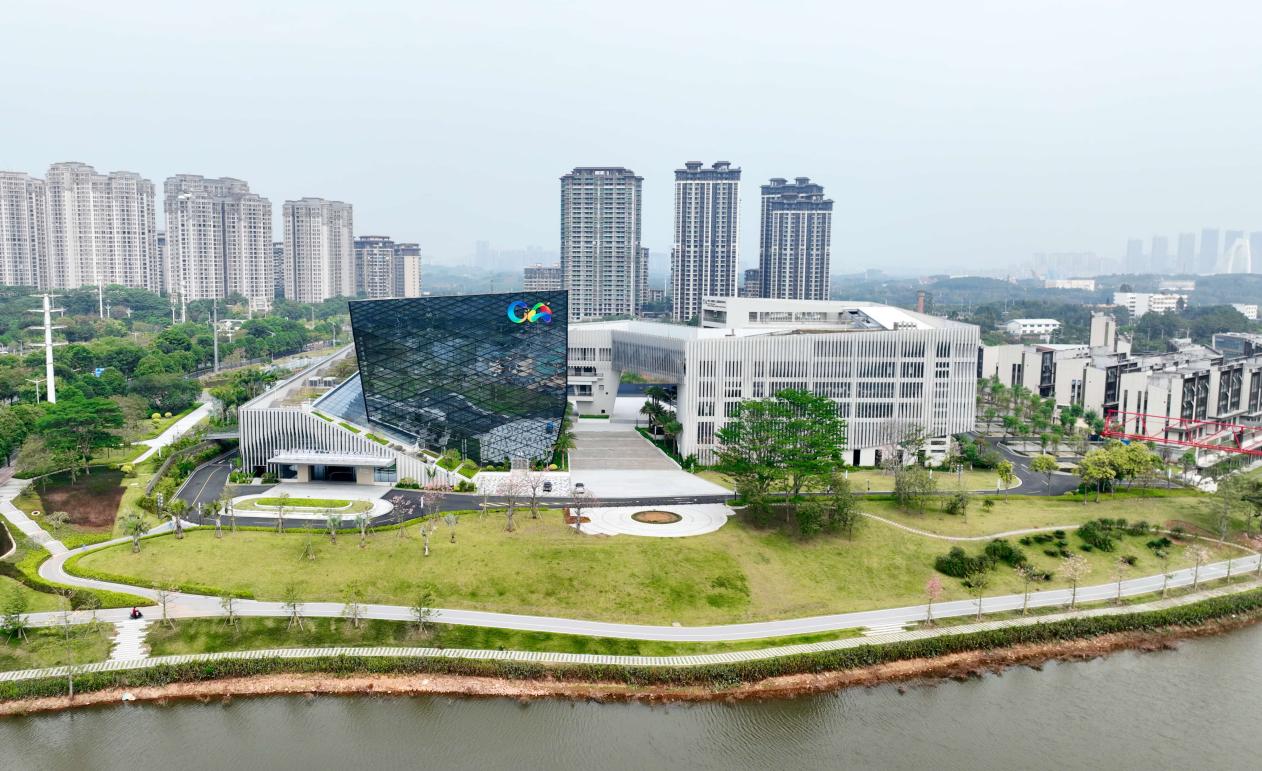
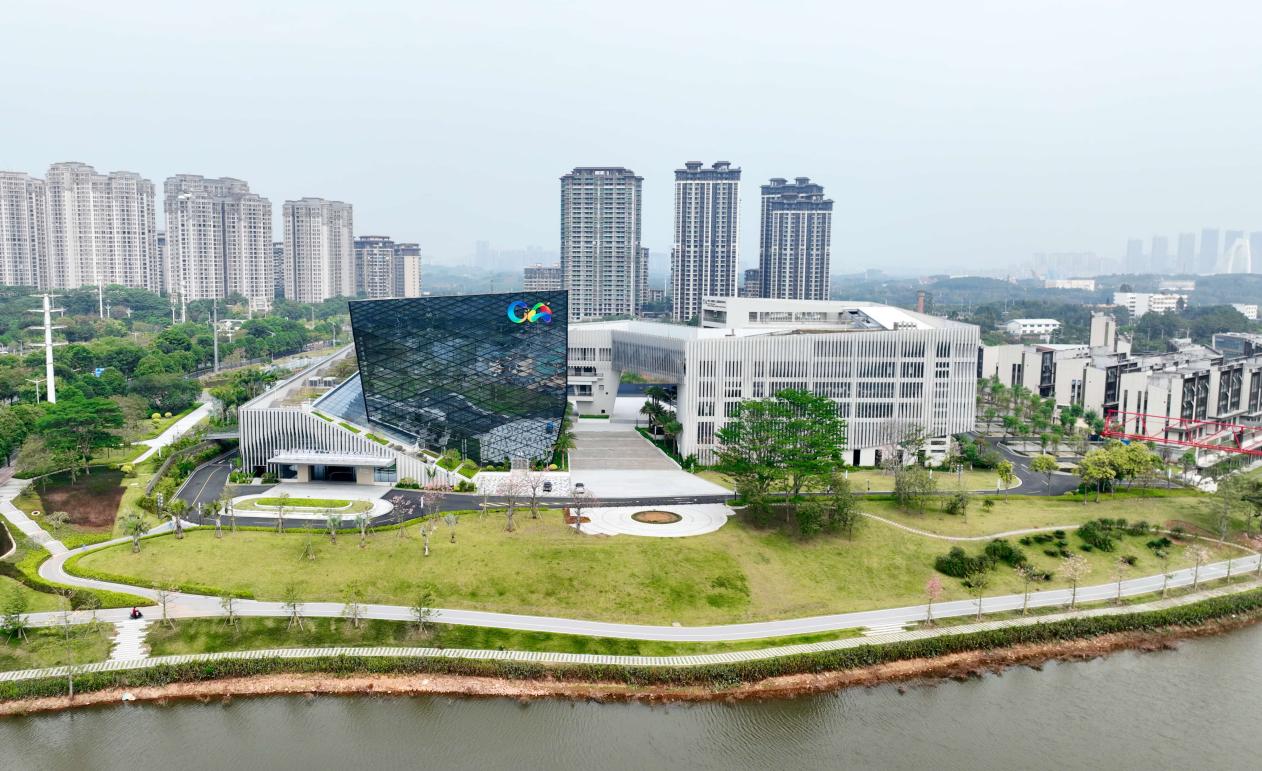
The photo shows the China-ASEAN Artificial Intelligence Application Cooperation Center located in Wuxiang New District, Nanning, the capital of Guangxi Zhuang Autonomous Region. (Photo/Zhang Youhao)
Artificial intelligence (AI) is rapidly reshaping entire industries. Riding this wave, Guangxi Zhuang Autonomous Region, which is China's gateway to ASEAN cooperation, is accelerating the construction of a unique development path that will serve as an important bridge. The idea is to turn AI innovations developed in China's leading technology cities such as Beijing, Shanghai and Guangzhou into practical solutions and channel them into the vast ASEAN market.
In July this year, the Guangxi Zhuang Autonomous Region issued a global call for participation in the “AI for All: China-ASEAN” contest, or “AI Super League.” In just a few months, 10,432 teams from 31 province-level regions in China and 11 ASEAN countries answered the call. Netizens affectionately referred to the competition as the “A League.”
A-League serves as a cooperation platform built by Guangxi for “AI+” companies, researchers, and developers. Focusing on the close integration of AI and key industries, it aims to pool innovation resources, accelerate the commercialization of results, connect capital to projects, and foster emerging AI companies oriented towards the ASEAN market.
Guangxi Zhuang Autonomous Region is the only province-level region in China that shares a land border with ASEAN and also has maritime access. The company enjoys clear advantages in platform, digital connectivity, power and energy supply, ASEAN-oriented computing capacity, and a strong pool of ASEAN-language talent.
Open to participants from China and across ASEAN, the A-League specifically encourages joint teams that include ASEAN partners and has no barriers to entry. There are currently 20 sub-contests in progress. Eighteen tracks, including automotive, e-commerce, and healthcare, have completed their final rounds or roadshows, and the education track is gearing up for the finals. A total of 600 ASEAN teams are participating in various courses.
“Guangxi and ASEAN markets share many similar AI application scenarios and are therefore highly compatible,” said Qi Xiangdong, chairman of QAX, a cybersecurity industry leader and chairman of the A-League review committee. He pointed out that winners who replicate their solutions in Guangxi and ASEAN markets will be able to achieve scalable and widespread commercial success.
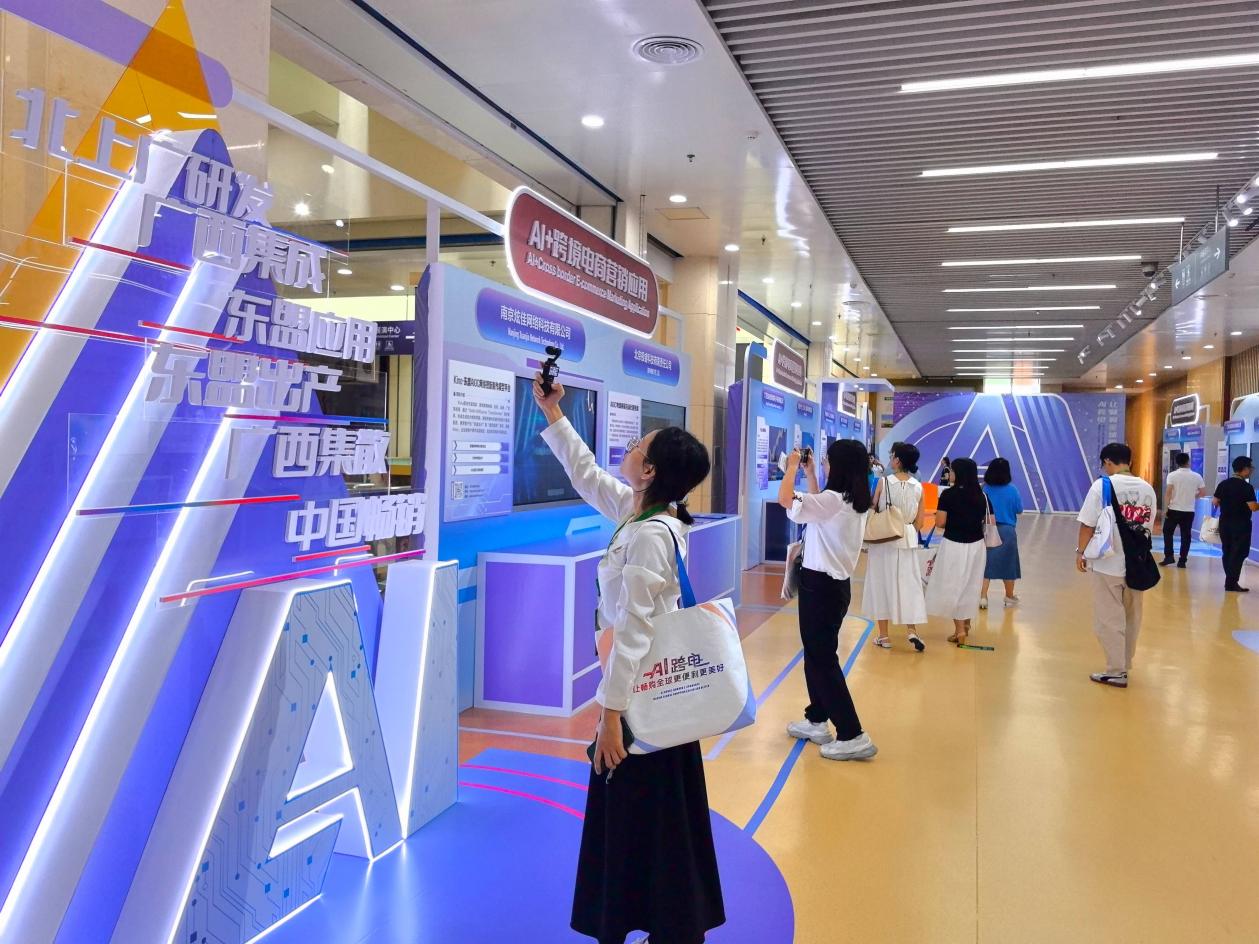
The photo shows the results roadshow of the 2025 ASEAN “AI + Cross-border EC” innovative application competition. (Photo/Fu Huazhou)
Currently, the A-League has evolved beyond a pure technical contest into a major stage for digital cooperation between China and ASEAN. Since its inception, the competition has expanded its open call to ASEAN and actively encouraged the formation of joint teams between Chinese and ASEAN companies.
After practical e-commerce practice and roadshow presentations, a multinational team from Guangxi International Business Vocational College won the second place in the university category of the 2025 “AI+ Cross-border E-commerce” Innovative Application Competition for ASEAN.
The team members from Indonesia were very excited to get off the podium. In preparation, he and his teammates repeatedly tweaked AI tools to make product selection, flavor descriptions, and visual presentations more “ASEAN-friendly” in cross-border livestream sales, ultimately achieving a breakthrough that struck a balance between creativity and practicality.
“It was an unforgettable collaboration,” said the Indonesian student. “I gained a deeper understanding of innovative AI applications in cross-border e-commerce and a deeper understanding of cultural diversity. Through the A-League, I saw great prospects for cooperation between ASEAN and China and a clear path to realize my entrepreneurial dreams.”
On November 28th, the A-League Artificial Intelligence and Radio, Television and Audiovisual Innovative Applications competition reached its final stage. One of the standout products was an AI communication platform designed to overcome language barriers when exporting Chinese short dramas to the ASEAN market. Instantly convert subtitles for over 300 short dramas into ASEAN languages with a simple switch on the interface.
The product was jointly developed by Guangxi Hualibo Cultural Media Co., Ltd. and a Vietnamese company. said Zhao Jing, Marketing Manager of Guangxi Hualibo Culture Media Co., Ltd. “We have built a robust ASEAN language corpus that allows real-time translation of platform interfaces and subtitles in one click.”
Zhao said the platform currently supports Thai, Vietnamese and Indonesian languages, and has already been deployed in Vietnam.
ASEAN is a region with very diverse demands for AI applications. Wen Yonggang, academician of the Singapore Academy of Engineering and executive board member of the A-League review committee, believes that Guangxi can precisely respond to the needs of different countries, establish long-term cooperation mechanisms, and implement customized solutions through specialized tracks, making ASEAN an important market for AI implementation and promoting coordinated regional digital economic development.
Recently, the China-ASEAN Countries Artificial Intelligence Application Cooperation Center was officially approved by the National Development and Reform Commission of China and established in Wuxiang New Area of Nanning, the capital of Guangxi Zhuang Autonomous Region. The center is one of China's two priority national AI application cooperation centers, with 61 projects already underway.
An official from the Wuxiang New Area Administration said that whether Chinese companies are looking to “go global” or ASEAN companies are looking to “enter”, the center will provide close-to-local services in business, legal and resource matching, significantly reducing cross-border business costs.
Looking ahead, Guangxi will continue to promote a development model in which core research and development takes place in China's first-tier cities, with Guangxi responsible for implementation and market-ready integration, and ultimately for deployment in ASEAN.
This will further accelerate the building of a high ground of AI cooperation with ASEAN countries and contribute to building a closer China-ASEAN community with a shared future.
(Web editor: Zhong Wenxing, Liang Jun)