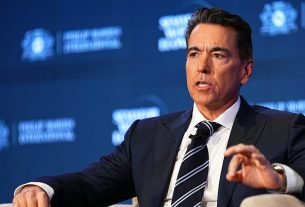
Neel Kashkari, president and CEO of the Federal Reserve Bank of Minneapolis, said Wednesday (January 14) that consumer spending and investment in artificial intelligence (AI) and power infrastructure have kept the U.S. economy strong and expected to continue doing so.
These trends are keeping the economy resilient, Kashkari said in a virtual town hall with the Wisconsin Bankers Association.
“Inflation remains too high. The labor market appears to be cooling slowly, but is more or less flat,” Kashkari said. “It’s good that we haven’t seen many layoffs, but we haven’t seen many hirings recently either. The labor market is rather flat.”
Asked how AI could impact employment, Kashkari said most of the companies he spoke to were using the technology and finding real-world use cases, but it was still in the experimental stage.
He added that so far, companies’ use of AI has not led to layoffs, but it may have led to a slowdown in hiring.
“I think companies are becoming more cautious about hiring because they’re thinking, ‘Let’s not hire a bunch of people we don’t need because we might be more productive. Let’s keep our workforce more or less the way it is to take advantage of AI,'” Kashkari said.
Advertisement: SCROLL TO CONTINUE
Asked about the potential impact of investing in and deploying data centers for AI, Kashkari said local regulators could decide whether energy prices rise and who bears the higher costs.
“If AI produces anything close to the productivity gains that its proponents say, that’s a very good thing for the U.S. economy,” Kashkari said. “So, productivity growth is what drives society’s standard of living and economic competitiveness. So we should want this AI to work. We should want it to lead to improved economic competitiveness for the United States, but obviously the details of how everything is built are important to the community.”
In September, the New York Fed announced that while AI adoption is rapidly progressing among companies in the region, only 1% of service companies are cutting jobs through layoffs, and manufacturing companies are cutting no jobs at all.