
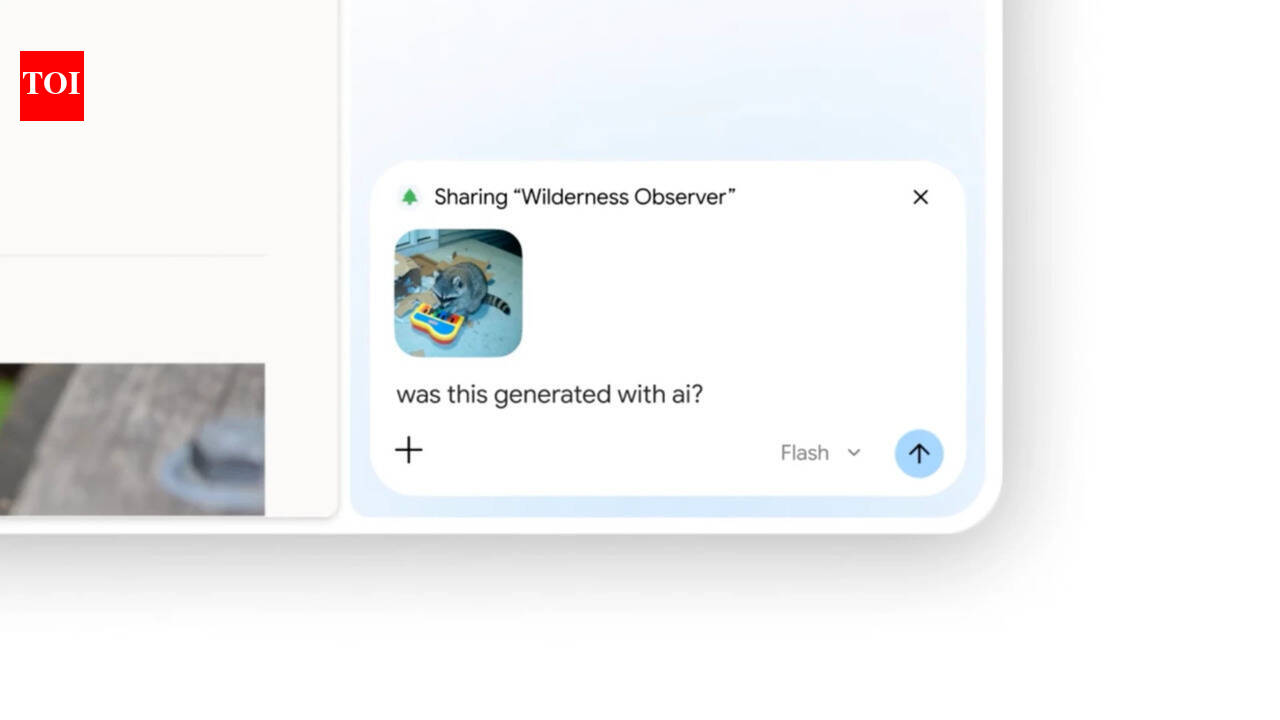
Do you have a suspiciously perfect sunset on your timeline? Ask your Gemini about it. When you upload an image, audio clip, or video, the chatbot will tell you whether it was created from an AI model, modified by AI, or real. It captures provenance data, names the camera or phone that captured it, and lays out all the generative edits in between, including Google Photos tweaks. Google says this check has already been run 50 million times.The same layer is rolling out to search today through Lens, AI mode, and Circle to Search, with Chrome expected to follow in the coming weeks. Hardware is another part. Pixel 10 was the first smartphone to let you tag photos with C2PA content credentials within the native camera app, and that tagging is now available for videos on Pixel 8, 9, and 10.
OpenAI and Eleven Labs sign on to Google’s watermarking system
Behind the Gemini feature is SynthID, Google’s invisible watermarking technology, and an unexpected company is getting in on the action. OpenAI, Eleven Labs, and Kakao have adopted this in their own generation tools. This is the first time that Google’s direct AI rivals have agreed to tag content using a system built by one of their competitors.For OpenAI, the rollout starts with images from ChatGPT, Codex, and APIs. The company is going one step further with its own verification tool, which allows anyone to upload an image and check if it comes from an OpenAI model. It is also now a C2PA compliant generator product. This is essentially a stamp that indicates that the origin signal travels cleanly between platforms that read the standard. Nvidia was the first external partner to watermark videos on Cosmos models earlier this year.Three years later, the numbers behind SynthID have changed rapidly. Google claims it currently has more than 100 billion watermarked images and videos, as well as 60,000 years of audio. The I/O 2025 number was 10 billion files.
Why Google combines SynthID and C2PA
Google also relies on C2PA, the Content Credentials standard backed by Adobe, Microsoft, and others. The two cover different jobs. C2PA tracks where a file was created and what edits were made to it, but SynthID persists for things that C2PA can’t do, such as screenshots, format changes, and re-uploads that remove metadata.Meta also joins the same side. Instagram will start labeling photos and videos taken with its camera with content credentials. This means that shots taken with a Pixel will end up in your feed with an origin tag still attached. Google releases AI content detection API on Gemini Enterprise Agent Platform for enterprises. It is built for cases where flagging AI media at scale is important, such as insurance fraud checks and platform-level moderation.The reason is simple. AI video and audio are too convincing to the eye alone. Google’s argument is that the fixes won’t come from one company. The entire web should be available for inspection.


