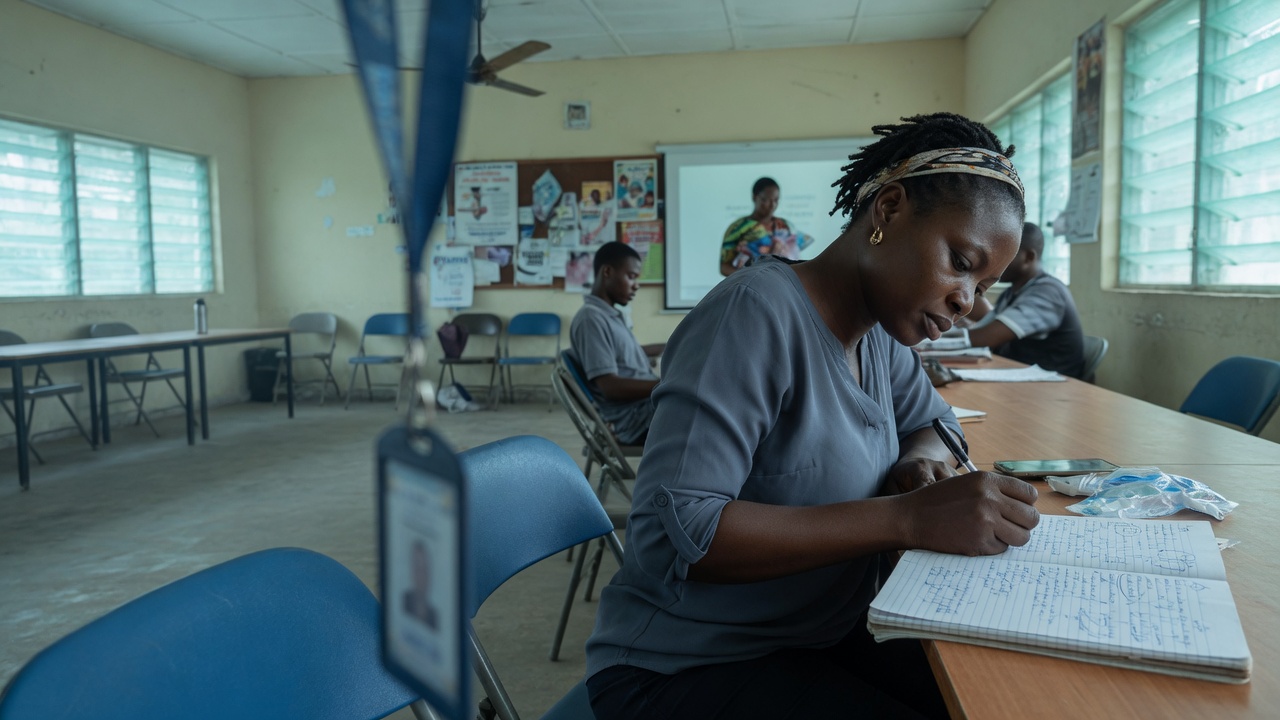
Applications for the Google Africa Applied AI Lab will be open to African startup founders and researchers from July 1 to August 31, 2026. To participate, confirm your status as a full-time founder or top researcher with an idea that has a big impact on Africa, prepare your application, and submit it by the deadline via the official Google Form.
The program, held at the Accra AI Community Center in Ghana, offers early access to Google DeepMind models such as Gemini, Gemma, and Veo, as well as mentorship and go-to-market support, but requires an in-person demo day and a commitment to substantive use of the AI tools provided.
Program overview and goals
The Google Africa Applied AI Lab will serve as a platform designed to commercialize AI solutions that address the unique challenges of the African continent. It operates from the Accra AI Community Center and welcomes participants from different countries across Africa to collaborate on innovative projects.
The main goal is to foster the development of Africa’s first AI-native unicorn startups, focusing on technologies that solve local problems in a meaningful way. This includes collaborating with Google Research and other teams to refine and scale up ideas into viable products.
The program aims to bridge the gap between initial concepts and market-ready applications by providing structured support. It targets areas where AI can create significant economic and social value within African markets.
While this initiative focuses on high-impact outcomes, there is no automatic funding or guarantee of success. Some participants may be eligible for additional resources from the Google AI Futures Fund or partner VCs, but this will depend on the merits and progress of their individual projects.
Success criteria for this program include the ability to effectively integrate AI tools and provide a clear path to commercialization. Restrictions include the need to physically attend important events, which can be a challenge for people far from Ghana.
Conditional examples include founders in Nigeria who are working on AI solutions to supply chain problems in their future work themes, with support for prototyping and testing with local data. Typical mistakes include underestimating the need for a strong execution plan or assuming that the program is only for established teams.
Important dates and timelines
The application period for the Google Africa Applied AI Lab is from July 1, 2026 to August 31, 2026. This period will allow sufficient time to prepare and submit the required forms.
Notification of selected applicants will begin in September 2026, followed by a collaborative development period from mid-September to early December. The program will conclude with an in-person product demo day at the Accra AI Community Center in early December.
Applicants should act quickly, as the window closes on August 31, 2026, and submissions will not be accepted after the deadline. The timeline is fixed based on official announcements and any changes will be communicated through the program page.
Timing standards include making sure all materials are prepared well in advance to avoid last-minute issues. Restrictions include fixed dates, which may conflict with other commitments for some applicants.
Practical steps include marking deadlines on your calendar and starting your application early. A typical mistake is to wait until the last day and end up with an incomplete submission.
Eligibility criteria

The Google Africa Applied AI Lab is open to current full-time founders and top researchers who are planning to become startup founders. Ideas must demonstrate the potential to have a significant impact across Africa, and projects at pre-seed to Series A stages that demonstrate traction will be prioritized, although strong concepts at any stage will be considered if they include a solid plan.
Evaluators will review team composition and technical proficiency, but applicants do not need co-founders or an entire team to qualify. People with a clear implementation strategy can apply based on their abilities and vision.
The program accepts submissions from founders and researchers from across the African continent. However, selected participants must arrange travel to Ghana for the mandatory in-person demo day, creating a practical barrier for participants in remote areas.
Criteria include alignment with investment focus areas and evidence of how ideas produce meaningful results. The limitations are that you must commit to all timelines once you make your selections, and there is no option to attend the demo day remotely.
A conditional example would be a Kenyan researcher developing AI tools for local education challenges applying as an individual with a detailed impact plan. Typical mistakes include applying without confirming full-time status or submitting an idea that lacks a clear link to Africa.
Focus areas and themes
Google Africa Applied AI Lab is working towards five technology futures: the future of work, the future of knowledge, the future of software development, the future of creativity, and the future of entertainment. Project ideas must have direct links to these areas to address specific gaps and challenges in the African context.
Coordination with one or more of these futures will demonstrate relevance to the program’s joint development goals and strengthen the application. Applicants can frame their solutions around these themes during preparation and demonstrate how their work fits into the overall direction.
Criteria for theme selection include identifying how the idea addresses important local issues within the chosen future. The program prioritizes projects that match defined scopes, so if your ideas fall outside of these areas, you’ll be limited.
Practical steps include reviewing each future and mapping the proposed solutions to at least one. A typical mistake is choosing a theme without explaining its relevance to African challenges within the application.
Benefits and support offered
Selected participants will have early access to Google DeepMind models such as Gemini, Gemma, and Veo. This access comes with hands-on technical guidance and go-to-market assistance from the Google team.
Additional support is provided through venture capital partners including 4DX Ventures, Norsken22, Novastar Ventures, and Ventures Platform. Customized guidance helps teams move AI projects toward commercialization through customized sessions.
The exact scope of involvement will vary from team to team, but the emphasis will be on the practical application of the resources provided. Some companies are eligible for funding, but it is separate from core participation and depends on the progress of the project.
Criteria for receiving benefits include active involvement during the joint development phase. Limitations include the customized nature of support. That is, not all participants receive the same resources or outcomes.
Conditional examples include teams receiving model access to build prototypes in future creativity areas while receiving guidance on scaling. Typical mistakes include expecting guaranteed funds or assuming that all benefits apply equally to all participants.
promises and requirements
Participants agree to apply Google AI models in ways that have a material impact, although the use of other tools is still permitted. Attending an in-person product demo day at the Accra AI Community Center in early December will be a key requirement for all selected teams.
The co-development phase will last from mid-September to early December and will include customized sessions. Participation in the program is easy as ownership of shares is not required.
Criteria for delivering on the promise include consistent use of models and preparation of Demo Day presentations. Restrictions include fixed in-person requirements, which may increase travel and accommodation costs.
Practical steps include planning your travel budget early and outlining how to use the model in your project. Typical mistakes are overlooking material usage requirements or assuming remote options exist on demo day.
Step-by-step application process

First, visit the official program page, find and open the Google Form for submission. Before initiating the form, gather details about the background of the founder or researcher, the stage of the project, and the intended impact.
Enter information about your ideas, alignment with the five technological futures, and plans to use available AI models. Please check all entries for accuracy and completeness before submitting.
Please submit your completed form by August 31, 2026. This process evaluates applications against the program’s investment focus areas, so clear and relevant answers increase your chances of being considered.
Criteria for a strong application include specific details about technical proficiency and execution plans. There are limitations, such as not being able to edit the form after submission, so careful preparation is required in advance.
Practical steps include first drafting your response in a separate document and verifying all the facts against official standards. A typical mistake is to provide vague explanations of ideas and impacts without providing concrete examples of how to address Africa’s challenges.
Post-application processing
Submitted works will be reviewed with a focus on alignment with program priorities and the strength of the proposed ideas. Selected applicants will receive notification from September 2026 onwards and will move on to the co-development phase.
Applicants who are not selected will receive a standard notification without individual feedback. A structured timeline supports preparation while the application window is open.
Selection criteria include how well the submission aligns with the designated focus areas and readiness for support. Limitations include the lack of detailed feedback for unsuccessful applicants, which precludes specific improvement insights.
Practical steps include monitoring email notifications and preparing a contingency plan regardless of the outcome. Typical mistakes are assuming that all applicants will receive individual responses or expecting immediate results outside of the established September schedule.
Tips for first-time applicants
Highlight the specific African challenge your idea addresses and outline the potential for measurable impact in your application. Demonstrate technical proficiency and existing traction to meet assessment criteria.
Frame your project within five technological futures and illustrate the intended material use of Google AI models. Prepare supporting details for your execution plan even if you don’t have a full team.
Please submit well in advance of the August 31, 2026 deadline and cross-reference all program information directly from official sources to ensure alignment with current requirements. Criteria for success include a thorough self-assessment of qualifications before beginning the form.
Limitations include the competitive nature of the process, where a strong idea alone does not guarantee selection. Practical steps include soliciting feedback on your draft application from colleagues familiar with AI projects.
Typical mistakes are submitting without validating the feasibility of a Demo Day trip or not explicitly tying the idea to one of the five futures in your answer.