The field of AI has exploded in recent years as maturing algorithms and technologies harness vast computing power and endless seas of raw data. Perhaps the most interesting development is the emergence of generative AI models that synthesize data to generate new content in unprecedented ways.
Generative AI is getting a lot of attention from writers and artists, but it also offers exciting applications in IT and DevOps workflows. However, despite the potential uses of generative AI in software development and IT operations, there are drawbacks that organizations looking to adopt generative AI should consider.
What is generative AI and how does it work?
Before the rise of generative AI, many AI systems were intended for data analysis and data-driven decision making, such as predictive analytics and business forecasting. Generative AI models go one step further, generating new content such as text, video, code, and images based on training data in response to user queries.
Generative AI uses complex machine learning constructs known as neural networks to identify patterns and structures in training data and apply that learning to create output. For example, a generative AI system trained on images of any known Picasso painting can generate new images in Picasso’s style.
AI models are the actual algorithms that process and analyze the ingested data. Software applications can use AI models to generate output at the user’s request. For example, OpenAI’s ChatGPT chatbot relies on a model known as GPT.
Generative Adversarial Networks and Transformers
Generative Adversarial Networks (GANs) are the most popular neural network framework used in generative AI. GAN has his two component models: generator and discriminator.
Generators create new data based on the characteristics, patterns, and structure of the training data, which are evaluated by discriminators. This process can be automatic, using a reward system that automatically reinforces the generator’s behavior if the output is good enough to pass the real thing, or it can be done using feedback and ratings from human users. You can also do it manually telling the AI if it was good or not. correct.
In fact, the discriminator provides feedback to the generator, allowing it to produce better outputs in the future. This is a process known as tuning. This competitive and adversarial behavior gives generative AI a distinct ability to “learn” over time.
In addition to GANs, generative AI can also use transformers, programs or algorithms that process sequences of data instead of individual data points. Transformers are often used to manipulate text because they can effectively transform natural language requests from a user into executable computer-based commands.
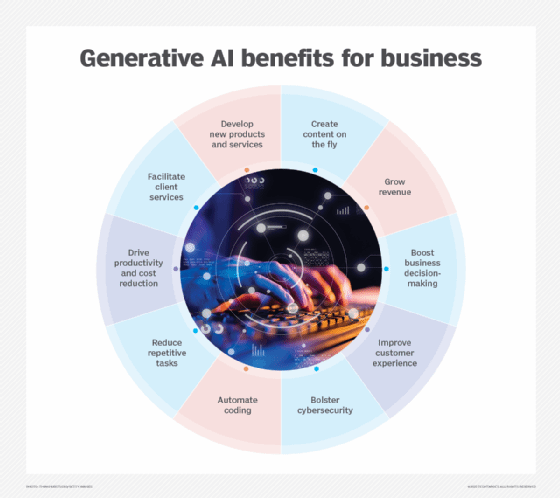
Use Cases for Generative AI in IT Operations
Applications such as ChatGPT and Dall-E are attracting attention in fields such as entertainment, finance, healthcare, and manufacturing, but the use of generative AI is also progressing in IT operations.
process automation. Generative AI can learn what you need for common processes and workflows and automate many repetitive business tasks, such as ensuring compliance and data integrity. In some cases, generative AI might even be able to fix such issues with minimal human intervention.
Risk assessment and management. Like other types of AI, generative AI analyzes vast amounts of data collected from across your IT infrastructure to find patterns and uses that data to identify potential threats such as security vulnerabilities or imminent system failures. You can identify risks. While predictive AI is focused on reporting, generative AI systems can also suggest and implement fixes for such issues.
Infrastructure optimization. Generative AI can learn to observe well-running infrastructure and identify potential improvements in system and network configurations, such as finding bottlenecks due to long system latency. AI systems troubleshoot issues, offer suggestions for remediation, and implement changes automatically.
reports and interfaces. Generative AI can synthesize text and create explanations based on data, making it a natural addition to IT reporting platforms. IT administrators can use text or voice prompts to execute specified natural language queries against the generated AI system. For example, instead of manually finding and changing system configuration settings, administrators can ask AI tools to perform tasks and make necessary updates in their organization’s change management system.
Use Cases for Generative AI in DevOps
Generative AI platforms such as ChatGPT are already known for their ability to generate text containing software code. As a result, generative AI is expected to play an increasing role in different stages of the DevOps lifecycle.
code generation. Generative AI, trained on code examples, can learn a vast amount of programming techniques to help your team develop software. AI-assisted software development includes tasks ranging from simple code completion, such as suggesting how to complete a line or block of code, to creating routines or entire programs based on detailed user requests.
Generating tests. Generative AI excels at synthesizing data and generating text, making it a natural choice when creating data and test cases as part of software testing. Additionally, AI systems can run these tests and report test results. Generative AI tools can also identify defects and provide suggestions for fixing and optimizing your code based on test results.
Bug fixes. Generative AI models can analyze bugs in human- and AI-authored code and suggest fixes. This improves software quality by reducing errors and ensuring adherence to organizational coding standards.
Automatic deployment. Once code passes tests, DevOps teams can automatically deploy code using generative AI as part of a workflow or process automation. Generative AI tools can also optimize workload placement and connect equipment for workload monitoring and KPI data collection.
Drawbacks of Generative AI in DevOps and IT
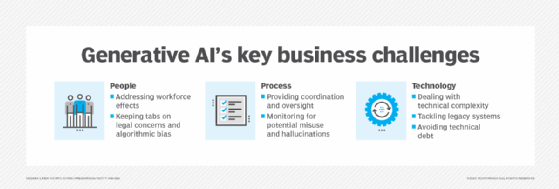
Despite its potential and promise, generative AI currently has significant limitations for IT and DevOps that can be a barrier to adoption in many organizations.
significant time and financial investment
Generative AI models require huge amounts of training data. Adopting generative AI for companies can require significant investments in data, both in the initial training phase of models and in ongoing (often supervised) retraining and refinement .
For example, an AI system intended to help run IT infrastructure requires good knowledge of the infrastructure and its configuration. This includes not only what your system looks like when it is working properly, but also a thorough understanding of potential problems and how to deal with them. Similarly, an AI system intended to assist in the creation of code within an enterprise requires comprehensive knowledge of the code written and validated by the organization for similar purposes.
Limited knowledge of AI systems
No matter how much input the AI receives during training, the system will eventually only know what it has been taught. Models take time to absorb changes, and dynamic IT environments can change too quickly for AI to respond to configuration changes and unexpected situations in time.
For IT operations workflows, this means that AI systems need access to accurate historical and current data on an organization’s IT environment. Similarly, in terms of software development and deployment, useful AI models require data on modern, well-tested coding processes and workflows.
Uncertainty about accuracy of AI output
Generative AI systems cannot assess training data quality or response accuracy based on context. This can lead to performance, security, and ethics issues that require human intervention.
For example, an AI tool that responds to an issue in an organization’s IT infrastructure may decide that the response is correct if the issue is resolved, but the system’s response is working but not compliant with regulatory requirements. may not. Similarly, AI-generated code is not always efficient, interoperable, or even functional for its intended purpose.
Possible copyright infringement
Especially for generative AI models trained on large datasets, it becomes difficult or impossible to determine the extent to which model outputs are based on copyrighted or otherwise protected intellectual property You may. As a result, organizations looking to adopt generative AI risk facing legal issues and associated costs.
If a user asks an AI image generator such as Midjourney or Stable Diffusion to generate a mountain scene, some of the output may be based on copyrighted images used to train the AI. Commercially selling AI-generated images can raise licensing issues, even if they are deemed acceptable for internal or proof-of-concept use.
This is a similar problem in code writing. When AI code generators are trained on vast amounts of open source or commercial code, using their output can impose licensing restrictions and other legal issues. Companies are finally starting to think about this issue. It remains unclear what kind of license is required to use the code to train an AI model, as we know that the code may later provide information to the model’s output.