
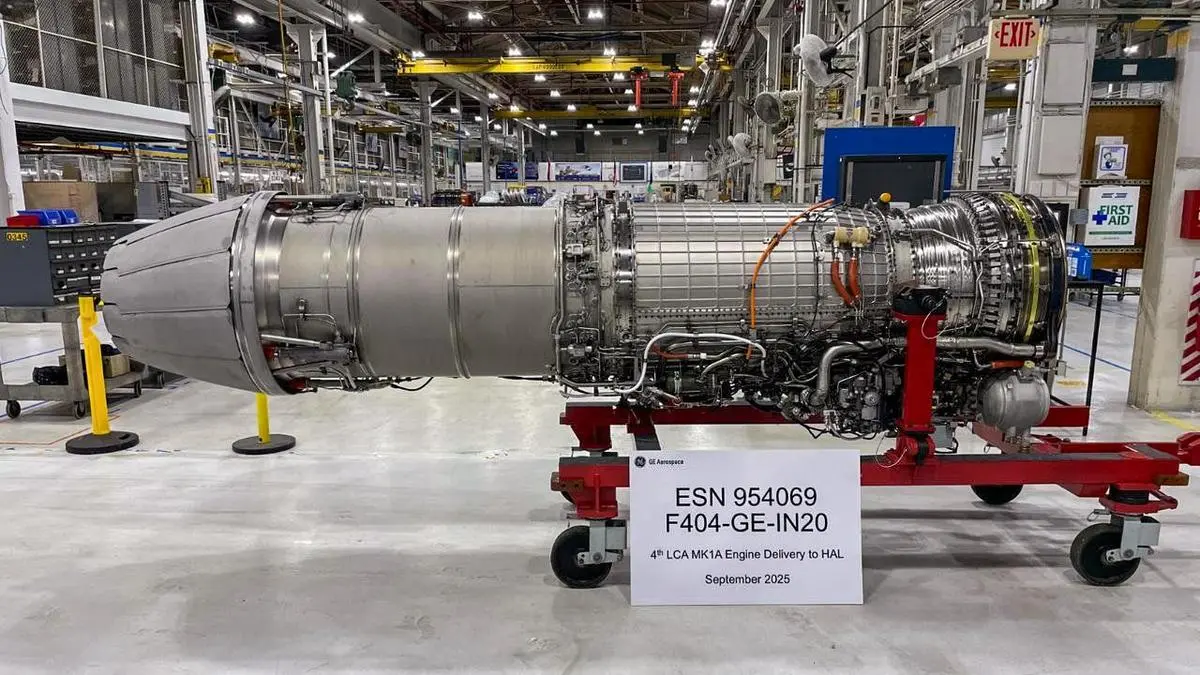
GE Aerospace has moved artificial intelligence from a pilot project to its core business, delivering measurable gains in efficiency and productivity, said Dinakar Deshmukh, the company’s executive director of data science and AI.
The company used a machine learning-driven engine monitoring system to reduce false positives by more than 50% and improve lead times by more than 60%.
“These algorithms detect anomalies that are very difficult for humans to detect. Their impact is very direct and significant on how commercial engines are monitored,” Deshmukh said.
Although generative AI is still in its infancy, it is beginning to show tangible results. “We’re still learning when it comes to generative AI and we’re not quite there yet,” he said, adding, “We already have generative AI applications in production that are driving real business outcomes.” The company has achieved productivity gains of 20-25% in areas such as software development.
GE Aerospace, which has approximately 57,000 employees worldwide, is increasing its AI efforts in India. Of the approximately 2,500 total employees in India, more than 50% of the AI team is based in Bangalore.
Deshmukh emphasized that the company is being selective in its AI implementation. “We’re not trying to apply AI everywhere. We’re focusing on operations that are important to business performance,” he said. “We identify complex areas where efficiency can be improved and target them with AI.”
The company has stepped up its investment in this area, increasing its AI spending by 2.5 to 3 times over the past two and a half years. However, execution at scale remains a key challenge. “Scaling up from proof of concept to production is the most difficult part and that’s where we focus,” he said, adding that GE is combining lean operating principles with AI to enable solutions to scale effectively.
“Our approach is to define the model by the problem, not the other way around,” he added.
Published April 12, 2026


