- The Federal Trade Commission has expanded its antitrust investigation to include Microsoft’s cloud, enterprise software and AI practices, and issued new investigation requests to its competitors.
- Regulators are scrutinizing areas such as software bundling, the market power of cloud services and how AI products are integrated across Microsoft’s product suite.
- Microsoft (NasdaqGS:MSFT) is accelerating the development of its own AI-based models, with help from third-party companies like Anthropic and Mistral.
- These changes are unfolding as U.S. officials emphasize heightened national security and intellectual property risks related to potential AI technology leaks, including to China.
For investors looking at NasdaqGS:MSFT, it sits at the intersection of cloud, productivity software, and AI, which are central to Microsoft’s business profile. While the regulatory focus on bundling and market impact impacts well-known products such as cloud infrastructure and enterprise subscriptions, the push into in-house AI models reflects how integral AI has become to those products.
Over time, the parallel efforts of antitrust oversight and AI independence could impact how Microsoft prices, packages, and develops its services. An increased focus on geopolitical and national security also means that AI decisions may increasingly be shaped by policy considerations as well as commercial objectives.
Stay up to date with the most important news stories about Microsoft by adding Microsoft to your Watchlist or Portfolio. Or explore our community and discover new perspectives on Microsoft.
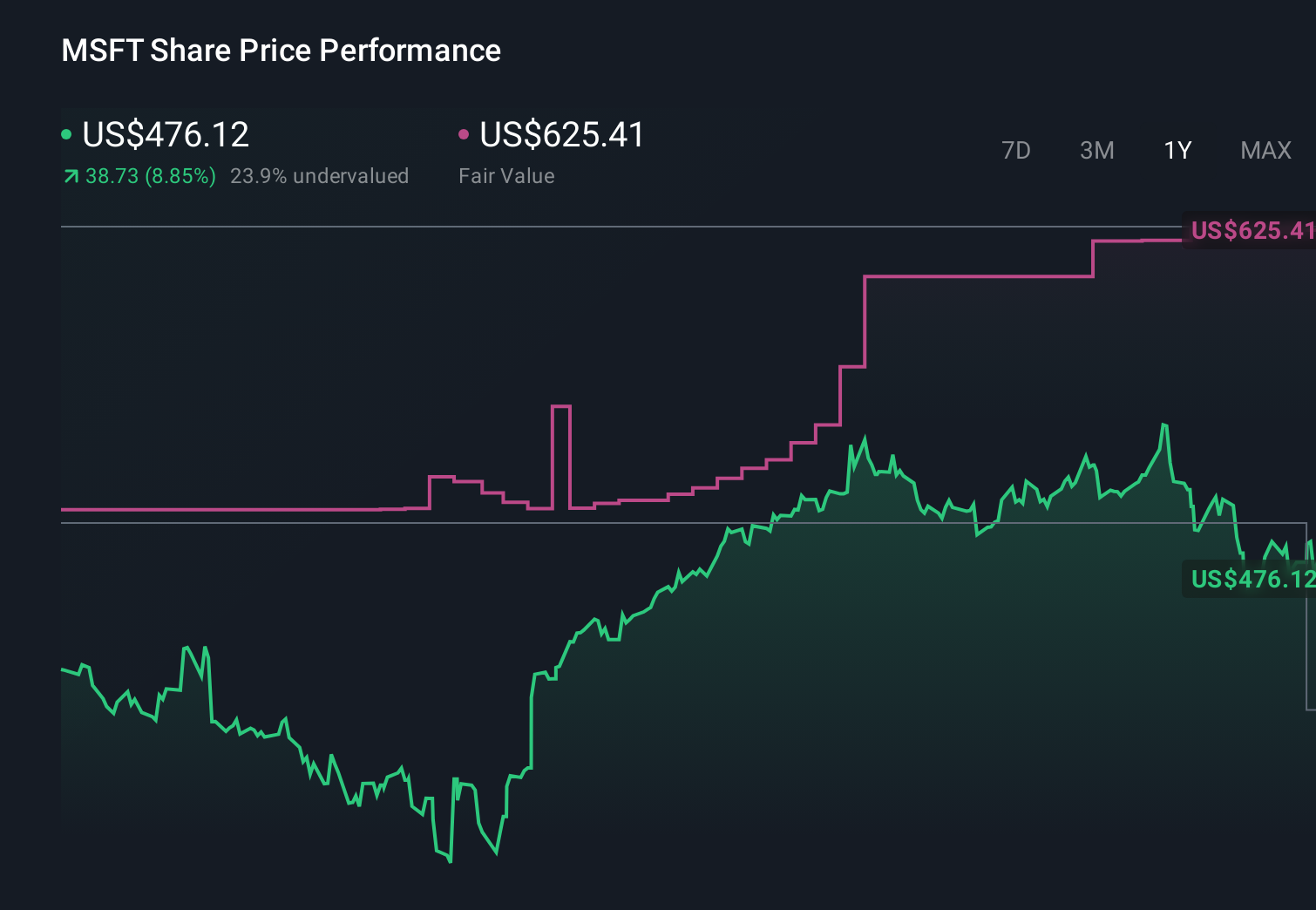
Is Microsoft’s balance sheet strong enough to withstand future acquisitions? Let’s take a closer look at our detailed financial health analysis.
The FTC’s expanded antitrust investigation focuses directly on how Microsoft builds and sells its most important businesses, particularly its AI-powered tools such as Azure, Microsoft 365, and Copilot. Regulators have questioned whether bundling security, AI, and productivity features into an all-in-one subscription will make it harder for competitors like Amazon, Google, and Salesforce to compete, and whether Microsoft’s control of cloud infrastructure gives it an unfair advantage in supporting model providers like OpenAI, Anthropic, and Mistral. At the same time, U.S. national security concerns about AI technology leaks, including from China, are drawing Microsoft into a stricter regulatory framework around export controls, data storage, and model access, which could impact how the company deploys its AI capabilities globally and builds its sovereign cloud products.
How does this fit into Microsoft’s story?
- The focus on bundling and the power of the cloud market ties directly into the narrative that the integration of Azure and AI will drive new high-margin revenue streams. Because these same integrated services are what regulators are evaluating for potential market abuse.
- Pressure from the FTC regarding licensing, packaging, or exclusive AI partnerships could call into question the assumption that Microsoft can continue to expand AI and cloud while maintaining stable profit margins, especially given analyst concerns about its already high capital expenditures and capital intensity.
- The growing geopolitical and national security scrutiny surrounding AI exports and sovereign clouds, which are central to partnerships such as Capgemini’s sovereign cloud business, are not fully captured in narrative discussions around execution and capacity risks.
Understanding a company’s value starts with understanding its story. Check out one of Simply Wall St Community for Microsoft’s top narratives and decide what it’s worth to you.
Risks and rewards investors should consider
- ⚠️ As FTC scrutiny expands, fines, license changes, or bundling restrictions could impact the economics of Azure, Microsoft 365, and Copilot, especially as competitors like Amazon, Google, and Oracle push their own cloud and AI stacks.
- ⚠️ Geopolitical and national security concerns regarding AI exports and data flows may complicate regulations and delay or restrict AI-driven cloud transactions in regions sensitive to sovereignty and cross-border data management.
- 🎁 The same AI and cloud integration that regulators are considering also underpins Microsoft’s large remaining performance obligations and partnerships with companies like OpenAI and Anthropic, which many analysts see as a key factor driving cloud and software demand over the long term.
- 🎁 Working with partners like Capgemini on sovereign cloud and compliance-focused products, Microsoft may be in a position to address tougher regulatory expectations and support clients who require tighter control over data, resiliency, and AI workloads.
Future points of interest
The key things to follow from here are how the FTC investigation progresses, whether formal charges or settlements emerge, and whether Microsoft adjusts the pricing and bundling of its cloud and AI services accordingly. Investors can also watch for changes in the structure of AI partnerships, particularly with OpenAI, Anthropic, and Mistral, as regulators and lawmakers push for exclusivity, access, and data protection. On the geopolitical side, new rules on AI exports, data center power usage, or sovereign cloud requirements in regions such as Europe and Asia could impact where and how quickly Microsoft deploys capital for data center and GPU capacity.
To stay on top of how the latest news impacts Microsoft’s investment story, visit our community page to stay up to date on key community stories.
This article by Simply Wall St is general in nature. We provide commentary using only unbiased methodologies, based on historical data and analyst forecasts, and articles are not intended to be financial advice. This is not a recommendation to buy or sell any stock, and does not take into account your objectives or financial situation. We aim to provide long-term, focused analysis based on fundamental data. Note that our analysis may not factor in the latest announcements or qualitative material from price-sensitive companies. Simply Wall St has no position in any stocks mentioned.
new: Manage all your stock portfolios in one place
What we created is The ultimate portfolio companion For stock investors, And it’s free.
• Connect an unlimited number of portfolios and see the total in one currency
• Alert you to new warning signs and risks via email or mobile phone
• Track the fair value of stocks
Try our demo portfolio for free
Do you have feedback on this article? Interested in its content? Please contact us directly. Alternatively, email editorial-team@simplywallst.com.