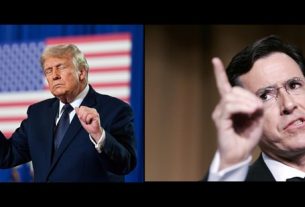
There are several ways to identify when content has been manipulated. Attention to detail is important.
The constant flood of information on social media makes it difficult to determine what is true and what is not. The recent boom in artificial intelligence (AI) has made that trend even stronger.
New generative AI tools such as DALL-E and Mid Journey Virtually anyone can now easily create imaginary but plausible scenarios.
This trend has given rise to so-called deepfakes. This is a video or image that convincingly portrays someone in a fake scenario.
The effects of this technology range from humorous and silly to political smear campaigns and non-consensual sexual content.
It’s important to know how to spot deepfakes to avoid misinformation and propaganda when they’re so real yet so easy to fake even the visuals.
Note the strange details
It’s important to always analyze image details and note discrepancies when you feel something isn’t right.
Manipulated images usually lack realistic representations of lighting, and hands are often digitally damaged. So if it looks more like a painting than a real image, it’s probably fake.
For example, Donald Trump recently shared an image of himself kneeling in the direct spotlight.
However, if you look closely at this image, you can see that the AI image generator was praying with his hands clasped. One finger is missing on the right, and the thumb is distorted.
Backgrounds are another giveaway. It doesn’t seem very realistic for the former president to be in a room kneeling with the spotlight on him, with no one around to see him.
unnatural or blurry features
Another example of a deepfake image that recently gained widespread attention was a photo that falsely portrayed Trump’s arrest. The former president was indicted in April for paying hush money to two women he said had sexual relations with him. Pope in a puffer coat.
The faces of the people in deepfake images of Trump’s arrest often have unnatural skin tones and are often waxy or blurry, a strong indication that the images are fake.
If the person’s features are not clear, a closer look at the image itself may reveal more questionable details.
For example, in the AI-generated image of the Pope in a puffy white jacket, his glasses are deformed and do not appear to fit properly. Also, if you glance at his right hand, the water bottle he’s holding has a strange shape that looks like it’s melted.
Anything strange in the background?
Another way to indicate that an image was generated by AI is the background details of the image.
For example, in an image showing French President Emmanuel Macron working as a bin man during France’s heyday: pension reform Strike, the illegible inscription on the garbage bag indicates, beyond the surrealism of the situation, that the image is a fake.
Those living in France may notice that the pedestrian traffic lights in the background are quite different from those seen in Paris or other cities in the country.
bad hands and writing
AI still struggles to write words correctly. In the false image of President Macron being arrested, the word “police” on the police officer’s helmet and uniform is incorrectly written and Mr. Macron has his six fingers on his right hand.
Discovering deepfake videos
There are many ways to find deepfake images, but deepfake videos have two main characteristics. These are unnatural eye movements and speech that is very often out of sync with a person’s mouth movements.
In a 2019 video, after Donald Trump denounced impeachment proceedings, Jeffrey Epstein is seen suddenly claiming he didn’t take his own life, but his mouth movements are what we’re seeing. It’s clear that it doesn’t match what you’re hearing.
Deepfake videos have also been used to spread propaganda about the war in Ukraine.
In one example, manipulated video A video claiming that Ukrainian President Volodymyr Zelensky called on his people to surrender to Russia was widely circulated on social media and even briefly relayed on a hacked Ukrainian news site. The video was revealed to be a deepfake that also featured unnatural eye movements.
But as AI technology improves, it becomes harder to detect the difference between real and fake content online. For this reason, the most important way to spot deepfakes and avoid misinformation is to check the facts and question the authenticity of the sources sharing the images and videos.
It’s important to get information from official and trusted sources, such as official government agencies and reputable news platforms. In most cases, a quick online search using reputable news sources or fact-checking organizations like Full Fact or PolitiFact can help you determine if something is true.