Incoming CEO Ternus must balance AI openness with tight company integration
issued Wednesday, April 22, 2026 · 06:19 PM
[SAN FRANCISCO] Apple built an empire on control.
For decades, the company’s tightly controlled ecosystem of custom chips, proprietary operating systems, and carefully selected apps has provided safe and easy-to-use devices.
This approach has made the iPhone the most successful consumer product in history, generating approximately $210 billion in revenue last year. It has also made Apple the world’s most valuable company for most of the past decade, a position only to be overtaken by artificial intelligence chipmaker Nvidia in 2024.
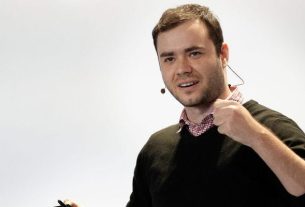
But when Apple’s next CEO, John Ternus, takes over from Tim Cook this fall, he will face a key question for the company’s survival in the age of AI, testing the limits of Apple’s practice of being selective about which apps and services can use its hardware.
The current wave of AI innovation is largely driven by openness: rapid iteration, broad developer access, and tools that work across platforms.
Companies like OpenAI, Google, and Meta have released models that sometimes spin off in unintended directions, but that visibly and continuously improve, attracting developers and users at a pace that traditional product cycles can’t match.
navigating asia
new world order
Get insights delivered to your inbox.
Contrary to expectations, Apple is cautious. A staunch custodian of Apple co-founder Steve Jobs’ vision, Cook has emphasized privacy and quality that can only be achieved through strict controls.
That restraint earned the company trust from users, but it also left it exposed to antitrust pressure in the U.S. and abroad, including a legal battle with Fortnite developer Epic Games and new European Union rules forcing Apple to increase competition on its devices.
The tension is even stronger when it comes to AI, as the AI boom tends to emphasize speed and experimentation.
“By choosing a hardware leader in John Tarnas, Apple may be showing that it still believes the future of AI will be run through tightly integrated devices, not just software,” said Timothy Hubbard, assistant professor of business administration at the University of Notre Dame’s Mendoza College of Business.
“That may be smart, but it also poses deeper risks. The very strengths that made Apple dominant – discipline, sophistication, control – could become a constraint if the next era emphasizes openness and faster iteration. That rapid innovation is where Apple started, and perhaps that’s where the company needs to return.”
OpenClaw contrasts with Apple management
Starting with Mr. Jobs, who turned Apple around from a financial crisis in the late 1990s, and then Mr. Cook, who built Apple’s services business into a powerhouse with annual sales of $110 billion, the Cupertino, Calif.-based company has proven that tight integration leads to long-term customers and lasting profits.
Now, with more open approaches sweeping the world, Ternus’ biggest challenge will be integrating AI into Apple’s impenetrable ecosystem.
One example is OpenClaw. It’s software that can control an army of AI “agents” capable of performing complex tasks traditionally handled by humans, and is widely popular in China, where users range from schoolchildren to grandparents.
But OpenClaw also illustrates the risks of openness. This software is in its raw form, has security vulnerabilities, and can take alarming actions, including exposing personal financial information on the open internet. The tensions it exposes are exactly what Apple has long been trying to avoid.
Ternus made it clear in media interviews that Apple is interested in shipping products rather than raw technologies like OpenClaw that generate excitement but won’t become everyday staples like the iPhone.
But Apple has signaled some intention to use AI technology developed by rivals when necessary. In January, the company signed a deal with Google to use Gemini AI models to improve its Siri virtual assistant.
Notre Dame’s Hubbard said Apple could also take a cue from Nvidia’s strategy. Last month, Nvidia announced that it would take OpenClaw’s open source software and adapt it into a product called NemoClaw, with safeguards and limitations to allow OpenClaw’s approach to operate in business environments.
Gene Munster, a longtime Apple analyst and investor at Deepwater Asset Management, said Mr. Tarnas’ focus on quality could change the way people think about Apple, just as Mr. Cook showed that there is more to Apple’s fortunes than the iPhone with the strong growth in its services business.
“Staying true to Apple’s culture should allow Apple to pursue AI more aggressively without sacrificing quality,” Munster wrote in a note to customers. Reuters
Decoding Asia Newsletter: A guide to navigating Asia in the new world order. Sign up here to get the Decoding Asia newsletter. Delivered to your inbox. free.