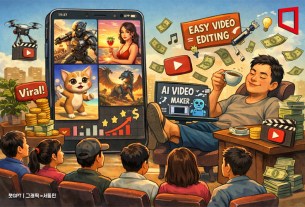
 Digital marketing has changed dramatically over the past few years. Businesses are no longer competing solely on text and images, but for attention in an online world dominated by video. From social media platforms and e-commerce websites to email campaigns and digital advertising, video has become one of the most effective ways to garner attention and get your message across.
But for many businesses, video production has traditionally been expensive and time-consuming. Recording footage, hiring editors, and managing production schedules can quickly add up to both costs and workload. Here is Image-to-video AI It’s changing the landscape. Rather than starting with a camera, marketers can now use artificial intelligence to transform existing images into engaging videos within minutes.
Whether you’re promoting a product, launching a new campaign, or building brand awareness, AI-powered image transformation technology offers a faster way to create content while keeping production simple.
Why video has become the center of digital marketing
Consumer behavior is shifting towards visual content. Especially on platforms like Instagram, TikTok, YouTube, and Facebook, people are more likely to watch short videos than read long texts.
Videos explain your product more clearly, grab attention as users scroll through social media, and often drive higher engagement than static graphics. Companies that regularly publish video content are in a better position to connect with modern audiences across multiple digital channels. The challenge is always producing videos of sufficient quality without overwhelming your marketing team.
Turn existing images into marketing assets
Most companies already have large collections of digital images. Product photos, promotional graphics, event photos, team portraits, customer testimonials, etc. often go unused after their original purpose. and Image-to-video AIthese existing assets will gain a second life.
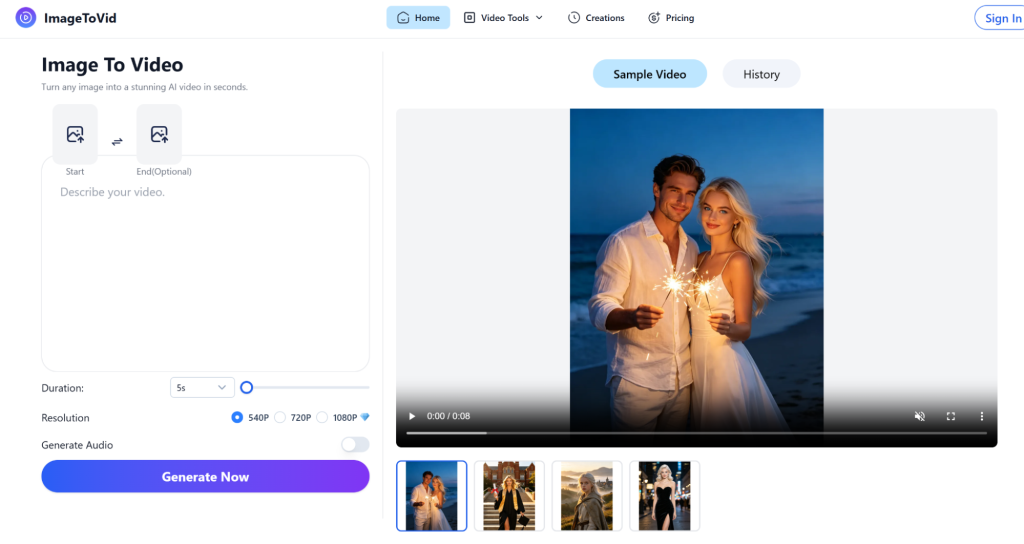
Instead of arranging another photoshoot or recording new footage, marketers can upload still images and allow AI to automatically generate movement. Camera pans, zoom effects, animated lighting, and natural transitions create videos that feel much more engaging than static images.
This allows businesses to maximize the value of the content they have already created.
Faster content creation for growing businesses
Maintaining a consistent online presence requires a steady flow of fresh content. Manually creating videos for each campaign can quickly become difficult, especially for small businesses with limited resources. AI significantly reduces production time by automating animation and video generation. Marketing teams can create multiple videos in a day without spending hours editing each one individually.
This efficiency allows companies to respond more quickly to seasonal promotions, industry trends, and new product launches. Marketers can focus more on strategy and communications instead of delaying campaigns due to production schedules.
Support social media marketing
All major social media platforms encourage video content. Instagram Reels, TikTok, YouTube Shorts, Facebook Stories, and LinkedIn videos are all valued for engaging visual content that captures attention within the first few seconds.
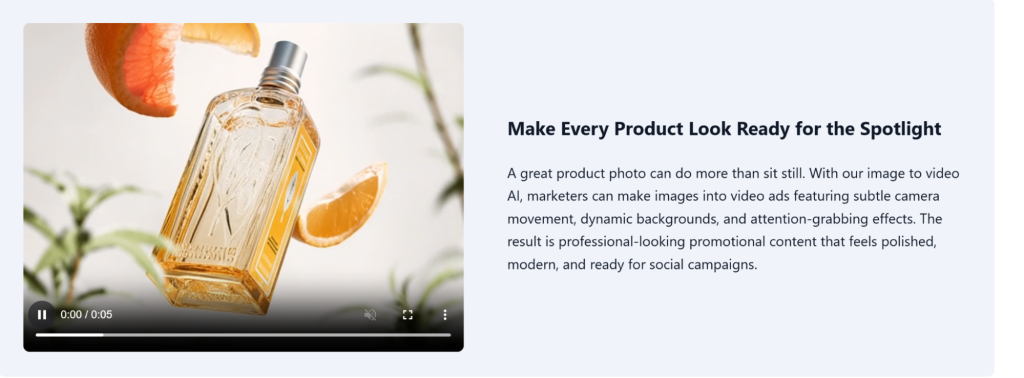
Image-to-video AI It helps marketers adapt existing images into platform-enabled videos without having to shoot new material. Product photos become promotional reels and travel images become animated destination showcases.
This flexibility allows businesses to publish more frequently while maintaining a consistent visual identity.
Helps your e-commerce product stand out
Online shoppers are unable to physically inspect products before purchasing. As a result, visual presentation plays an important role in purchasing decisions. While high-quality product photos are still essential, animated product videos often provide a more engaging shopping experience.
AI-generated videos can highlight different viewing angles, create subtle camera movements, and present products in a more dynamic format without the need for traditional video production.
This approach helps online stores use existing photos to create richer product pages.
Make your marketing campaigns more flexible
One of the strengths of AI video generation is its adaptability.
Turn a single image into multiple different videos by simply adjusting animation styles and prompts. The same promotional photo could be a slow movie-like ad, a fast-paced social media clip, or a professional business presentation.
This flexibility allows marketers to tailor content to different audiences without creating entirely new visual assets.
As your campaign evolves, AI makes it easy to experiment with different creative directions.
Improved creative workflow
Marketing often involves tight deadlines and multiple ongoing projects. AI automates repetitive production tasks so creative teams can spend more time developing ideas instead of making technical edits.
Designers can focus on storytelling, branding, and campaign planning instead of manually adding camera movements, transitions, and simple animations. This transition increases overall productivity while maintaining creative quality.
Choose the best image
The AI runs the animation automatically, but the starting image influences the final result. Sharp, high-resolution photos with balanced lighting generally produce smoother movement and better detail. Images with well-defined subjects make it easier for AI to generate natural-looking movements.
Marketing teams often achieve the best results with product photography, lifestyle images, architecture, travel scenes, food photography, and professional portraits. Investing in high-quality photography will continue to improve every step of your content creation process.
Measuring success beyond production speed
Time savings are valuable, but effective marketing is measured by results, not just production efficiency. When using AI-generated videos, companies need to monitor performance metrics such as audience engagement, video completion rates, click-through rates, social shares, and conversions.
Comparing AI-generated content to traditional static images can help you identify which formats resonate most with your target audience. These insights support better decision-making for future marketing campaigns.
Issues to keep in mind
AI has simplified video production, but it can’t replace a thoughtful marketing plan. Creators should review all videos produced before publishing to ensure that the animation looks natural and matches the intended message. Poor quality source images or unclear prompts can lead to poor results.
AI works best as a creative assistant rather than a complete replacement for human judgment. A combination of automation and careful reviews helps maintain both quality and brand consistency.
The future of AI in digital marketing
AI-powered video generation continues to evolve rapidly. Future tools are expected to feature longer animations, more realistic movements, improved prompt interpretation, and better support for personalized marketing campaigns. Many platforms also combine image editing, video generation, audio creation, subtitles, and content optimization into an integrated creative environment.
These developments make it easier for businesses to create professional-quality marketing content while reducing production time.
As AI capabilities grow, there will be more opportunities for companies of all sizes to compete through creative visual storytelling.
conclusion
Image-to-video AI is transforming digital marketing by helping businesses transform ordinary images into engaging video content without the complexities of traditional production. Instead of investing heavily in cameras, editing software, and lengthy workflows, marketers can reuse existing visual assets to create dynamic content for social media, e-commerce, advertising, and brand promotion.
As video continues to dominate online communication, companies that embrace AI-powered content creation will be able to respond faster to changing trends, publish more consistently, and better leverage existing creative resources. By combining high-quality images with a thoughtful marketing strategy, Image-to-video AI helps brands move from static visuals to dynamic storytelling in a faster and more efficient way.