The AI race between the U.S. and China continues to smolder despite strict technology restrictions in place. Thanks to strict trade embargoes, U.S. companies are restricted from supplying critical AI infrastructure to China. Specifically, Nvidia GPUs, considered a powerhouse of advances in generative AI, are strictly prohibited from being sold to Chinese companies. However, Nvidia chips still find their way into China through illegal means. But federal authorities appear to have finally had some success in keeping a lid on such deals. The Department of Justice announced the arrest of two Texas businessmen for violating U.S. export control and smuggling laws by attempting to supply AI hardware.
Additionally, the owner of a Houston-based company called Hao Global LLC also pleaded guilty after $50 million in cash and Nvidia AI hardware was recovered. This isn't the first time illegal Nvidia hardware has appeared in the same conversation as China's AI advances. A few weeks ago, it was reported that approximately $1 billion worth of NVIDIA chips were illegally transferred to China despite chip export regulations. Please remember. Restrictions on chips that could allow the development of supercomputers have been in place since 2022 in China, and a ban on the sale of Nvidia H20 AI chips was announced in April this year.
Interestingly, federal authorities have charged a Texas-based individual named Alan Hao Hsu with “knowingly exporting and attempting to export” approximately $160 million worth of Nvidia H100 and H200 GPUs. “These GPUs are used for both civilian and military applications,” the Department of Justice Office of Public Affairs said in a press statement. Su and his partners allegedly smuggled critical AI hardware between October 2024 and May 2025 using forged documents and false alarms.
What's next?
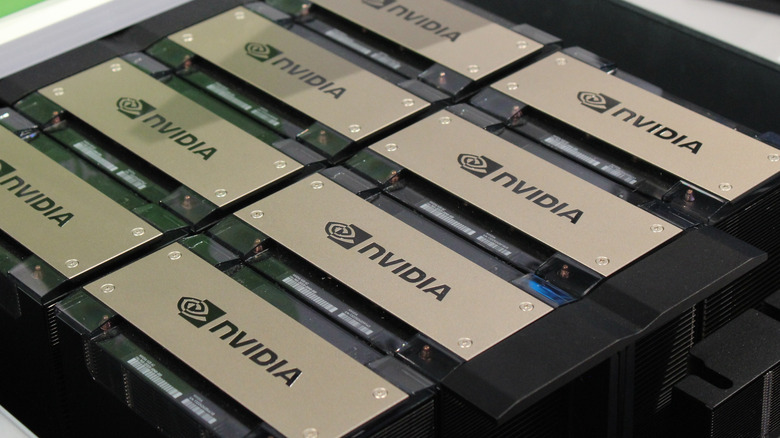
In the latest Texas case, law enforcement also arrested New York-based technology owner Fanyue “Tom” Gong and Benlin Yuan, the chief executive of a U.S.-based subsidiary of a Chinese company. They allegedly worked with a Hong Kong-based logistics company to purchase NVIDIA GPUs through a U.S. intermediary, and Su's company allegedly received $50 million in wire transfers linked to China, which could result in up to 10 years in prison and fines exceeding the entire profits from the illegal transactions.
After acquiring the GPU, the Nvidia label was removed and replaced with a fake company label named “Sandkyan.” These rebadged Nvidia AI chips were later declared as general-purpose computer parts and then shipped to customers in China. Mr. Gong and Mr. Yuan currently face 20 years in prison and the equivalent of $1 million in fines. The case remains under investigation by the Commerce Department's Office of BIS, FBI field offices in Washington and New York, and Immigration and Customs Enforcement's Homeland Security Investigations (ICE HSI).
The arrest in Texas is not the first of its kind. Just a month ago, federal authorities charged four people with a conspiracy to send Nvidia chips to China in violation of export laws. Interestingly, in the second week of December, the Trump administration allowed Nvidia to sell H100 and H200 GPUs to Chinese customers on the condition that the US government receives 25% of the sales. Meanwhile, Nvidia's market share in China has fallen to zero due to the ban. However, trade restrictions do not appear to have had the intended impact. According to The Information, Chinese AI giant DeepSeek is still deploying banned Nvidia GPUs to develop a top-of-the-line model that rivals the likes of ChatGPT.