From left to right: Shridhar Mamta, Tiffany Branch, and Stephen Masser of the FDA.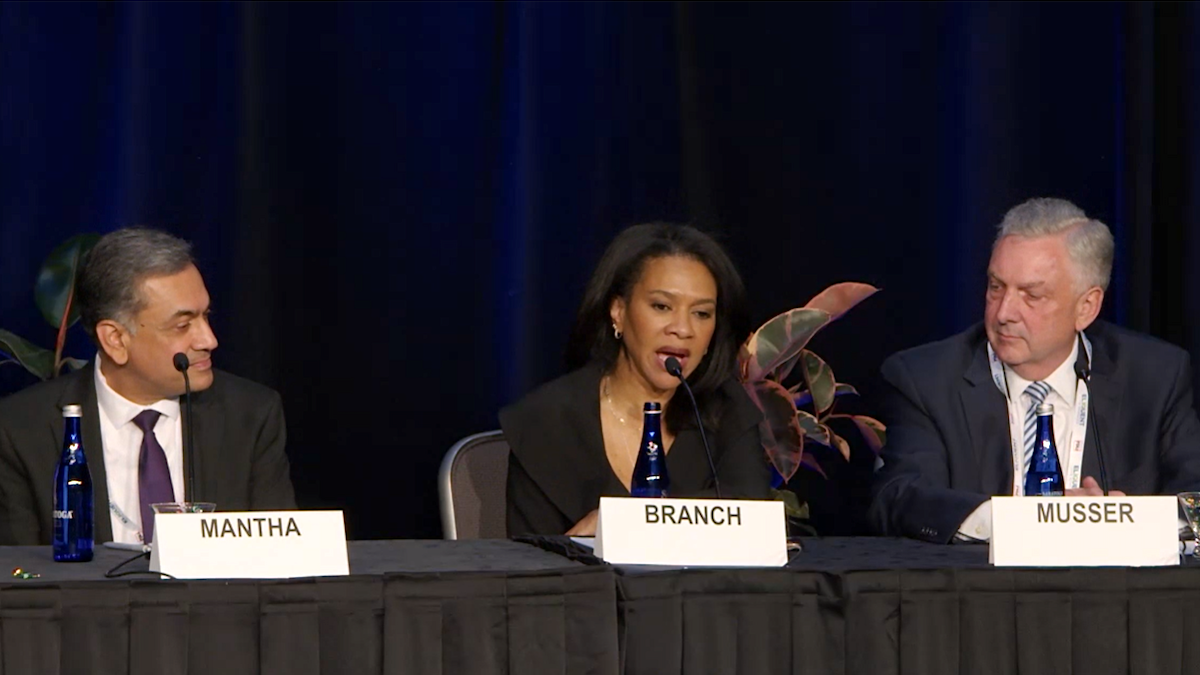
U.S. Food and Drug Administration (FDA) officials discussed the launch of a new artificial intelligence (AI) system to integrate 40 different application data sources across all centers at the Food and Drug Law Institute’s (FDLI) annual meeting on Thursday.
The system, HALO (Harmonized AI and Lifecycle Operation), was announced Wednesday along with version 4.0 of the agency’s Elsa tool. According to the FDA, HALO and Elsa are integrated to allow staff to query data and create workflows without having to manually upload documents for each chat. This HALO integration is expected to enhance the implementation of AI capabilities in the agency’s operations.
panel discussion
During the panel discussion, FDA officials discussed HALO and how they are using AI tools in other areas of their work, such as processing. Information disclosure law (FOIA) Request.
The session was moderated by Tala Fakhouri, vice president of consulting at Parexel and former associate director of data science and AI policy at the FDA.
Sridhar Mantha, acting chief information officer for the FDA Office of Digital Transformation, said HALO is a new integrated data platform designed to integrate more than 40 different applications, submission data sources, systems and portals across all FDA centers.
“This is a single data platform with the highest level of security. Data is partitioned and segmented by center,” Mantha said. He added that the platform “aggregates data from all centers.”
“This is pretty amazing. I don’t think many companies have an integrated data platform yet,” Fakhouri said.
Tiffany Branch, director of the Office of Management and Enterprise Services in the Office of the Commissioner, explained how the agency is using AI to process FOIA requests. Using AI tools, the agency was able to process FOIA requests 85% more efficiently than using manual processes.
“We receive 12,000 FOIA requests a year, and that number is only growing by 20% every year. This is where we can use AI more effectively,” Branch said.
Fakhouri asked Stephen Musser, the FDA’s deputy commissioner for food, whether AI is being used in testing.
“We’ll parse that out a little bit. At this point, we don’t know how we’re going to use this information during an inspection because it’s difficult for inspectors to integrate this information during an inspection,” Musser said. He added that AI is well-suited to detecting “abnormal patterns of imported goods and economically motivated adulteration.”
Musser added that AI tools are also good at extracting information and “drawing conclusions that humans can’t see.”