
Experts in the chemical sciences are calling on experts in chemistry-related fields to use artificial intelligence ethically and responsibly for the benefit of humanity and the environment.
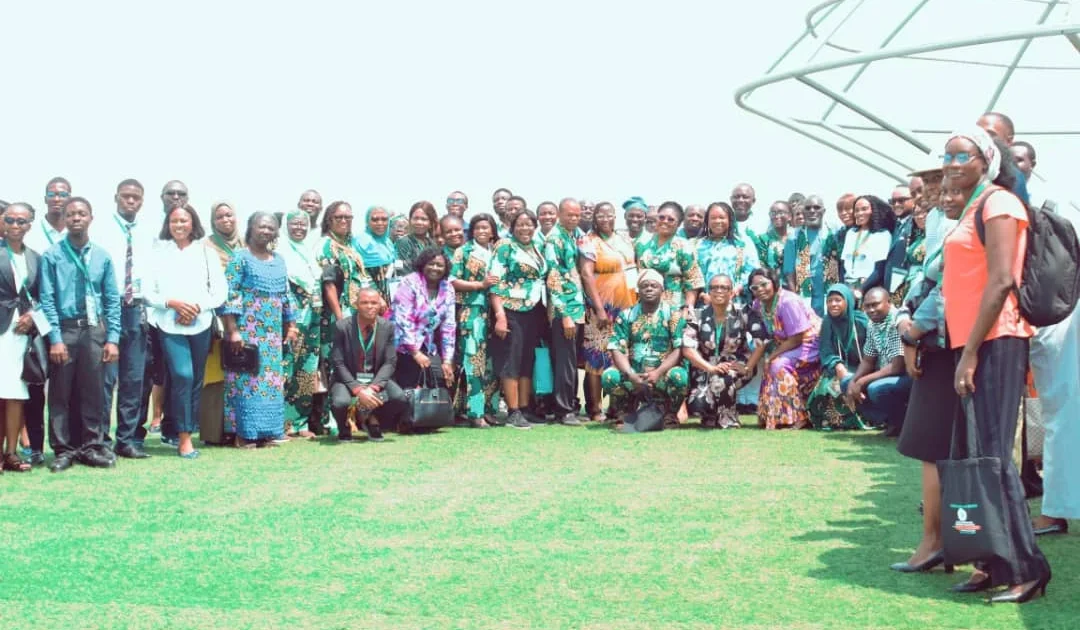
They made this call at the inaugural meeting of the Lagos State Branch of the Chemical Society of Nigeria held at the University of Lagos, Akoka on Tuesday.
The theme of the conference was “Responsible AI in Chemical Sciences to Promote Safety, Ethics, and a Sustainable Environment.”
The Chemical Society of Nigeria is a professional association of chemistry graduates and other professionals involved in chemistry-related activities.
Professor Omotayo Arotiba, in his keynote address, said that while artificial intelligence is here to stay, professionals in the chemical sciences field need to use AI responsibly.
“We want chemists to be willing to embrace what AI can do. However, we need to be very careful in implementing AI as there are potential risks. These include AI hallucinations, questions about reliability, and concerns around academic integrity.”
“I strongly believe that AI cannot replace human thinking. As humans, we are better than AI. We need to understand that AI is not a perfect technology and can make mistakes.
“AI is a tool. AI is a means to an end, not an end in itself. Understanding both the limitations and strengths of AI will put you in a position to use it to your advantage,” he said.
Arotiba, a professor of chemical science and director of the Nanomaterials Science Research Center at the University of Johannesburg in South Africa, emphasized the need for governments and universities to pay close attention to ethical issues surrounding AI.
Guest speaker Dr. Desmond Mol, Acting Dean of the Department of Computer Science at Pan-Atlantic University, said chemists could reap significant benefits by adopting ethical use of AI, particularly in terms of knowledge acquisition and interdisciplinary collaboration.
Mol, who spoke on the topic “Using machine learning for chemical synthesis: From innovation to safety and ethics,” said chemistry has established principles, history and specialized methods, so AI simply provides additional tools to interpret and analyze data.
“Artificial intelligence does not teach chemistry; rather, AI provides a platform where chemical knowledge can be applied more effectively.
“We will continue to rely on our expertise as chemists. AI will simply improve our work and help us make more informed decisions,” he said.
Speaking earlier, Lagos CSN Chairman Dr. Oluseun Popoola explained that the conference was meant to outline how chemists can use AI responsibly, ethically and sustainably for the benefit of humanity and the environment.
According to her, many of us are already using AI in various organizations and professional settings, and the important thing is to use it responsibly and ethically.
She explained that while AI can be helpful, it can never replace human reasoning.
“AI can provide guidance. It can provide a roadmap and point you in the right direction. But AI cannot replace the chemist in the lab.
“This poses new challenges, especially for chemists here in Nigeria.Most of the AI platforms we currently use, including ChatGPT and similar tools, were developed and trained primarily in Western countries.
“Therefore, we must have good scientific understanding to properly adapt and apply AI to the Nigerian context.
“AI should never replace real learning, as it often only provides general answers and is therefore inappropriate for professional or academic purposes,” she said.
Also, Vice Chairman of CSN Lagos Chapter, Akindele Olarewaju, explained that chemists should also use AI ethically as everything increasingly revolves around AI.
According to him, chemists will not be left behind because chemistry itself has always involved the intellect in formulating, analyzing, predicting and solving scientific problems.
“Besides the fact that everyone is using AI, we also need to pay attention to security and ethics. Equally important is sustainability. Therefore, the ethical and sustainable application of AI in chemical sciences is very important,” he said.
Dr. Cordelia Duqueese, president of the local organizing committee, said that while AI may provide direction, it should not determine the final destination of chemists, stressing that there have been several instances where AI predictions have proven inaccurate.
Dukeeze, an associate professor in the Department of Chemistry at the University of Lagos, argued that chemists should control AI rather than allowing it to control them.
“AI is not absolute. As chemists, we use AI to save time and reduce costs.
“But we always have to go back to the drawing board, carefully consider formulations, evaluate reaction conditions, and ensure that everything we develop is beneficial to humanity and safe for the environment,” she said.


