“Edge AI” directly executes machine learning calculations Analyzes heart rate and sleep patterns in real time Processes data without a smartphone Detects signs of abnormalities such as falls and arrhythmia
![[Image generated by AI]](https://wimg.mk.co.kr/news/cms/202607/12/news-p.v1.20260710.5aeb6eb107b14688b409ff3409ba3993_P1.png)
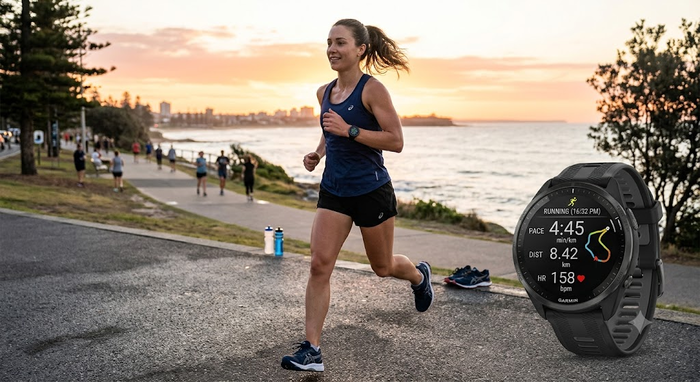
As the global running craze has recently swept the world, filling parks and athletic fields with runners, the smartwatches we wear on our wrists are also getting smarter. As smartwatches rapidly integrate edge AI technology that performs machine learning calculations directly on the device itself, observers say the era of “AI coaches on your wrist” that can diagnose your health and manage your pace in real time without a smartphone or cloud connection has arrived.
According to the Global Smartwatch Shipment Tracker released by Counterpoint Research on the 12th, global shipments of edge AI-equipped smartwatches increased by 70% year-on-year in the first quarter of 2026. This accounts for 25% of the total smartwatch market.
The rapid growth of the market is driven by advances in low-power AI chips. These chips allowed heavy AI functions to run smoothly on the device itself, solving the battery drain problem that has been the long-standing Achilles heel of smartwatches.
Mohit Agrawal, director of Counterpoint Research, said, “Edge AI in smartwatches has moved beyond the adoption of dedicated chips and has entered the software optimization stage,” adding, “The adoption share of edge AI will grow to 32% by the end of this year.”
The biggest beneficiary of this technological advancement is the rapidly increasing number of runners. Until now, smart watches have been limited to storing exercise records and displaying screens linked to smartphones. It now analyzes heart rate, sleep patterns, body temperature, and other data in real time and provides personalized feedback.
In particular, edge AI processes data instantly within the device, without going through a smartphone or external server. This makes it possible to detect danger signs such as falls or arrhythmia without delay and issue an alarm. Another big advantage is increased privacy protection, as sensitive personal health data is not exposed to the outside world.
Demand for healthcare functionality is also rapidly increasing in the market. In the first quarter of this year, shipments of smart watches with blood pressure monitoring function doubled compared to the same period last year, and shipments of products equipped with sleep apnea detection function tripled. The industry is currently accelerating the development of ways to manage difficult-to-diagnose diseases such as diabetes from the wrist.
Competition among chipset manufacturers, which are the brains of smartwatches, is also intensifying. Apple Inc. has already announced its S9 chip with a four-core neural engine dedicated to machine learning calculations, and Huawei is targeting the market with its self-developed KirinW80 chip and Celia AI assistant.
This year, Qualcomm joined the fightback with its Snapdragon Wear Elite, which features a dedicated neural processing unit, and Google is expected to further boost its AI capabilities with its next generation of Tensor-based wearable chips.
New operational approaches are also emerging, such as Ambiq’s Apollo platform, which uses vector cores instead of dedicated NPUs to maximize power efficiency, and the world’s tech companies’ battle for edge AI leadership on runners’ wrists is expected to further intensify.
“Gone are the days when a smartwatch simply served as an adjunct to a smartphone or a device for recording workouts,” an industry insider said, adding, “As edge AI technology becomes more sophisticated, smartwatches will be able to function independently as personalized digital trainers on the wrist, updating and delivering customized training programs in real-time without a smartphone.”
This article was translated by GripLabs Mingo AI.