introduction
in In the 21st century, technology not only evolves, but accelerates. One of the most important accelerators of this digital age is artificial intelligence (AI), a transformative force that promises efficiency, personalization, and automation on an unimagined scale. But this promise comes with risks. Particularly in countries like Nigeria, the rush to digitalization often outstrips the framework needed to protect citizens from the unintended consequences of AI-driven systems. As machines increasingly make decisions that affect human lives, from granting loans to profiling individuals, one urgent question has emerged. How can we ensure that AI serves humanity rather than undermines it? Before we can answer that question, we need to understand what AI actually is. According to the European Commission, artificial intelligence (AI) is defined as “a system that exhibits intelligent behavior by analyzing its environment and performing actions with some degree of autonomy in order to achieve specific goals.”
The Organization for Economic Co-operation and Development (OECD) provides a similar definition, describing AI as “a machine-based system that makes predictions, recommendations, or decisions that affect a real or virtual environment against a set of human-defined goals.” The Alan Turing Institute, a pioneer in ethical technology research, defines AI as “the design and research of machines that can perform tasks that previously required human (or other biological) brainpower.” Across these definitions, one theme stands out. That’s because AI systems operate autonomously and adaptively at scale, all qualities that make them powerful, but also potentially dangerous without proper oversight.
Let us now contrast this with the concept of human rights. These fundamental freedoms and rights are given to everyone simply because they are human. These include the right to life, liberty, dignity, privacy and equal treatment under the law. The Universal Declaration of Human Rights (UDHR) asserts that human rights are “inherent in all human beings, regardless of race, sex, nationality, ethnicity, language, religion or other status. These rights are not conferred by any state but are inherent in all individuals simply by virtue of being human.” The African Charter on Human and Peoples’ Rights expands this concept to include collective rights and cultural identity, emphasizing human dignity as central to governance. In Nigeria, these rights are not abstract ideals but are guaranteed by the 1999 Constitution of the Federal Republic of Nigeria (as amended), which specifically enshrines the right to privacy in Article 37.
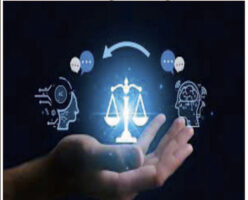
The problem lies at the intersection. While AI expands what is technically possible, it also expands what is legally and ethically permissible. AI systems are trained on vast datasets containing sensitive personal information, from biometric scans to financial history. Without appropriate guardrails, these systems can perpetuate bias, erode individual autonomy, and violate constitutional protections. It doesn’t have to be malicious to be dangerous. A poorly designed algorithm can only identify as effectively, faster, more invisible, and at a larger scale than a biased human.
Nigeria is keenly aware of this reality. As digital infrastructure expands through platforms such as the National Identity Management Commission (NIMC), Bank Verification Number (BVN), fintech apps, and e-government portals, the risks to privacy and dignity are also increasing. Recognizing the inadequacies of the previous regulatory framework, the Nigeria Data Protection Regulations (NDPR) 2019, the country enacted the Nigeria Data Protection Act (NDPA) in June 2023. The NDPA is not a complementary law. It repeals and replaces the NDPR and establishes a comprehensive and enforceable legal framework for data protection in Nigeria. With this law, Nigeria finally aligns with global standards and shows that data protection is not a luxury, but a legal obligation in the digital economy.
NDPA brings a paradigm shift. Created the Nigerian Data Protection Commission (NDPC) as a regulator, mandating lawful and transparent data processing and codifying data subject rights, including access, rectification, erasure, data portability, and the right to object to automated decision-making. Importantly, high-risk processing also requires a data protection impact assessment (DPIA), reinforcing the principle that privacy and ethical risks should be considered before implementing data-driven systems. This is not just a compliance issue, but also a human rights issue.
But laws alone are not enough. A key missing link is the integration of Ethics by Design, a proactive approach to AI governance that embeds ethical considerations directly into the technical architecture of AI systems and the policy creation process. “Ethics by Design” is not a slogan. It’s a philosophy of responsibility. Are the algorithms fair? Can their results be explained? Do we respect the autonomy and dignity of our users? Who designs them and who can challenge their decisions? These are the questions Nigeria must face now if it is to build AI systems that uplift rather than oppress.
The relevance of this approach becomes painfully clear when examining incidents such as the failed launch of the NIMC Mobile ID app in 2020. The app, which was released without proper review or publicity, unintentionally generated digital IDs for users and leaked personal data, triggering a legal challenge under Article 37 of the Constitution. This debacle could have been avoided if a data protection impact assessment had been conducted as currently required by the NDPA. Events like this illustrate how quickly a technical error can turn into a constitutional violation.
Additionally, AI’s ability to resist systematic bias is not hypothetical. Consider financial platforms with AI-driven credit scoring models in Nigeria. When trained on flawed or exclusionary data, these models can discredit entire demographic groups, citing historical marginalization rather than discreditability. Similarly, facial recognition systems have been shown globally to misidentify dark-skinned individuals, raising alarm over their implementation by Nigeria’s security agencies. Without ethical design and oversight, these tools risk exacerbating the very inequalities they claim to address.
Democratic perspectives also need to be considered. In countries where public awareness of digital rights remains low, the opaqueness of AI systems exacerbates the power imbalance between data subjects and data controllers. Citizens often do not know what data is being collected, how it is being used, or how to combat its misuse. Although the NDPA addresses this asymmetry through transparency and accountability provisions, actual enforcement requires that the NDPC be technically sophisticated and politically independent. Otherwise, the law becomes a ceremonial shield rather than a functioning sword.
Ethical design in Nigeria must therefore go beyond courts and norms. It must include grassroots participation, inclusive innovation and capacity building across all sectors. This means involving civil society organizations, digital rights activists, technologists, and vulnerable communities in the design of digital governance tools. That means creating AI systems that are not only efficient, but fair. Not only intellectual but also human.
The question is no longer whether Nigeria will use AI. The question is whether Nigeria’s AI will respect the principles that define a democratic society: dignity, autonomy, justice, and accountability. The NDPA provides a legal footing. Now is the time to build a moral structure. The Ethics by Design framework provides Nigeria with a rare opportunity to lead not only in innovation but also in ethical innovation. And in a world where technology increasingly shapes the human experience, there may be no more important challenge than this.
Evolution of AI
AI has progressed from rule-based systems to machine learning and deep learning models capable of autonomous decision-making. Applications range from medical diagnostics to self-driving cars to predictive policing to financial algorithms. While AI improves productivity, it also raises concerns, including:
– Job replacement by automation.
– Surveillance capitalism, where personal data is misused for profit.
– Algorithmic governance. When AI influences public policy without sufficient oversight.
The conceptual origins of artificial intelligence (AI) can be traced back to the mid-20th century, when pioneers such as Alan Turing and John McCarthy began exploring the possibility of creating machines that could simulate human intelligence. Turing’s seminal 1950 paper, “Computing Machinery and Intelligence,” posed the provocative question, “Can machines think?” This question laid the philosophical foundation for modern AI research. McCarthy, who coined the term “artificial intelligence” in 1956, convened the historic Dartmouth Conference to broadly consider the birth of AI as a formal field of inquiry.
Early aspirations and technical milestones.
Early AI efforts focused on symbolic logic, rule-based systems, and expert systems that relied on hand-coded rules to simulate decision-making processes. These systems, although limited in scope, have found applications in areas such as medical diagnostics (e.g. MYCIN) and chess algorithms. The advent of machine learning, especially supervised learning techniques, in the late 20th century ushered in a new era in which machines could learn patterns from data, rather than relying solely on pre-programmed rules.
Since then, exponential growth in computing power, big data availability, and algorithmic innovation has culminated in what many scholars call the “AI revolution.” Notable developments include deep learning techniques leveraging artificial neural networks, natural language processing typified by large-scale language models (LLMs), and computer vision systems that match or exceed human performance in certain areas.
From automation to autonomy
AI has moved from automating repetitive tasks to performing complex cognitive functions that were previously thought to be the exclusive domain of humans. Self-driving cars, AI legal assistants, autonomous drones, and AI-generated art demonstrate the breadth of applications for AI. As these systems become more sophisticated, they increasingly exhibit autonomy, the ability to make decisions and take actions without direct human intervention. This change raises serious questions about accountability, transparency, and control.
For example, autonomous weapons systems that can select and attack targets without human supervision challenge existing norms under international humanitarian law (IHL). Similarly, AI systems deployed in judicial and parole decisions raise concerns about bias, fairness, and due process, especially when the logic behind the decisions is opaque even to the developers. This is a phenomenon called the “black box problem.” (to be continued).
Thoughts for a week
“whenwhen I say “I support equal rights,” I mean equal rights for all…from the moment of conception until natural death. This means that we believe that all people have equal human dignity, regardless of their “contribution” to society. ”
– (Abby Johnson)