As tensions in the Middle East escalate and the expansion of artificial intelligence continues to increase electricity demand, Energy Secretary Chris Wright said the Trump administration is focused on boosting U.S. energy production while containing electricity costs for consumers.
In an interview with the National News Desk, Wright spoke about his administration’s strategy to protect energy supplies in the Strait of Hormuz, expand data center infrastructure and compete with China in the global race for artificial intelligence.
The interview came as the Trump administration announced that the United States would oversee shipping through the Strait of Hormuz following recent attacks on commercial ships that the Trump administration blamed on Iran.
Asked about his administration’s proposal to impose a fee on cargo transiting the strategic waterway, Wright said the broader objective was to ensure continuity of global energy supplies.
“The purpose of controlling the strait is to allow energy to flow in from all countries in the Arabian Gulf except Iran,” Wright said. “Iran is the problem. The problem is not the United States or anyone else.”
Wright said discussions continue about how the United States will be compensated for securing maritime traffic.
“I think there will be more news later today about what compensation or compensation the United States will receive in this case,” he said. “President Trump is a businessman. He likes making deals. He likes investing in America. He likes creating American jobs.”
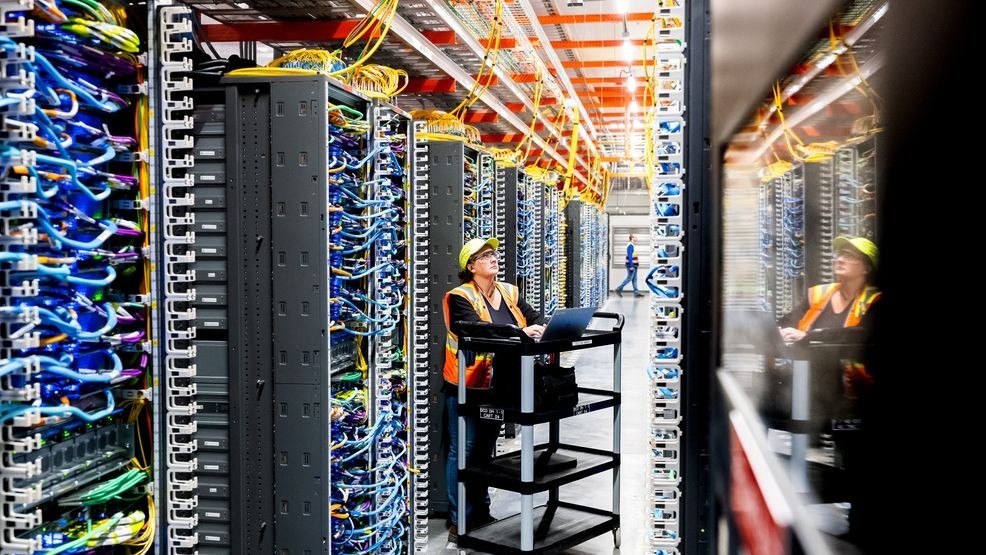
The conversation then turned to artificial intelligence following reports that New York Governor Kathy Hochul plans to sign an executive order that will temporarily shut down new hyperscale data centers while the state studies power demand and the impact on the grid.
The proposal has drawn criticism from some lawmakers, including Sen. John Fetterman, who argued the move could weaken the United States’ position in the global AI race.
Wright agreed.
“If the U.S. withdraws or drags its feet on data centers, China wins,” he said.
Wright said the administration believes AI infrastructure is essential to maintaining U.S. technological leadership.
“Countries that lead in the field of artificial intelligence in the coming years and decades ahead will become global superpowers,” he said. “We don’t want China to be the world leader.”
One concern frequently raised by local communities is that large data centers will drive up electricity costs.
Wright argued that the administration’s voluntary “ratepayer protection pledge” is intended to prevent such an outcome.
In this initiative, data center developers commit to investing in local power infrastructure before connecting new facilities to the power grid.
“We’re asking the developers of these data centers to put money upfront into their communities, invest in power infrastructure, and expand their power generation capacity,” Wright said.
He said participating projects also include multi-year initiatives aimed at stabilizing electricity prices.
“They all involve a multi-year power rate freeze,” Wright said. “They are actually being used as a mechanism to stop electricity price increases and generate significant local tax revenue, job opportunities and wage increases.”
Wright argued that rapidly growing data centers are not the main cause of rising electricity costs.
“The issue is the state’s green energy mandate,” he said. “That’s not data center development.”
He argued that in states that have restricted traditional energy production for the past two decades, power prices are rising because supply is not keeping up with demand.
The administration also faces growing opposition from activist groups who are planning demonstrations against new AI data centers, citing concerns about power consumption, water usage, and environmental impact.
Wright said many of these concerns are based on outdated information.
“These groups are very effective at scaring people,” he says.
Regarding water usage in particular, Wright said the new facility uses much less water than many people realize.
“All the new data centers that are being built are using something called closed loop,” Wright said. “Water doesn’t evaporate. It uses less precious water.”
He encouraged the community to negotiate an agreement that would allow residents to economically benefit from data center development, rather than rejecting the project outright.
“If you take them out of their own communities and force them into other people’s communities, you lose all the benefits of lower prices, higher wages, more jobs,” Wright said. “Don’t push one data center aside and let another data center win over it.”
As AI development accelerates around the world and geopolitical tensions continue to impact global energy markets, Wright said he believes the United States’ ability to expand reliable energy production while attracting technology investment will remain central to the country’s long-term economic and national security strategy.