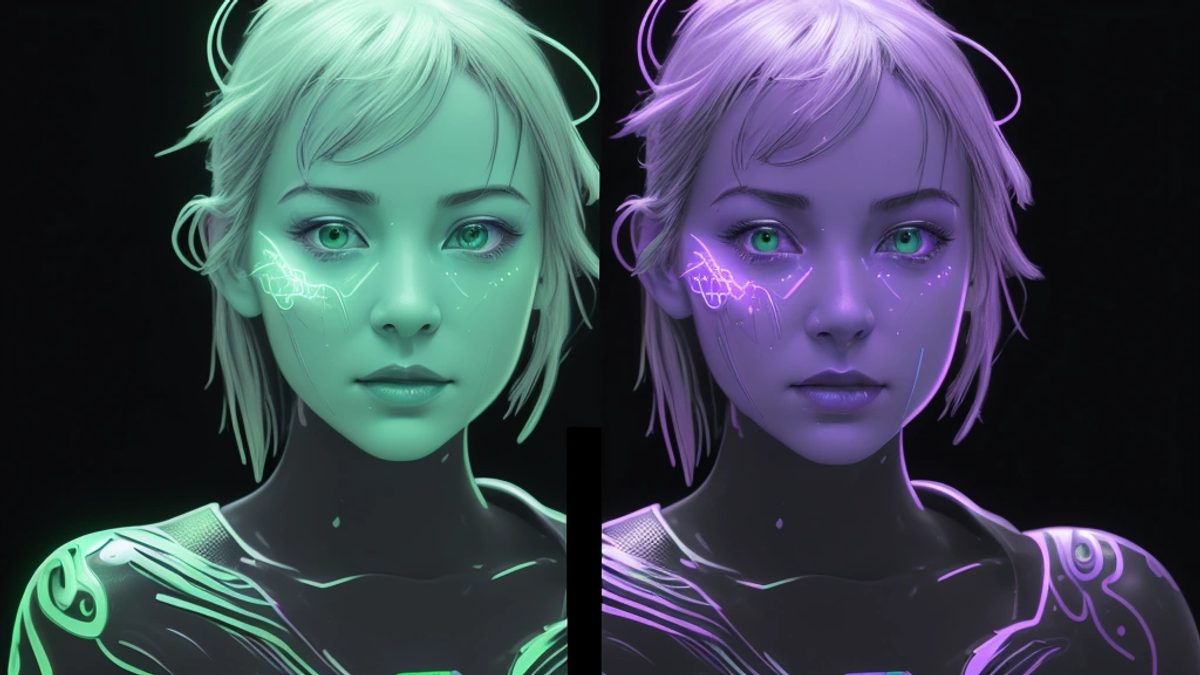

One post by Elon Musk showcasing Grok Imagine’s improved lip syncing received over 4 million views in three hours. His chosen caption, “Nothing in this video is real,” may be more important than the technology behind it.
On April 25, Musk posted a Grok-generated video to X with a two-line note: “The new Grok Imagine model has been released with much better lip sync and sound. There’s nothing real about this video.” The clip quickly went viral. Four million views in three hours is not unusual for Musk’s account, but the combination of content and disclaimer landed differently. Grok Imagine has rapidly evolved since its launch in August 2025, and the latest iteration, running on Grok 4.3 beta, makes a meaningful leap forward in one feature that has historically made AI videos feel spooky: synchronized lip movements. For the first time, the mouth matches the words so convincingly that there is no visual cue for most casual viewers to say “this is fake.”
Grok Imagine’s development schedule is quite demanding even by 2026 standards. The Aurora autoregressive engine behind it was trained on 110,000 NVIDIA GB200 GPUs, one of the largest single training infrastructures ever deployed for a video generation model. Version 1.0 shipped on February 3rd and includes significant improvements to 720p 10-second clips and audio. The “Extend from Frame” feature was introduced on March 2nd and allows users to chain clips together for up to 15 seconds per segment, using the last frame of one generation as the starting frame of the next. By early April, updates to the Grok app brought smooth motion and a “cinematic visual flair” to generated footage, and Musk publicly noted that Grok models were updated about twice a week. Powering today’s viral clips, the 4.3 beta significantly improves temporal coherence and adds native audio lip sync, which community testers say is a big change from what was available six weeks ago. xAI has confirmed that Imagine 2.0, with 30-second generation, improved physics, and more realistic motion, is in development on its roadmap.
The platform number explains why this is commercially important. Grok Imagine generated 1.245 billion videos in January 2026 alone. This is similar to Runway and Kling in terms of production volume. API pricing is $0.05 per second for 720p output with audio. For content creators, marketers, and the X Premium subscriber base who already have access built into their subscriptions, the marginal cost of producing photorealistic talking head videos is virtually zero. This is the condition under which Mr. Musk’s disclaimer becomes as much a policy question as a product announcement.
The accompanying moment of disclosure
“Nothing in this video is real” is optional and not legally required in most jurisdictions. In any case, the fact that Mr. Musk created this and caused as much discussion as the quality of the video itself is instructive. The European Union’s AI law, which entered the implementation phase in 2025-2026, requires AI-generated synthetic media to be labeled if it can be mistaken for real audiovisual content, but enforcement is patchy, varies by jurisdiction, and relies heavily on platform compliance. X’s own synthetic media policy requires labeling AI-generated content that depicts real people in misleading contexts, but enforcement of the policy is inconsistent and user-driven rather than systematically enforced at the model level.
The timing is no coincidence. Grok Imagine reaching convincing lip-sync in April 2026 coincides with a global election calendar that includes key votes in Germany, Australia, and several state elections in the United States, where AI-generated political content is already a documented concern. Research on how disclosure affects audience credibility is not positive. Studies have shown that displaying warnings after viewing content or formatting it as a small text label minimizes the formation of false beliefs compared to unlabeled content. The caption “Nothing in this video is real” works if the viewer reads it. It will fail if the clip is clipped, reshared without context, or embedded in a feed where the source post is not visible.
Bet as an entrepreneur
For xAI as a business, Grok Imagine’s viral moment is exactly the kind of product market signal that justifies investment in infrastructure. Sora, Runway, Kling, and Google’s Veo 2 are all competing for the same creative workflows and enterprise video budgets. The advantage of Grok is delivery. 600 million X users, a premium subscription bundle, and a founder who creates posts that reliably generate the kind of earned media that no marketing budget can replicate. Whether that distribution advantage translates into stable platform revenue or simply facilitates short-term trials will depend on whether the quality of the model holds up to professional use cases beyond viral social clips. Today’s post answers the question whether Grok Imagine can get noticed. The more difficult question is whether it can generate trust, which depends almost entirely on how the platform handles the content it enables.
Also read: Isomorphic Labs is administering AI-designed drugs to humans, and the results will define the decade • Anthropic’s Mythos is a real threat to crypto infrastructure, albeit not in the way panic suggests • GPT-5.5 lands as OpenAI accelerates pace of model releases to nearly monthly