This story was published in the Climate and Education Newsletter. Sign up here.
I’m one of those rare people (there are others, right?) who haven’t yet tried ChatGPT or any other generative artificial intelligence program. Part of my hesitation is driven by a vague fear that AI will destroy the planet. For example, researchers estimate that U.S. data centers could consume as much water as 10 million Americans and emit as much carbon as 10 million cars. At the same time, there is hope that AI can help fight climate change by accelerating research into climate change solutions.
So when I came across an announcement about a new initiative on how to teach K-12 educators to use AI with climate change in mind, I was intrigued. The effort, called TEACH-AI, was launched last fall by researchers at the University of California, Irvine, Indiana University Bloomington, and the University of Bremen in Germany. Among other projects, we are developing courses to help future educators understand how to use AI in an environmentally responsible way and how to use AI to teach lessons about climate change.
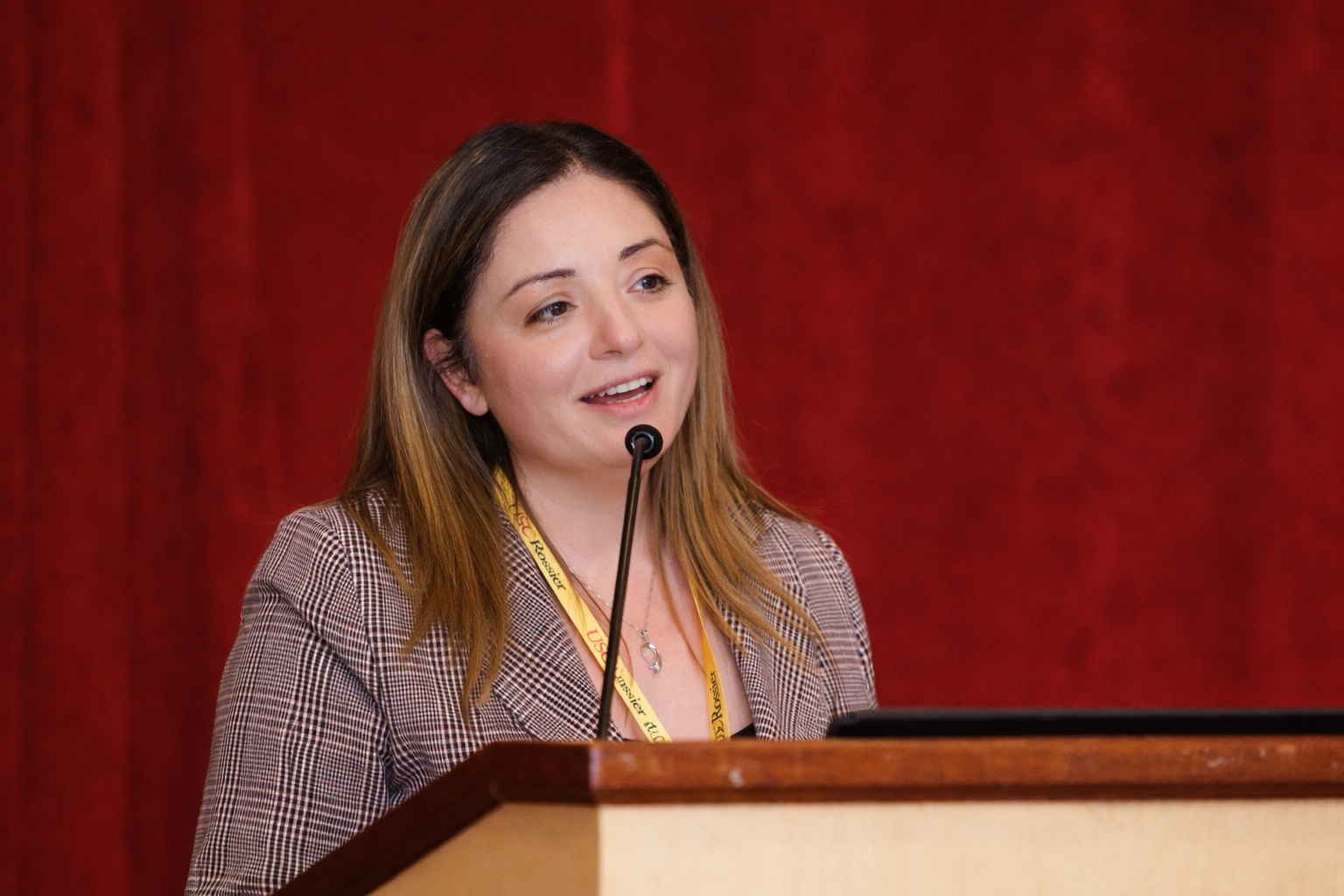
My colleague Ariel Gilreath, who works with Hechinger in K-12 education, spoke this week with one of the TEACH-AI creators, Asli Sezen Barry, endowed chair of climate and environmental education and associate professor in the School of Education at the University of California, Irvine. The following is an interview with Ariel and Sezen Barry, edited for length and clarity.
— caroline preston
Could you explain the idea behind TEACH-AI and how it was born?
Institutions have launched many AI initiatives. At this point, it’s hard to basically say “don’t use this” because it has benefits for teachers and students. So we thought, “Okay, how do we get people to think about the environmental costs of this?”
At the same time, we were trying to understand what level of trust and knowledge base educators currently have in commonly known tools like ChatGPT, as well as other AI tools developed for educational purposes, such as understanding climate change.
What I began to see was that teachers who were environmentally conscious were actually much more cautious than we originally thought. Even when students were using it, they were concerned. Their districts are working on implementing specific tools, and these teachers actually highlighted many of the reasons why it’s a good idea not to use AI at this time. I heard similar concerns from colleagues in Germany.
So we thought, if students are going to use AI tools, if districts are going to implement AI tools, and teachers are very concerned, let’s find a way to understand how AI can be used intentionally in the context of climate change. How to choose the right tools and how to know when an AI tool is fit for purpose. Also, create activities that teachers and students can use to discuss cost-benefit analysis of specific AI tools.
Is the main goal to help future educators use AI to teach about the environment, or is it to train educators how to use AI in a more sustainable way?
It will be both. It’s only one course, so it’s an exploratory work. A colleague of mine developed a tool called StoryAI. It has specific goals and objectives and as a result reduces energy costs. We’ll look at how big data can be leveraged to store data into tools that educate on issues like sustainable fashion, food waste, and fire.
There has been much debate about whether using AI is bad for the environment in the first place, given the amount of water and energy that AI data centers use. I would love to hear your thoughts on this.
Such concerns are valid. But at this point where I’m at, it’s hard to say, “No more, enough is enough.” Because there are good reasons why teachers use it, such as when it comes to overwhelming assignments. Climate change is a very complex topic. And we tell them to teach it in an interdisciplinary way and how the community cares about it and what the science says about it.
That’s where AI tools may be able to help educators. They may be using AI tools to learn about climate change and current data and research.
We need to think about what AI tools and how we use AI will fit well into the way we design teaching and learning, and which tools will fail. We need to prepare educators to move past that judgment.
Part of this effort includes designing courses that blend AI literacy with geography and environmental science education. What can teachers learn from this course?
This course is called ‘Education for a Sustainable Future’. We will look at it from the two angles I mentioned earlier. What role are AI tools playing in understanding and predicting climate change, and how are they supporting (or not supporting) solutions? Another element is the adoption of AI literacy.
Currently, many specialized master’s degrees are being created across the country and internationally. There is not much discussion about the environmental impact of courses or even curricular elements. Prejudice, language bias, and dependence are discussed a bit, but not in an environmental context.
And the classes you described are only part of this effort.
We are also conducting document analysis to examine guidance from California, Germany, and UNESCO to see where AI recommendations align with environmental literacy.
Education plays an important role in these discussions because people make decisions and people vote on things. If you don’t know and understand these things, you won’t be able to take informed action.
The role of education is critical to having these discussions and learning how to view this type of data.
Contact editor Caroline Preston at 212-870-8965, Signal (CarolineP.83) or email. preston@hechingerreport.org. Contact Signal staff writer Ariel Gilreath (arielgilreath.46) or at: gilreath@hechingerreport.org.
This story about AI in education hechinger reportis a nonprofit, independent news organization focused on inequality and innovation in education. register to Hechinger’s Climate Change Newsletter.
thisarticleteeth,The Hechinger Report First published inRepublished here as Creative. Commons Attribution-NonCommercial-NoDerivatives 4.0 International License.