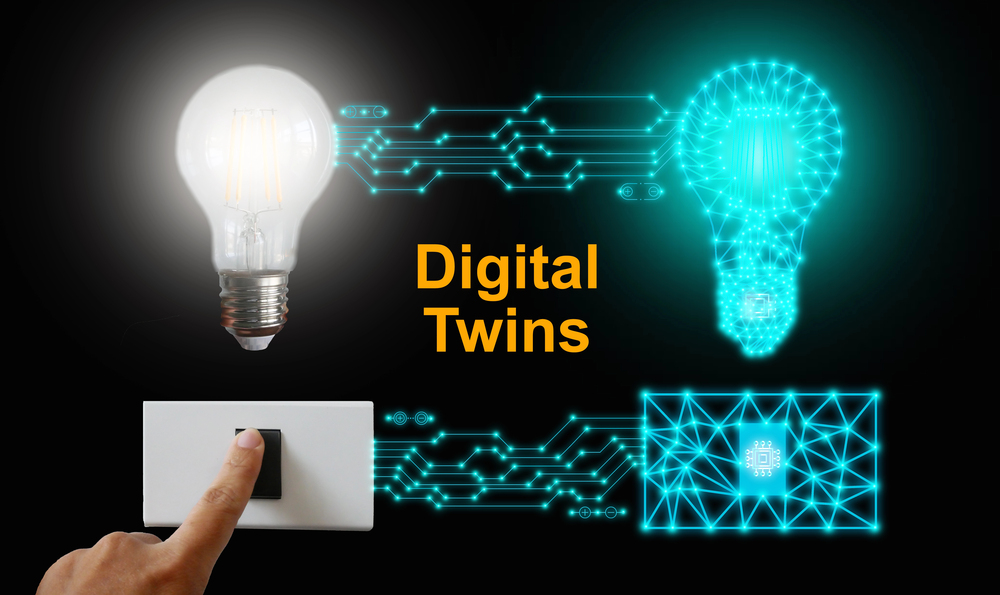
This month, Digital Twin Consortium (DTC) announced the addition of four new testbeds to its innovative digital twin testbed program. These testbeds span real-world applications, from autonomous manufacturing and quantum optimization to pandemic preparedness and climate and lightning forecasting, and highlight the transition of digital twins from conceptual models to operational, intelligent systems that validate proof of value and support cross-industry collaboration.
This expansion reflects broader market momentum. Digital twins are no longer a niche simulation tool, but a foundational technology for real-time analytics, digital transformation, and AI integration. The main takeaway is that as we move into 2026, digital twin technology is rapidly evolving, driven by innovations in data infrastructure, edge computing, generative artificial intelligence (AI), and interoperability frameworks.
What is a digital twin?
Essentially, a digital twin is a digital replica of a physical system, process, or product that maintains dynamic, real-time coordination with its physical counterpart through continuous data flow. These models enable simulation, monitoring, prediction, and optimization of physical assets and environments throughout their lifecycle. Unlike static digital models, a true digital twin updates in real time and adapts based on sensor feeds, historical data, and analytical output to reflect the state and behavior of the physical twin.
Traditionally, digital twins originated in aerospace and manufacturing, where complex systems and high-value assets require predictive maintenance and performance optimization. Today, its scope has expanded to include urban infrastructure, healthcare operations, energy grids, logistics networks, and climate systems.
See also: Digital twins pave the way for AI-enabled smart factories
The role of digital twins in today's data-driven business and industrial markets
For data-driven enterprises, digital twins have become a critical enabler of operational excellence, risk mitigation, and strategic decision-making. They offer:
Operational insights and predictive analytics. Digital twins blend real-time telemetry with historical performance metrics to help operations teams predict failures, optimize maintenance schedules, and reduce unplanned downtime. These features significantly improve asset availability and return on investment.
Cross-functional decision support. Modern digital twins aggregate data from IoT devices, enterprise systems, and environmental sensors to provide unified dashboards and analytics to stakeholders. By integrating diverse data streams, digital twins enable support. Cross-organizational decision-making workflows—From procurement planning to field service optimization.
Simulation and what-if analysis. Companies use digital twins to model scenarios such as supply chain disruptions, energy demand fluctuations, and climate impacts, and provide quantitative analysis to inform strategic planning and resilience investments.
Achieving digital transformation. Beyond operational use, digital twins support smart manufacturing (Industry 4.0), connected infrastructure, and digital services initiatives. They help organizations move from reactive operations to a predictive and prescriptive mode of insight and action.
How digital twins incorporate real-time data and AI
The evolving state of the digital twin in 2026 will be defined by advanced analytics, AI augmentation, and convergence with real-time data systems.
Real-time data integration. Digital twins rely on robust real-time data from sensors, edge devices, and cloud systems to continuously sync with the physical environment. Network advances (including 5G and the emerging 6G) have reduced latency, allowing twins to run near-instantaneous analysis and control loops in mission-critical environments such as industrial automation and smart grids.
AI and machine learning. AI accelerates the generation of insights within digital twins.
- Predictive AI Identify patterns that precede failures and performance deviations.
- Generation AI Create reasonable future states and alternative configurations to help planners evaluate tradeoffs and optimize design choices.
- multi-agent system Enabling autonomous digital twins to interact with each other and even with physical assets enables decentralized decision-making with minimal human intervention.
DTC's testbed initiative explicitly incorporates multi-agent and generative AI frameworks in its maturity assessment to demonstrate how intelligent AI modules and next-generation digital twin systems can be co-created to enhance autonomy and value extraction.
Digital twin ecosystem and interoperability. Testbeds and frameworks from industry groups such as DTC accelerate Standardization and interoperabilityallowing digital twins to be configured across vendor platforms, domains, and use cases. These collaborations help overcome silos and create an ecosystem of interoperable digital models that share common semantics, APIs, and security protocols.
What lies ahead for digital twins in 2026?
Organizations looking to digital twin technology to improve their operations will see new developments next year. Some of the most interesting things to look for include:
1. Intelligent and adaptable twins. The next frontier for digital twins is AI-native intelligence. It is a system that learns operational behavior over time, dynamically adapts its models, and makes context-aware recommendations. Generative AI takes this even further, enabling automatic scenario generation and optimization without extensive manual modeling.
2. Planetary scale digital twin. Large-scale initiatives like the Digital Earth Model (such as the EU's Destination Earth project) demonstrate how the twin concept can be extended to global climate modeling, disaster response, and public policy simulation.
3. Edge AI and real-time control. Combining digital twins and edge AI reduces reliance on centralized cloud systems and enables millisecond-level autonomy, which is critical for robotics, autonomous systems, and real-time adaptive control.
4. Business automation and cross-enterprise twins. Digital twins have evolved from asset-centric tools to enterprise twins that embody business processes, supply chains, and customer journeys, enabling continuous process optimization across the value chain.
5. Ethics, Security and Trust Framework. As digital twins access increasingly sensitive data and control critical infrastructure, governance frameworks become essential. Standards for trust, privacy, and secure twin-to-twin communications will be at the core of enabling broader adoption.
A final word
Digital twin technology enters 2026, moving from static virtual replicas to intelligent, data-driven systems that integrate real-time analytics and advanced AI. Strategic initiatives such as DTC testbed expansion demonstrate that twin systems are becoming practical, interoperable, and mission-centric across a variety of sectors. Organizations that take advantage of this evolution will unlock new levels of predictive insight, operational autonomy, and competitive advantage in an increasingly data-intensive global economy.