The announcement signals a clear strategic shift. NVIDIA no longer positions AI primarily as a cloud workload with graphics processors. Instead, the company is preparing for a world where AI agents write code, use tools, perform tasks, reason through workflows, control software, and ultimately operate physical machines. To make that possible, NVIDIA is looking to further own the infrastructure around these agents, including CPUs, networking, security, personal computers, and robotic platforms.
4 View gallery
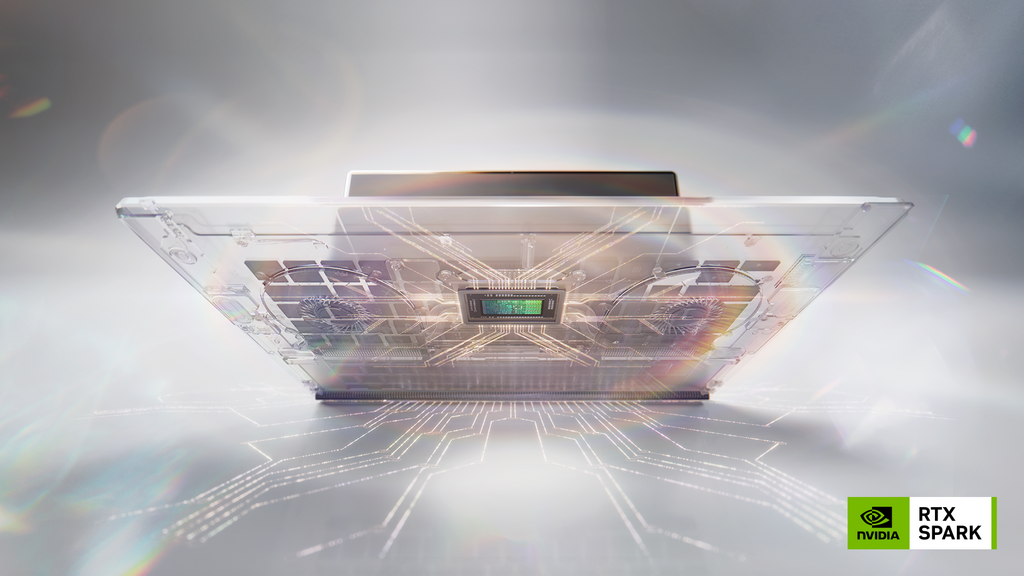
NVIDIA and Microsoft reinvent the Windows PC for the era of personal AI
(Photo: Nvidia)
At the heart of the data center push is NVIDIA Vera, which the company describes as the first CPU purpose-built for AI agents. Now fully operational, Vera is designed to handle CPU-intensive parts of agent AI workloads, including Python runtimes, sandboxed code execution, orchestration logic, analytic pipelines, and data processing. According to NVIDIA, Vera enables 1.8x faster task completion compared to x86 CPUs across workloads such as agent AI, reinforcement learning, and data processing.
“AI agents will become the largest users of computing,” said Jensen Huang, founder and CEO of NVIDIA. “Vera is the first CPU designed for that future, built to run agent AI at hyperscale with exceptional performance, efficiency, and programmability.”
The company said customers considering Vera include NYSE, Anthropic, OpenAI, SpaceXAI, ByteDance, CoreWeave, Lambda, Nebius, Nscale and Oracle Cloud Infrastructure. System manufacturers like Dell Technologies, HPE, Lenovo, and Supermicro are also integrating it into their AI infrastructures.
For NVIDIA, Vera aims to solve bottlenecks that have become more prominent as AI moves from simple chatbot responses to multi-step agents. The GPU is only part of the story as agents respond to prompts by searching, calling tools, running code, retrieving data, evaluating results, and generating final responses. Ambient CPU activity can slow down the entire system. Vera is built around NVIDIA’s custom Olympus CPU cores, with 88 cores and a memory subsystem that delivers up to 1.2 TB per second of bandwidth, keeping accelerators fed and reducing the time spent waiting on CPU-bound steps.
This CPU is also part of NVIDIA’s larger Vera Rubin platform, which the company says is beginning full-scale production of what it calls an agent AI factory. Vera Rubin is a rack-scale system built for large AI labs, cloud providers, and hyperscalers. It combines Vera CPUs, Rubin GPUs, BlueField-4 infrastructure processors, storage, and Spectrum networking into a 5-rack platform that operates as one large AI supercomputer.
4 View gallery
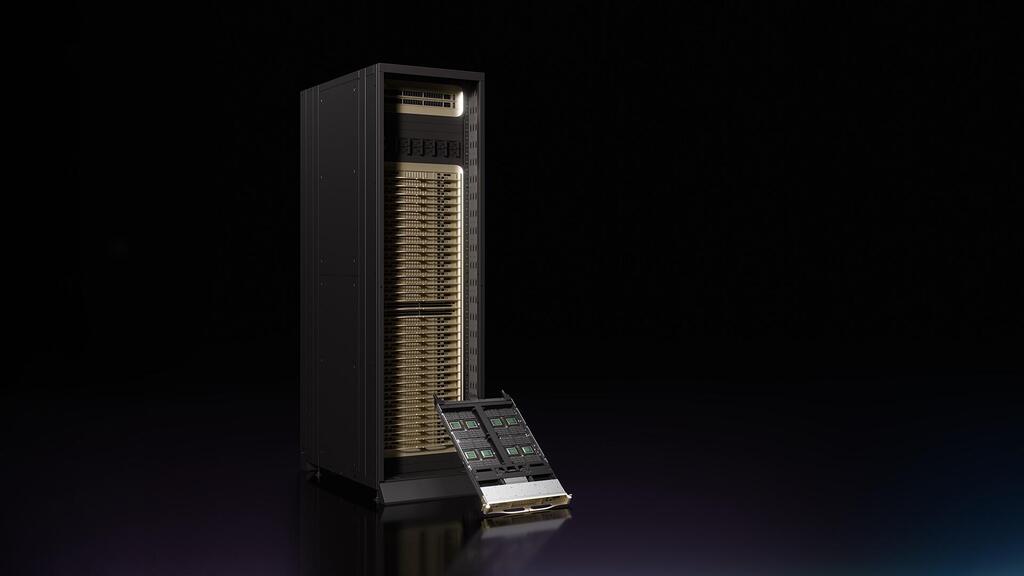
Vera, CPU for agent
(Photo: Nvidia)
NVIDIA says Vera Rubin delivers 10x higher agent throughput at scale compared to the previous generation Grace Blackwell platform. The product is manufactured through a global supply chain that includes more than 350 factories in 30 countries, with 150 partners in Taiwan alone.
“Agentic AI is a new kind of workload, where a single prompt can trigger 1,000 steps to infer, search, use tools, and generate a response,” said Huang. “Vera Rubin is an AI factory engine built for this moment, delivering intelligence at scale with the performance, efficiency, and security needed to power the next industrial revolution.”
As these systems grow, new networks are also required. NVIDIA said Vera Rubin introduced Spectrum-X Ethernet Photonics. This is a co-packaged optical switching technology currently in production and designed to support a 1 million GPU AI factory. The company says the technology provides greater power efficiency, longer AI uptime, and faster deployment than traditional transceiver-based networks.
Security is also a big theme. Because AI factories process proprietary data, regulated content, and mission-critical models, NVIDIA emphasizes confidential computing and hardware-level protection. Vera Rubin is designed with rack-scale, full-stack NVIDIA Confidential Computing to encrypt data across high-speed interconnects and uses BlueField-4 and DOCA software for multi-tenant isolation, zero-trust policy enforcement, runtime threat detection, and end-to-end encryption.
The same security logic goes into NVIDIA’s Windows Push. In collaboration with Microsoft, the company announced RTX Spark, a new superchip for Windows PCs designed for personal AI agents. NVIDIA says RTX Spark-powered laptops and compact desktops will be available this fall from ASUS, Dell, HP, Lenovo, Microsoft Surface, and MSI, with models from Acer and GIGABYTE to follow.
RTX Spark aims to transform your PC from a machine that runs apps to a device that can host private local agents. The chip combines a Blackwell RTX GPU with 6,144 CUDA cores and 5th generation Tensor Cores, connected to a 20-core Grace CPU. NVIDIA says it will deliver up to 1 petaflops of AI performance and up to 128GB of unified memory.
“The PC is being reinvented,” Huang said. “For 40 years, we’ve been launching apps. Click, type. With RTX Spark and Microsoft Windows, your PC does the work you ask it to do. This is the new PC. Your personal AI computer.”
The main challenge for local AI agents is reliability as well as performance. Agents that can open applications, search files, generate code, send information to models, and operate throughout your workflow require more control than standard apps. NVIDIA and Microsoft said RTX Spark uses new Windows security primitives and NVIDIA OpenShell, a runtime designed to allow users to define what the agent can and cannot do, to route sensitive queries to local models and mask personal information when using cloud models.
NVIDIA is also marketing RTX Spark to creators, AI developers, and gamers. The company says users will be able to render 90GB 3D scenes, edit 12K videos, generate 4K AI videos, run 120 billion parameter language models with up to 1 million tokens of context, and play AAA games at 1440p and over 100 frames per second. Adobe is also redesigning Photoshop and Premiere for RTX Spark, and NVIDIA says this change will improve AI and graphics performance by up to 2x across creative workflows.
For enterprises, NVIDIA and Microsoft are also deploying much larger systems on Windows. DGX Station for Windows is a deskside AI supercomputer built on the GB300 Grace Blackwell Ultra desktop superchip. NVIDIA said the system, which will be released in the fourth quarter from ASUS, Dell Technologies, GIGABYTE, HP, MSI and Supermicro, will be able to locally run AI models with up to 1 trillion parameters.
4 View gallery
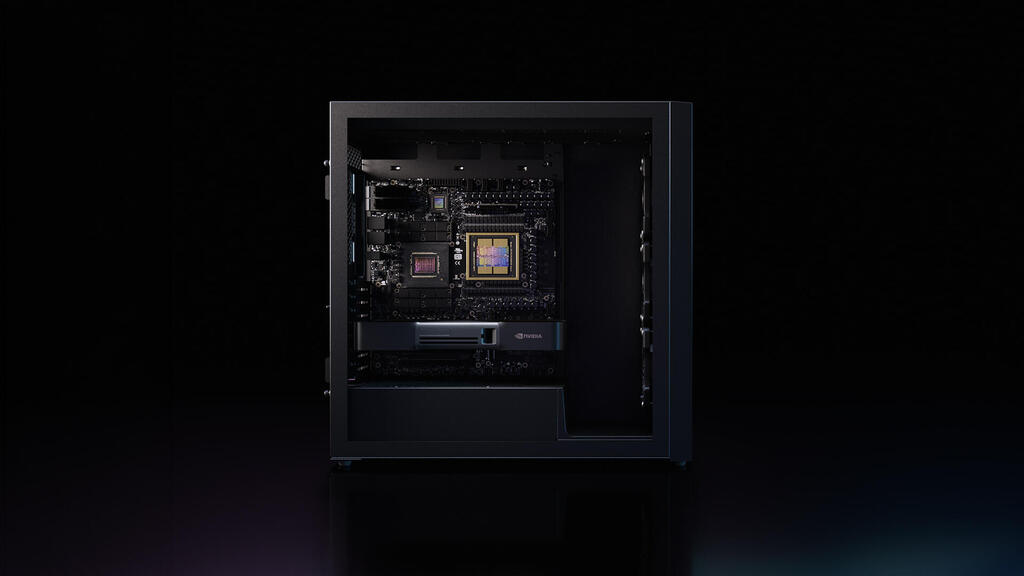
NVIDIA DGX Station
(Photo: Nvidia)
The system is designed to bridge the gap between data center AI infrastructure, which has traditionally run on Linux, and the Windows environments in which many companies already run their design, engineering, research, and productivity workflows. DGX Station for Windows includes a 72-core Grace CPU, Blackwell Ultra GPU, up to 748 GB of coherent memory, and up to 20 petaflops of FP4 performance. It can also be combined with an RTX PRO 6000 Blackwell Workstation GPU for visualization and simulation.
According to NVIDIA, DGX Station can run hundreds of agents simultaneously and connect them directly to enterprise applications and workflows. It also supports Windows Subsystem for Linux, giving organizations access to Linux AI toolchains while maintaining Windows security, management, and compliance controls.
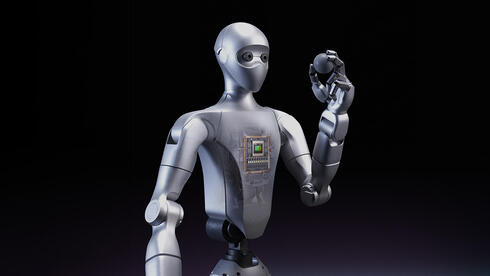
The final part of NVIDIA’s GTC Taipei push moves AI from screens and data centers to the physical world. The company announced the Isaac GR00T Reference Humanoid Robot, an open humanoid robot reference design for academic research. The platform combines the Unitree H2 Plus humanoid robot, Sharpa’s five-fingered hand, Jetson Thor onboard computing, and NVIDIA’s Isaac GR00T software and models.
The goal is to provide researchers with a more integrated platform for humanoid development that integrates hardware, data capture, simulation, training, evaluation, and deployment. The robot is approximately 6 feet tall, weighs 150 pounds, and has 31 degrees of freedom throughout its body, reaching 75 degrees of freedom if you include its hands. The Jetson AGX Thor T5000 onboard computer includes a Blackwell GPU, 14-core Arm CPU, and 128 GB of unified memory for real-time inference and control.
4 View gallery
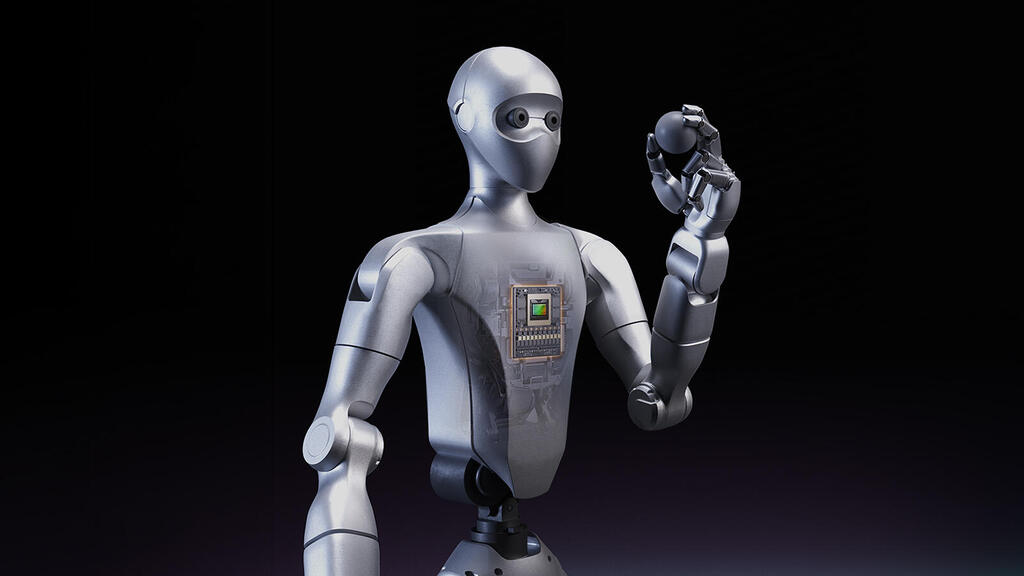
NVIDIA Isaac GR00T Reference Humanoid Robot
(Photo: Nvidia)
“Humanoid robots will bring physical AI to the world’s largest industries, creating a multitrillion-dollar economic opportunity,” Huang said. “The NVIDIA Isaac GR00T Reference Humanoid Robot provides researchers with a single, open platform to make breakthrough discoveries toward general physical intelligence.”
Leading research institutions such as Ai2, ETH Zurich, the Stanford Robotics Center, and the Institute for Advanced Robotic Control at the University of California, San Diego are expected to use the platform. The reference humanoid robot will be available from Unitree in late 2026, while the Unitree G1 reference workflow will soon be available on GitHub and Hugging Face.
Taken together, these announcements show that NVIDIA is trying to define its next AI platform before the market is fully formed. The bet is that agents will no longer live in one place. These will run in large AI factories, corporate desks, consumer PCs, and eventually robots operating in the real world.
That vision is still in its early stages, and much depends on whether developers, enterprises, and users adopt agents deeply enough to justify new hardware. But NVIDIA’s message from Taipei was unmistakable. The AI boom has moved beyond model training, and the next race is to build the machines that run AI.