Beijing, January 30, 2026 /PRNewswire/ — China.org.cn’s news report on AI applications in China:
Anyone who watched Iron Man has dreamed of owning their own highly intelligent and incredibly efficient JARVIS. After all, who wouldn’t want an assistant this talented?

Cutting-edge AI is making its way into daily life in China
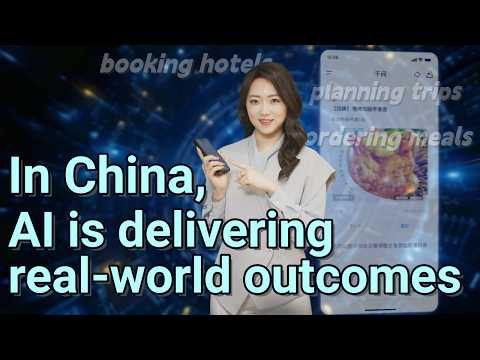
In China, that vision is becoming a reality. Recently, Chinese tech giant Alibaba rolled out an updated version of its AI assistant app Qwen. Built on the company’s open source large-scale language model Tongyi Qianwen, the new version is deeply integrated with real-world services across Alibaba’s ecosystem, including takeout delivery, online shopping, digital payments, maps, and travel platforms. Apps can complete tasks and provide results autonomously. For example, with a simple voice command such as “Order a Big Mac and have it delivered to my office,” and payment confirmation, all you have to do is wait for the knock on the door. Even for more complex tasks, such as booking flights or hotels, you can simply tell your AI assistant and wait for it to do the rest.
From AI that simply “thinks” and “suggests” in a chat window to intelligent assistants that take the initiative, perform tasks, and deliver real-world results, we see China’s AI development moving in a direction that is more human-centered, needs-driven, and integrated into our lives.
At the same time, this change continues to expand the availability of scientific and technological benefits. Health services are a strong example. Pancreatic cancer is known for its high mortality rate, frequent misdiagnosis, and difficulty in early detection. However, using China’s AI model PANDA, the disease can be identified with high sensitivity and specificity using non-contrast CT, which is typically taken during routine health checkups. Additionally, the test cost is reported to be less than 200 yuan (approximately $25 USD) per screening. Similar AI models are now being extended to early detection of other types of cancer. In addition to cancer screening, there are also health management apps such as Ant Afu. Afu helps users build healthy lifestyle habits, answer health-related questions, and analyze health checkup reports. The app is powered by AI avatars of hundreds of China’s top doctors and expands access to quality medical services while reducing doctors’ offline and repetitive workload. Notably, more than half of its 15 million monthly active users are from Tier 3 or lower cities, where healthcare resources are traditionally less concentrated. With the help of AI, healthcare services are becoming more comprehensive, universal, and convenient.
Another area where the benefits of AI are becoming clearer is in bridging the “digital divide” faced by older adults. Online services such as ride-hailing and food delivery for younger generations often pose an insurmountable barrier for many older adults. AI assistants significantly reduce operational complexity, allowing seniors to enjoy these everyday services as well, and even unlock new possibilities for connecting with a rapidly changing world.
When AI technology is geared toward improving real-life experiences such as ordering a meal, seeing a doctor, or traveling or commuting, technological advances can truly resonate with human development itself and create warm value. By staying grounded and focusing on making technology accessible, affordable, and truly useful, China’s AI development is unlocking human-centered potential in more subtle and far-reaching ways.
china mosaic
http://www.china.org.cn/video/node_7230027.htm
Cutting-edge AI is making its way into daily life in China
http://www.china.org.cn/video/2026-01/30/content_118308189.shtml
Source China.org.cn