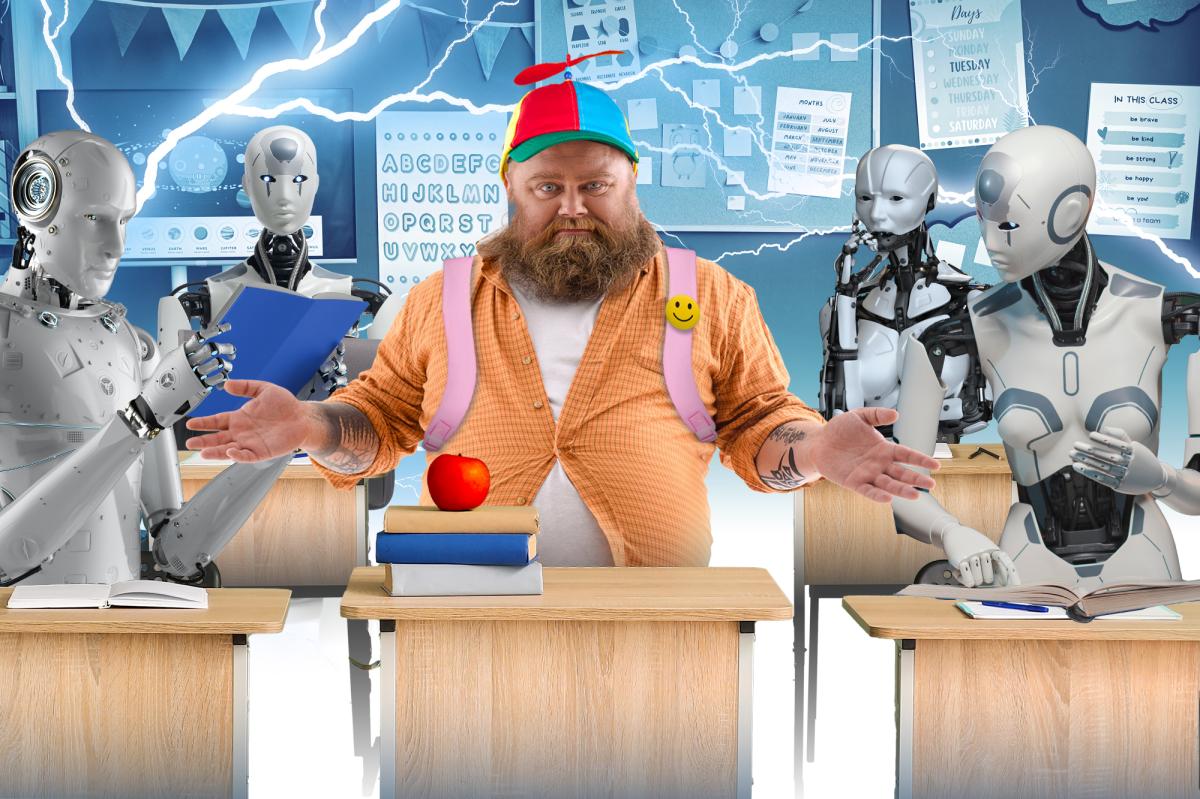
Fear of AI taking jobs is driving American adults back to school, a new study finds.
According to a study by Eastern Washington University, more than 52% of people over the age of 25 are concerned that they could lose their jobs due to an AI takeover, forcing them to plan on enrolling in courses to hone their skills and advance their careers.
The university surveyed more than 1,000 participants and analyzed Google Trends to determine what is driving people’s hard work interest, whether it’s honing their skills to compete with AI or changing their field entirely.

Of those who are ready to return to work, 21% were motivated by artificial intelligence threatening their career, and 31% said AI “made them more interested.”
This comes as experts argue that AI poses a threat to most white-collar careers. Mustafa Suleiman, CEO of Microsoft AI, told the Financial Times in February that most of these jobs will be automated within the next 18 months.
Daniel Crichton, a Manhattan Institute fellow who specializes in economic growth and AI, told the Post he was “not surprised” by the EWU’s findings.
“When people hear these big negative news stories, they often go back to school,” he says. “It’s common to say, ‘I’m struggling or I expect to be struggling in this economy, so I want to improve my skills.'”
According to the survey, employees in the healthcare, technology and hospitality industries are most likely to enroll next year.
Crichton said interest in the industry is increasing as people return to school at all levels of higher education.

“Welding, electrician, these are jobs that people think are not being replaced at all,” he explained.
Researchers at Tufts University last month created the U.S. AI Employment Risk Index, predicting that more than 9 million people will be “at risk of displacement over the next two to five years.”
According to the index, the occupations most threatened by AI are computer programmers, web designers, financial planners, data scientists, authors, and journalists.
Apart from the frightening reality that humans may become obsolete, money remains the main factor that drives people to pursue some form of higher education.
According to the EWU report, about 64% of those who wanted to go back to school said it was for a better paycheck.
But Crichton warned that even the most prestigious academic institutions may not be ready for this unprecedented AI revolution.
He said many professors are just as confused as these prospective students and don’t even know what to teach given the rapid advances in technology.
“When people feel insecure about their jobs, they always look for alternatives,” he said. “The old model was just going back to school, but I think one of the big questions is: Are schools ready for AI?”
“And I think the answer right now is no. Curriculum won’t adapt that quickly.”