Sensor Tower releases “2026 AI App Market Insights Report”. This report provides an in-depth look at how generative AI is reshaping the mobile app landscape, website traffic, and the digital advertising ecosystem, while driving the continued evolution of the competitive landscape, consumer behavior, and commercial monetization models.
This transformation, driven by chatbots and started in 2023, has now evolved into a broader ecosystem-wide transformation. From AI assistants and AI-powered shopping experiences to the rapid adoption of AI concepts in advertising marketing and non-AI native applications, AI is continually reshaping products, businesses, and user experiences.
Across the mobile and web ecosystems, we believe there are three key trends that will define the AI development landscape in 2026.
- Competition intensifies as ChatGPT faces growing challenges
- AI agents transform the way consumers shop
- AI is the new entry point for users to discover content and ads to reach audiences
Sensor Tower’s 2026 AI Apps Market Insights Report provides in-depth analysis of these and many other key topics, providing comprehensive coverage of the latest cross-device and cross-vertical industry trends.
Competition intensifies as ChatGPT faces growing challenges
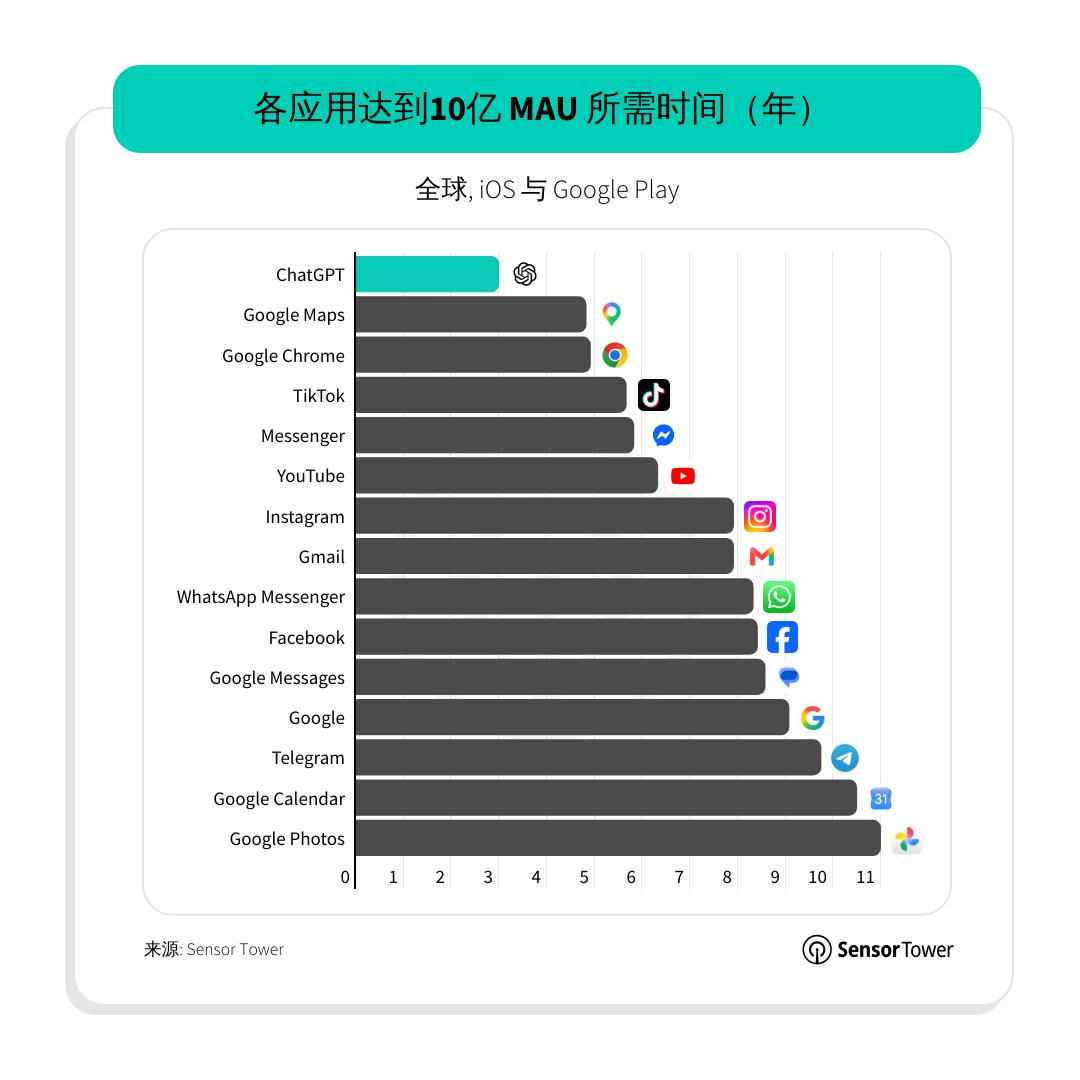
ChatGPT continues to lead the AI assistant market. In May 2026, we became the fastest mobile app in the world to reach 1 billion monthly active users (MAUs), achieving this milestone in just three years. This is faster than TikTok, YouTube, and Instagram.
At the same time, market competition is clearly increasing beyond the top players. In Q1 2026, the combined usage time of ChatGPT, Google Gemini, and DeepSeek accounted for almost 90% of the total time spent on AI assistant apps, indicating that a few major platforms still dominate the market.
However, competition is beginning to intensify at the edges of this highly concentrated market. As Google Gemini and Claude continue to gain momentum in several major global markets, ChatGPT’s real audience share (a metric that measures unique users across mobile apps and websites) fell below 50% for the first time in March 2026. Leveraging deep native integration with the Android system and broad ecosystem distribution across Google’s services, Google Gemini has steadily expanded its market footprint, particularly in Europe, the United States, Japan, and South Korea.
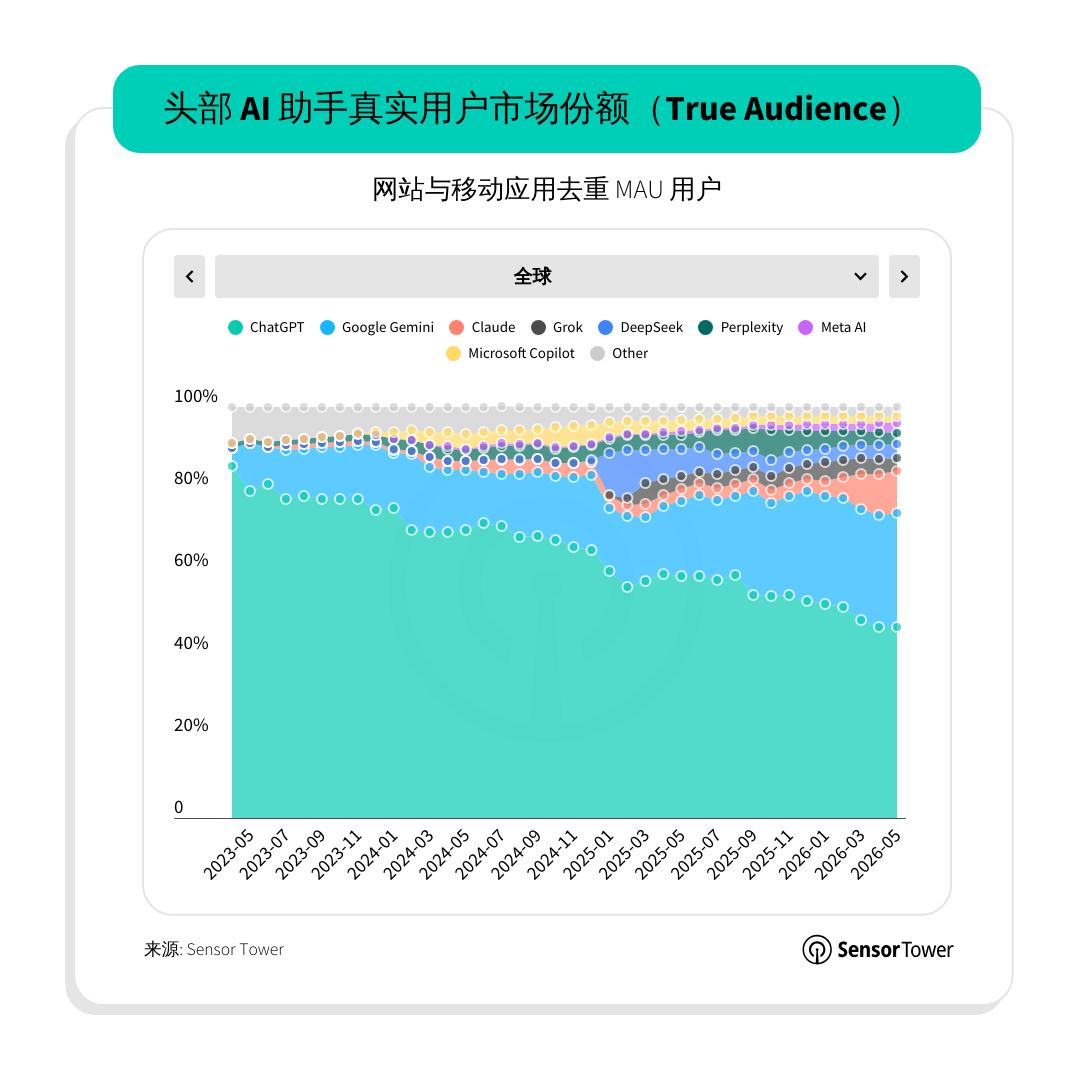
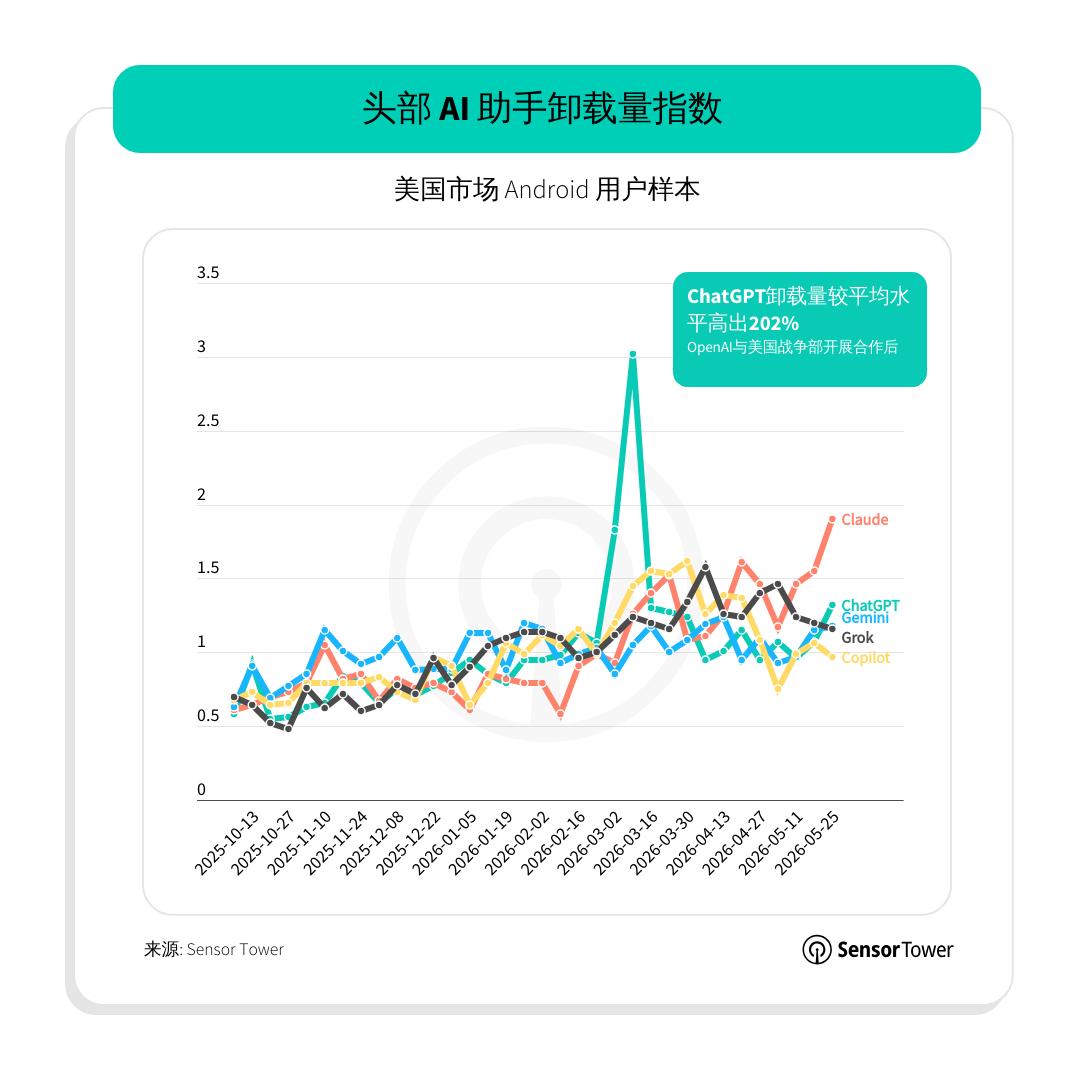
Meanwhile, Claude has emerged as the biggest dark horse of 2026. In May 2026, actual viewership grew explosively by 452% year-over-year, with US market share increasing from 4.4% to nearly 14%. In the US market, ChatGPT uninstalls increased significantly after OpenAI reached an agreement with the Department of the Army, peaking during the week of March 9-15, at approximately double the average level for the app. It appears that many users who uninstalled ChatGPT migrated to Claude because Anthropic explicitly refused to partner with the Department of Defense. From March 1st to March 5th, Claude’s daily downloads briefly exceeded ChatGPT’s downloads. ChatGPT has regained the top spot in the daily download rankings since March 6, but the gap between the two has narrowed significantly compared to pre-March levels.
The data shows that while ChatGPT remains the undisputed leader in this category, the market is gradually moving from a single oligopoly to a more diverse multiplayer competitive environment, with Gemini’s structural channel reach benefits and Claude’s rapid penetration among experts and conscious users.
AI agents transform the way consumers shop
AI assistants are increasingly influencing how consumers discover and evaluate products online, especially in high-value categories (such as consumer electronics, home goods, and fashion apparel) where purchasing decisions rely heavily on information gathering and comparison. From Q4 2024 to Q1 2026, referral traffic driven to shopping websites from generative AI increased across all major retail categories. The computer and consumer electronics categories led the shift, with the share of traffic driven by generative AI soaring nearly fourfold. Meanwhile, the Home & Garden and Sports & Outdoors categories both accounted for over 0.35% of total visits.
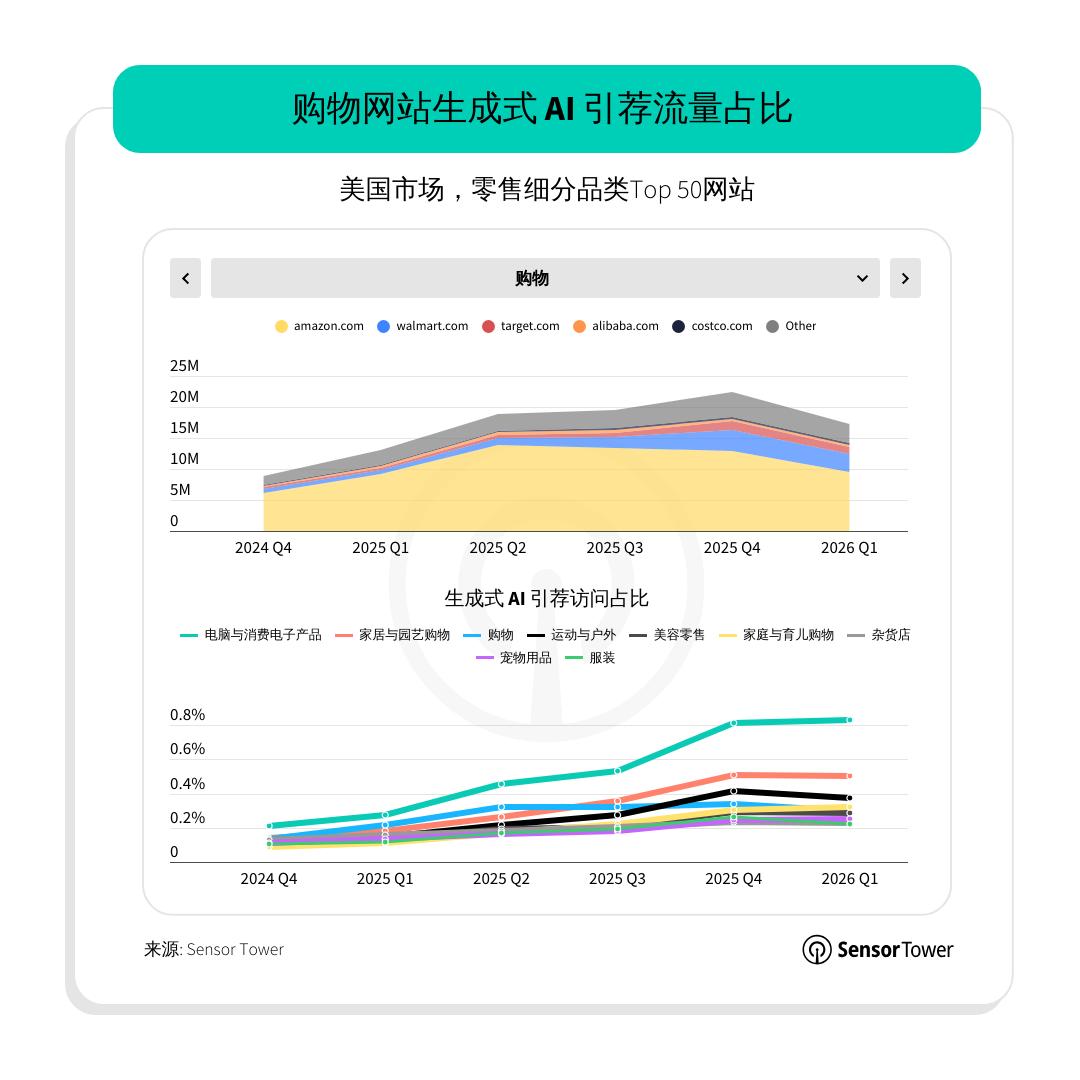
However, there are significant differences in the adoption of AI technology across retail platforms. Retail giants like Walmart and Target that have deeply integrated AI assistants have seen their share of generated AI referral traffic rise to more than 1.5%. In contrast, Amazon currently maintains a low market share due to limited crawler access and a relatively closed ecosystem.
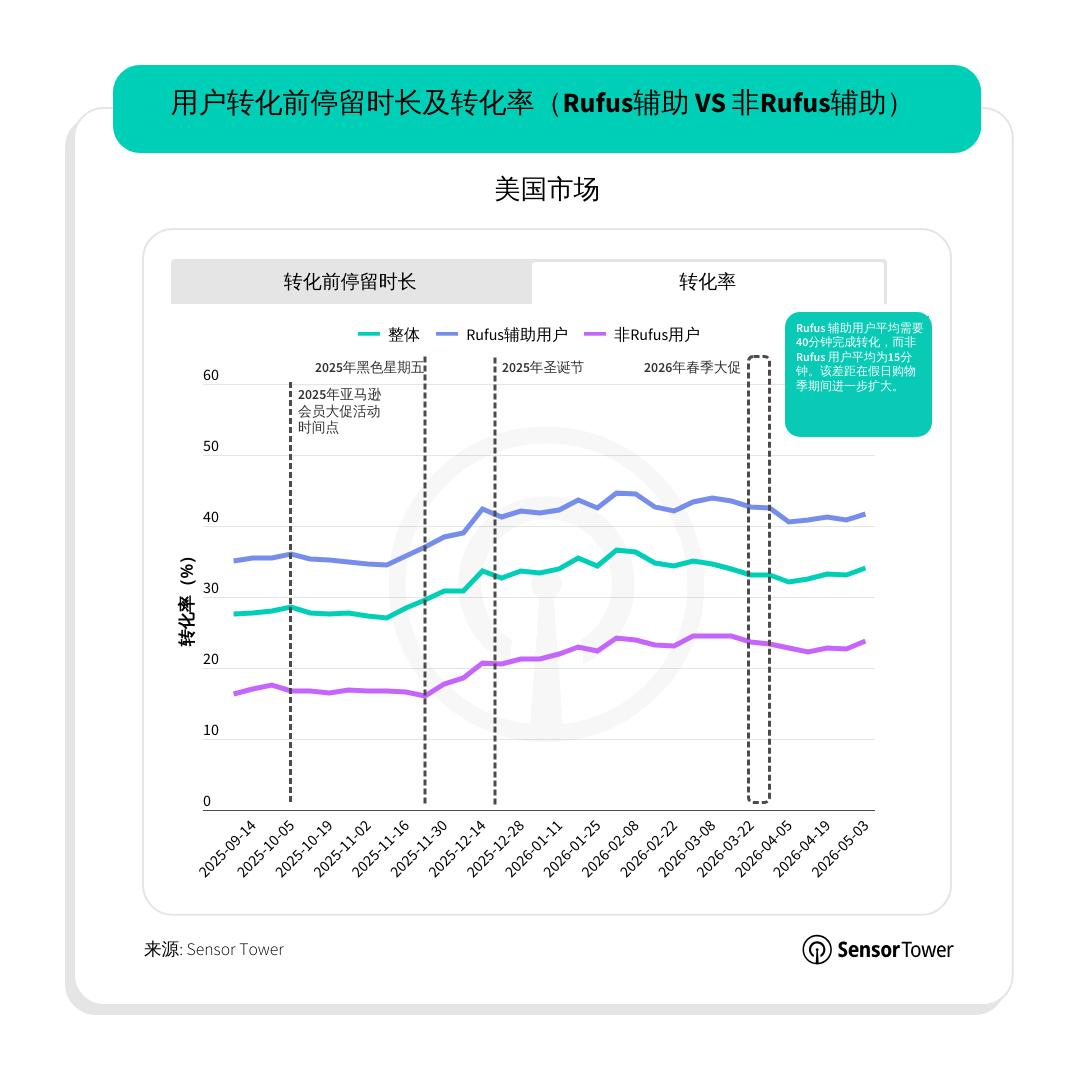
At the same time, AI shopping assistants that were early integrated into various e-commerce platforms, such as Amazon’s Rufus and Walmart’s Sparky, are also reshaping users’ in-app behavior. Data shows that Rufus users have nearly twice the purchase conversion rate as non-users. Meanwhile, Sparky’s rapid adoption rate significantly extended users’ in-app session time, effectively increasing average order value.
This shows that the value of AI is reflected not only in driving traffic, but also in improving conversion efficiency and user engagement within retail platforms.
AI has become the new entry point for users to discover content and ads to reach audiences
As AI apps grow in popularity, they are emerging as the entry point for new content discovery in the digital ecosystem, following search and social media. ChatGPT began testing ad placements in early 2026, and by May, the number of ad impressions had jumped more than seven times compared to March. Although overall adoption is still in its infancy and at a low level, AI platforms are rapidly evolving into new performance marketing and user reach channels that advertisers cannot afford to ignore.
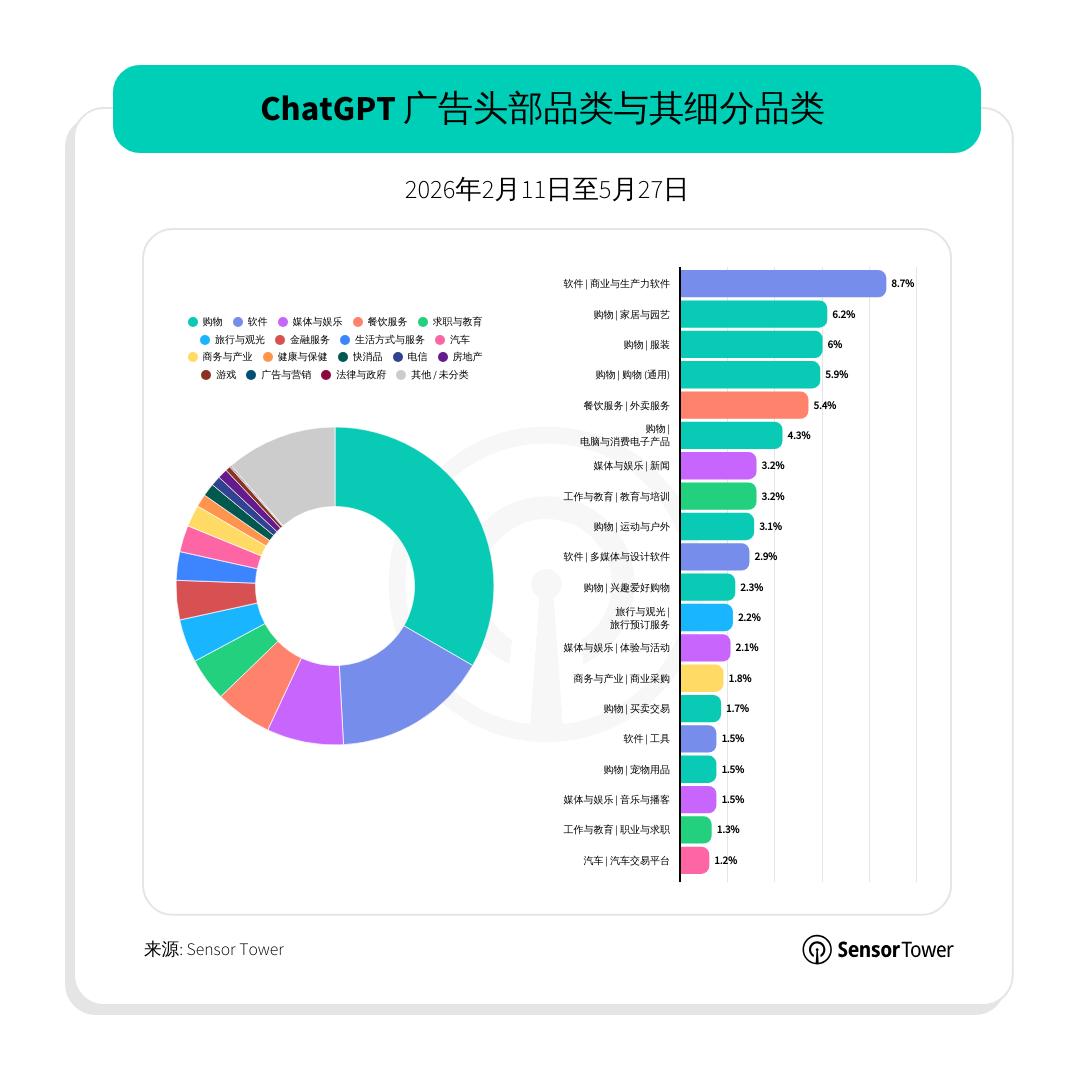
Early advertisers were primarily focused on shopping, software, travel, and financial services, which is perfectly in line with AI’s inherent benefits of helping users make complex decisions. However, compared to traditional social media platforms, AI platforms impose stricter restrictions on sensitive categories such as healthcare and gambling, thereby creating a more sophisticated and compliant advertising ecosystem.
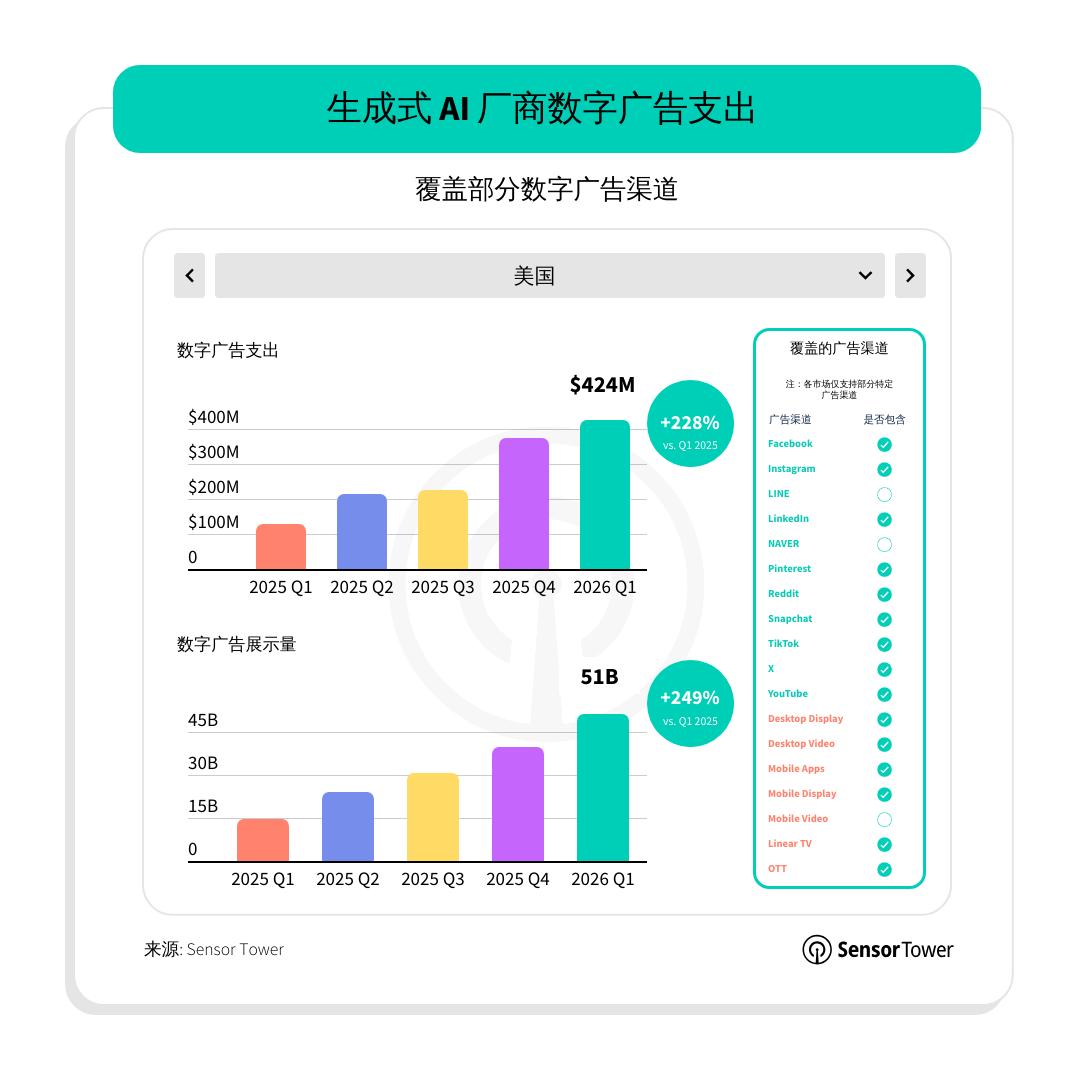
At the same time, AI brands themselves have become important advertisers in the market. In the first quarter of 2026, spending on generated AI-related advertising in the US market more than tripled compared to the same period last year. As competition for users intensifies across the board, ad spending at both OpenAI and Anthropic has surged more than 800% year over year.
Looking at the broader internet landscape, marketing that leverages AI concepts has also become mainstream. More than 200,000 apps now mention AI in their store descriptions, and in Q1 2026, global investment in ad creative containing AI-related keywords reached $1.3 billion.
wider perspective
Clear patterns of development are gradually emerging across three key areas: AI assistants, retail commerce, and advertising marketing.
No longer a standalone app category, AI has evolved into a behavioral habit and underlying business architecture that runs throughout the internet, profoundly reshaping user experiences, business models, and digital ecosystems.
- In the AI assistant space, the market is moving from single-player dominance to multiplayer competition.
- In retail commerce, AI is reshaping consumer content discovery and purchase conversion paths
- In advertising marketing, AI is both a delivery medium and a core selling point in its own right.
- In the mobile app ecosystem, AI is gradually evolving from a separate product feature to a standard feature of mobile apps.
Taken together, these changes point to 2026 as the year of maturity in which AI moves beyond the early adoption stage and achieves full structural integration into the digital economy.
This article is from the official WeChat account “Sensor Tower”, written by Sensor Tower, and published with the permission of 36Kr.