AI needs data centers, but many residents don’t want them.
Developers are building data centers across the country to support growing cloud demand and AI infrastructure needs. What started as mundane industrial development has snowballed into a charged public debate, raising questions about how data center development affects the communities around them. Through town hall shouting matches, ballot petitions, rallies and sometimes even violent altercations, communities are coming together to oppose development.
According to a recent report from Data Center Watch, local, bipartisan opposition blocked or delayed $64 billion worth of data center projects between March 2024 and March 2025. As of March 2025, at least 142 activist organizations existed across 24 states — and experts have suggested that number has grown in the past year as data center opposition gathers even more traction.
“Community groups are not going away,” said Jessica Sharp, a Wilmington, Ohio, resident who’s organizing efforts to oppose the proposed $4 billion AWS data center campus in her city. “You’re not just going to steamroll us. We’ve built too much momentum by working together … and we’re not giving up the fight and our way of life.”
Many residents feel they’re owed more than what operators are offering in exchange for accepting data centers in their towns and cities. Others feel that data center development should be halted or significantly reduced. And many more say that, above all else, the system for data center development is broken, as new developers too often ignore stakeholder concerns to bullishly push their builds forward.
Community groups are not going away … we’re not giving up the fight and our way of life. Jessica SharpA Wilmington, Ohio, resident
As more businesses adopt and deploy AI, they will increasingly depend on these data centers. Business leaders consequently need to consider how concerns about data center development can affect their own AI strategies — from delayed or canceled projects to escalated costs to reputational backlash. Businesses have a role to play in advocating for input, transparency, participation and collaboration from all affected parties, especially residents, to help move the needle on the issues surrounding AI data center development today.
AI data centers seek new homes
Burgeoning interest in AI has led to the proliferation of new data centers in recent years. They house the servers, networking equipment and other IT infrastructure that power AI. While similar to traditional data centers, the current crop of data centers supporting the AI boom has unique needs, such as specialized hardware and vast computing power.
Recent McKinsey & Company research estimated that AI data centers will require $5.2 trillion in Capex by 2030 to meet global demand for AI. Many companies are already making the necessary investment; S&P Global said at the end of 2025 that data center M&A and investment hit over $61 billion worldwide, with the U.S. leading the way in data center growth.
Much of that growth comes from massive cloud service providers such as AWS and Google. Often called hyperscalers, these companies operate specialized data centers for extreme scale. A hyperscale data center can house more than 5,000 servers and use upward of 100 megawatts (MW) of power, covering 10,000 or more square feet and requiring massive energy and cooling systems.
“We need more data centers because AI is taking off,” said Darrell West, a senior fellow at the Brookings Institution’s Center for Technology Innovation. “AI is being deployed virtually in every area … and it requires very high computational power, so data centers provide that type of computer processing.”
To build these data centers, developers are turning to rural areas with less advanced technology. Large land masses in states like Virginia, Texas and Ohio are prime targets. As of April 2026, according to Data Center Map, Virginia alone has 598 data centers, many of which make up what’s called the Data Center Alley in Ashburn, Va. Texas sits at 439, and Ohio has 203.
Data center locations usually depend on the availability of land, electricity, water and other resources, as well as the incentives and other unique advantages a community or state might offer, West said. For example, Virginia offers proximity to federal government agencies, which are increasingly using AI, especially for defense, along with the state’s land and energy resources, he said.
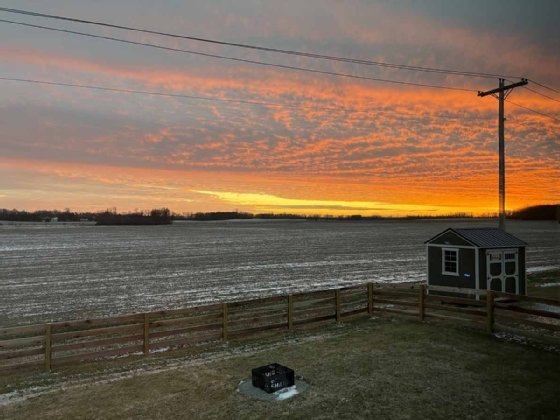
Potential location of the $4 billion AWS data center being considered in Wilmington, Ohio.
Data center operators promise community benefits
Community leaders often pursue and partner with data center operators, welcoming development of these facilities for their potential benefits, such as job growth and tax revenue.
An AI data center can create hundreds of jobs, said Douglas Swain, president of Logistix Property Group, a land development company specializing in data center land entitlement. What’s more important is the quality of jobs, he added, noting that jobs at these facilities typically pay 50% more than a state’s average wage. They’re tech jobs in a growing tech industry.
Data centers particularly promote job growth during construction, said Dan Diorio, vice president of state policy at the Data Center Coalition. For example, from May 2023 to May 2024, the U.S. Census Bureau measured that data center construction spending increased by 69%, he said. And in 2023 alone, the U.S. data center industry contributed over four million jobs and $400 billion in labor income, according to the Data Center Coalition’s 2025 study, “Economic contributions of data centers in the United States.”
“[Workers] make careers out of these short-term jobs,” Diorio said. These jobs give them the experience and education they need to move on to more projects.
For campus data centers — which are particularly large and often hyperscaler-funded — community benefit is even more fruitful, Swain added. Those projects take longer and involve multiple buildings and long-term vendors, so the jobs are more sustainable. That, in turn, can lead to more demand and investment in nearby housing and other infrastructure. “There’s a lot of spin-off benefits in terms of eating, living and spending money within the community,” he said.
Data centers also sometimes offer a cleaner alternative to existing industrial infrastructure. For example, a data center project in Jay, Maine, is on the site of a former paper mill. The data center would use less water than the paper mill did, and developers plan to replace the on-site gas-fired power plant with a solar field. Because the state anticipated the project to be significantly beneficial to the town, Gov. Janet Mills sought to exempt it from a bill proposing a temporary moratorium on data center development in March 2026; Gov. Mills subsequently vetoed that bill in April, and the state legislature was unable to override that veto.
Another benefit that spurs community involvement is property tax revenue. Operators can pay massive property taxes back to the cities and towns, money that these communities can use for infrastructure and other needs, West said. This is already happening in certain areas. For example, Covington, Ga., plans to eliminate residential property taxes entirely due to the revenue it expects to receive from an AWS data center under construction there, Diorio said.
In exchange for the tax revenue AI data centers promise and to compete with offers from other municipalities, community leaders have historically offered operators tax abatements or other incentives. These can include sales tax exemptions, tax incremental financing (TIF) agreements and payments in lieu of taxes (PILOTs). These financial incentives ensure that AI data centers return predictable, long-term revenue.
However, some residents said tax incentives aren’t always in the community’s best interest. Quintin Kroger Kidd, a Wilmington resident, is part of active protests against the AWS data center campus, which is in the initial stages of development. AWS sought a 30-year, 100% property tax abatement for the data center. Under the proposed TIF agreement, the city and various city organizations, such as the Wilmington City Schools, would receive a PILOT that amounts to only about 30% of the property tax AWS would have to pay without the abatement, Kidd explained.
Many residents, including Kidd, view these tax breaks as a free handout to billionaire developers. And sentiment against tax abatement is prevalent in other areas where data centers are going in.
“These big tech companies think that they have their choice of the land, and they have these small rural towns, whose officials don’t know better, tripping over themselves to hand out things like tax abatements,” Sharp said. “It stems from misunderstandings and also data center lobbyist groups acting like this is a clean industry and no public health impacts, which couldn’t be further from the truth.”
[Communities] are now demanding that companies pay them. Darrell WestSenior fellow, Brookings
Prior to the AI boom, data center development often facilitated a symbiotic relationship between developers and communities. However, given rising concerns about the negative effects that hyperscale data centers can potentially have on communities, residents are realizing they have more bargaining power with data center developers than they might have originally thought, Brookings’ West said. For that reason, tax abatements are becoming less common than they were even six months ago.
“Instead of paying the companies by offering tax incentives, [communities] are now demanding that companies pay them — that they pay their full taxes and also provide other financial benefits in the community to quell the public concerns that have developed about data centers,” West said.
What makes data centers so controversial?
Despite the allure of economic growth, many residents are concerned about living near an AI data center. There’s often a fundamental ideological difference between community members and what a data center represents, West said. In rural areas, residents particularly enjoy the rugged landscape; they would much rather look out their window at farmland instead of a large data center.
Aside from data centers being an eyesore, residents cite a range of concerns, starting with their utility bills. Because AI data centers require massive amounts of electricity, residents worry they’ll drive up regional electricity demand, causing bills to skyrocket. Another fear is that increased demand could cause grid overload that leads to supply issues, especially in hot summer months. “On social media, you see a lot of posts about people complaining about their utility bills,” Kidd said.
These facilities can sometimes use more energy than large cities. That, coupled with the rapid growth of data centers in concentrated areas, could cause bills to rise — either because of distributed increases in utility infrastructure costs or because demand is rising faster than energy supply. Data center operators often disclose plans to bear the cost of new infrastructure or demand, but verifying these commitments and operator compliance can be difficult due to confidential contracts.
“We had an [electricity] rate increase last year, and AEP Ohio just announced there’s another 40% interest increase coming this year,” said Nikki Gerber, a resident of Adams County, Ohio. “We don’t even have a data center here yet — we are paying for the demand needed up at the ones in Columbus and New Albany,” two other Ohio cities with data center development.
There’s also growing concern over water use. AI data centers often consume up to five million gallons of water per day for cooling. Many residents anticipate that water will primarily come from surrounding freshwater sources, leading to increased strain and even shortages. For Gerber, water is a particular concern. She has repeatedly asked officials and developers what damage the proposed data center in Adams County will cause the town’s aquifer and has suggested they conduct impact studies. She said she hasn’t received a response.
Water use has also raised red flags for environmental conservationists. For example, a proposed data center in Urbana, Ohio, is two miles from Cedar Bog Nature Preserve, a protected wetlands area. Many residents, along with the Cedar Bog Association, have opposed the development, citing concerns over how groundwater disruption could affect Cedar Bog. The Urbana city council recently passed a 12-month moratorium on data center development to study its potential impact.
The proposed AWS data center in Wilmington has sparked similar concerns about its effects on wildlife. The Ohio Environmental Protection Agency is currently deciding whether to permit data centers to release untreated wastewater and stormwater into Ohio rivers and streams. Data center water pollutants include biocides, corrosion inhibitors and heavy metals, such as lead. Many people are anxious about how introducing these pollutants into the water systems will affect wildlife and potable water in Wilmington and across the state, Kidd said.
Living close to a hyperscale data center can also cause adverse health effects from air pollution, noise and other sources, according to a recent study of Virginia’s Data Center Alley. Effects range from steady light pollution that keeps residents awake at night to long-term health outcomes like respiratory and cardiovascular diseases.
Data Center Coalition’s Diorio questioned the methodology of that study, noting how it, and much of the rhetoric on health effects, overestimated the time data center generators are on. Those generators operate only during emergencies and short testing and maintenance periods, he said, citing Virginia’s Joint Legislative Audit and Review Commission (VJLARC) 2024 study that found generators in the Data Center Alley area were used at most twice a year and only for a few hours each time. Diesel generators are a “relatively small contributor to regional air pollution,” the study said.
At the AWS data center in Wilmington, Ohio, the plans include 252 generators that will be used for backup power. Each generator is expected to run for about ten hours per year for testing, maintenance and emergencies, said John Werkman, economic development manager with Amazon, at a recent special town meeting. That’s higher use than the VJLARC study found.
Sharp’s backyard faces the proposed Wilmington AWS data center. She said one of her top concerns is how the long construction period will affect her family. “That’s going to be a huge burden, especially felt by the families in the closest proximity,” she said.
Data centers often emit low-frequency noise pollution, Sharp said. “In the air-cooled facilities like AWS uses, the fans are extremely noisy and create a lot of low-frequency noise,” she said. “With ambient noise being so quiet in a rural community, that’s going to be really pervasive and irritating.”
Sharp is also concerned about air pollution, noting that the hyperscale facility could negatively affect air quality compared to the current open field at the proposed data center location. “My husband has asthma, so I worry about him and our kids having disproportionate health impacts,” she said.
For some residents, lackluster job growth and housing are also issues. The jobs promised by data center developers either aren’t enough to justify the development or are given to outsiders more often than to locals.
“On some of the new data centers that are being developed, we found in our research that they typically might generate 500 construction jobs over a period of several years, and then once the data center is up and running, it may require just 100 jobs to operate,” West said.
Fluctuating job growth leaves residents weary. A 2025 Business Insider analysis found that, on average, even the largest U.S. data centers employ fewer than 150 permanent workers. Moreover, many residents worry that, because there’s no mandate to hire from within the community, outsiders will move into the area seeking jobs, raising rents and reducing housing availability — as was the case in Abilene, Texas, where Stargate’s data center expansion caused a serious housing crisis last year.
In more rural areas, community members cite home value depreciation from the moment a data center is announced. “There are ‘For Sale’ signs all over my neighborhood,” Sharp said. “I’ve seen houses on the market since December with no movement — and this is in what was once a desirable area in Wilmington. It’s not normal here to see a house on the market for five to six months, and some of these are brand new homes.”
Lack of transparency adds to growing resentment
For residents, the top worry about data center development often isn’t housing issues, rising utility bills or even adverse environmental impacts. Their main concern is that they’re too often left out of the conversation entirely.
They’re … completely missing the point of what it means to be a good neighbor in a community. Jessica SharpA Wilmington, Ohio, resident
In the initial stages of data center development, agreements between operators and local governments are typically confidential. Local officials and groups sometimes sign nondisclosure agreements, or NDAs, that bar them from discussing proposed developments. The rationale for these agreements is that developers need them to protect competitive advantages and proprietary data, and to ease the flow of information between local officials and infrastructure providers, Diorio said.
Some states are even enshrining this sort of confidentiality in law: The recently passed Ohio House Bill 184 included a confidentiality clause, Sec. 9.66(D), which stated that any business information submitted to a political subdivision for economic development assistance is confidential and can’t be disclosed to the public, whether anonymized or not.
This clause was particularly upsetting, Kidd said. HB 184 concerned an unrelated issue — limitations on intercollegiate athlete contracts — and the inclusion of the confidentiality clause caught residents off guard. In the context of data center development, it means that deals between operators and local government entities remain secret. Many feel this goes against the intention of Ohio’s Sunshine Laws.
Sharp shared a similar sentiment about the closed-door nature of data center development in Wilmington. The Clinton County Port Authority rushed the process under NDAs, and the data center deal was basically complete before it was public knowledge, she said. This involved changing zoning codes to allow for data center development in light industrial zones and then rezoning a parcel of land for light industrial use — all without community knowledge.
Gerber dealt with similar transparency issues. She spent the past three years working on rerouting the Buckeye Trail — a famous, more than 1,400-mile trail loop in Ohio — to make Manchester, Ohio, a trail junction village where hikers could resupply, boosting the local economy. She received approval for the project in January 2026 and was surprised a week later when the village announced that a data center would be built on the land, and her reroute couldn’t proceed.
It was like having the rug ripped out from under her, she said. “They just completely obliterated everything I was working on,” she added.
The polarizing nature of massive data center development and the secrecy surrounding some of the deals have left many residents feeling like the status quo must change.
“They’ve taken away our seat at the table to decide what we want for our communities,” Sharp said. “From a PR standpoint, they’re failing … and completely missing the point of what it means to be a good neighbor in a community.”
How residents are fighting data center development
Residents opposed to data center development are making their thoughts known in town halls across the country. The National Conference of State Legislatures lists 14 states that are considering some form of a data center development ban. Port Washington, Wis., passed the country’s first anti-data center referendum last month. Public opposition is no doubt putting pressure on officials to act.
Some residents are taking matters into their own hands. Take Gerber, whose name is on a proposed Ohio constitutional amendment to ban the development of data centers larger than 25 MW in the state. The Ohio Residents for Responsible Development, a grassroots group of concerned citizens, is leading this initiative to amend the state constitution.
“We have 72 counties covered out of 88 counties in the state … with county leads taking signatures,” she said of the effort to get the more than 400,000 signatures needed to put the amendment on the November state ballot.
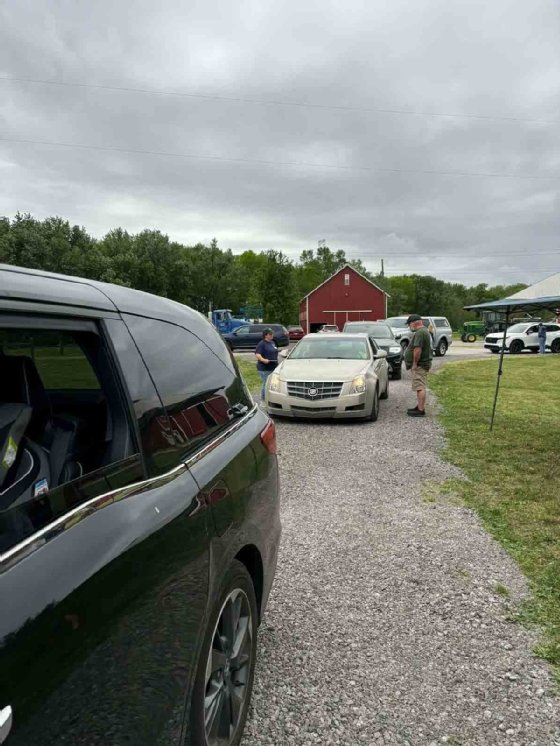
Drive-through petition signing event at the Gorman Farm in Trenton, Ohio, where residents are helping get the more than 400,000 signatures needed to put a data center ban on the state’s November ballot.
Sharp is another Ohio citizen fighting data center development. She’s the lead organizer for the Wilmington Residents for Responsible Development group. She recently filed a lawsuit against Wilmington for its lack of transparency regarding the proposed AWS data center. The complaint alleges the city didn’t follow required notice procedures when rezoning the development site — which is next to residential homes, including Sharp’s — for data center development.
The suit also raises other concerns, such as a request for damages to be awarded to the plaintiffs should the rezoning go through, and it calls for more explicit communication and transparency moving forward. Sharp’s group also secured enough signatures to get a referendum on the upcoming November ballot so residents can vote on whether to rezone 500 acres for industrial data center development.
Joseph Miller, director of PauseAI UK, the British arm of the PauseAI nonprofit that coordinates local groups to mitigate AI risks, said informing people of the risks and local organization are key to getting the attention of governments and decision-makers.
One of PauseAI’s biggest achievements, Miller said, was organizing the largest AI safety protest in London, drawing 300 people. The U.S. is seeing similar protests, though on a smaller scale. In March 2026, demonstrators in San Francisco called on AI companies to halt development, citing existential threats the technology could bring.
In a few cases, growing resentment toward data centers and AI technology in general has led to violence. In April 2026, an Indianapolis city council member woke up to find 13 bullet holes in his home and a note on his front door reading “No Data Centers.” A few days later, someone targeted the home of Sam Altman, OpenAI’s CEO, with a Molotov cocktail.
Many community members aren’t going to such extremes, however. For some, like Gerber and Sharp, the goal isn’t to stop data center development entirely but to force officials to be more transparent about it. Neither Gerber nor Sharp is opposed to AI itself but rather to the communication tactics of data center developers, operators and local officials. This is an opinion many data center developers and advocacy groups actually share — more communication and collaboration are needed between local communities and developers.
The need for communication and sustainable development
Bruno Berti, senior vice president of global product management at NTT Global Data Centers, a data center operator, said engagement with residents and prioritization of sustainable practices are the secret ingredients in his company’s latest data center development projects.
Community engagement is going to be bigger for us. Bruno BertiSenior vice president of global product management, NTT Global Data Centers
An NTT data center project in Gainesville, Va., was ultimately approved for construction after NTT representatives attended local meetings and spoke with residents, Berti said. “It’s becoming a lot more prevalent that we have to answer these questions,” he said. “Community engagement is going to be bigger for us.”
Community engagement provides NTT with an opportunity to “demystify narratives” about data centers that are most concerning to residents, Berti added. Take, for example, potential concerns about the rising cost of electricity driven by data center consumption. While studies show that AI data centers can put a massive strain on power grids, that doesn’t mean they’re always the only culprits behind electricity rate increases.
Increases in electric rates can stem from other factors, such as inflation and President Trump’s tariffs, but people often attribute them to data center development, Brookings’ West said. “The public is connecting data centers to electric rate increases, either fairly or unfairly, and blaming the data center developers for that.”
The Data Center Coalition’s Diorio said grid capacity and electric rates typically are the responsibility of utility providers and depend on the grid infrastructure. Because of outdated systems and providers that haven’t invested in their utility infrastructure, some communities can face negative consequences from hosting data centers.
There are communities where data centers don’t fit residents’ needs, Diorio added. Generally, it’s the responsibility of developers and operators to ensure they build in areas where they can operate without negatively affecting the people who live there. Practicing this foresight and respecting local communities’ interests can demonstrate a commitment to sustainable and responsible development and improve public sentiment.
NTT Global and other data center developers are working to engage with residents on their concerns about grid load and electricity rates, Berti said. This includes implementing peak shaving, in which data centers use backup power generation when the community’s power load reaches a certain level. This enables data centers to continue operating without drawing excess energy from the grid, preventing brownouts and higher electricity costs for residents and businesses in the area.
Increased generator use circles back to concerns about air pollution. Many data centers use diesel generators for backup power, which can harm the surrounding environment. However, some developers are turning to innovative, green technologies, such as fuel cells and renewable energy, Berti said. Fuel cells produce electricity without expelling harmful emissions because they rely on electrochemical reactions rather than combustion.
Diorio mentioned that more data centers are using solar, wind and geothermal sources of energy to power operations. Operators are also exploring nuclear power as small modular reactors are being developed in the U.S. According to S&P Global Energy, hyperscalers outpaced other industries in clean energy procurement in 2024 and 2025; however, they’re unlikely to meet the decarbonization goals set for their data centers.
While many data centers place substantial strain on water systems, others have managed to cut freshwater use by as much as 70% with more sustainable closed-loop cooling systems, according to the Florida Water and Pollution Control Operators Association. Closed-loop systems consume water once and then reuse it to cool their systems, reducing runoff that drains into local ecosystems or contaminates groundwater.
However, closed-loop systems still use chemicals and aren’t necessarily a silver bullet. And developers’ arguments don’t always hold sway with residents. For example, Prologis, which is building a data center in Trenton, Ohio, told the local community that increased industrial utility revenue from its data center could offset any residential rate increases; however, its explanations haven’t done much to quell residents’ concerns.
Not all data center development is created equal, and developers that are trying to use sustainable practices have an imperative to communicate that more effectively to the communities involved. Even with these nuances, however, much of today’s hyperscale data center development forgoes renewables and isn’t as transparent as it could be, leaving residents in the dark about any semblance of benefits or valuable trade-offs.
Businesses have a say in this data center debate
Business leaders have a role to play in the future of data center development with their wallets and their advocacy. As workloads continue to scale and demand more data center resources, businesses must assess which data center operators they want to invest in and what they expect from them in terms of transparent, ethical development.
There’s no single right answer for how to engage with data center development.
Companies face the potential for disruption if they don’t take data center controversies seriously. For example, if a business uses a facility that becomes a target of a local protest, it could experience delayed AI model training or deployment, performance issues due to restricted energy or water use, or higher operational costs as data center operators navigate permit modifications, regulatory compliance and litigation defense. Equally worrisome is the potential for reputational damage. If the data center an enterprise is using becomes the target of negative publicity, it could find itself also targeted by proxy.
Businesses can mitigate these risks by partnering with responsible data center operators. These operators prioritize community engagement; use sustainable approaches to energy production and cooling; commit to bolstering community benefits and mitigating harm; and step away from NDAs and confidentiality to increase much-needed transparency.
NTT’s Berti suggested that NDAs might no longer be necessary for developers. “Part of the secrecy was trying to make sure that people didn’t know where the data centers are located. I don’t think that’s an option anymore. Everybody knows where data centers are,” he said. “The other reason we used to do it was we didn’t want our competitors to know where we were building a data center.”
NDAs provided competitive advantages, Berti said, such as preventing competitors from buying up land and negotiating power agreements with local utility companies. However, many of those reasons aren’t valid anymore, he added. “If you really look at the industry … there’s enough capacity for all of us to be successful,” he said. “I think working together is actually more important.”
While Diorio still sees security and competitive advantage as legitimate justification for data center developers’ secrecy, he said he agrees that community engagement pushes the industry forward. Unfortunately, newer developers and operators entering the marketplace are using resources and engaging with community stakeholders irresponsibly, he said.
There’s no single right answer for how to engage with data center development. For better or worse, data centers are an economic and technology necessity — not only for AI, but for cloud computing, data storage and everyday devices. However, a divide is quickly emerging in the industry between developers that seek to work with communities and those that develop regardless of community wishes and well-being.
It’s up to businesses and business leaders to push for the former over the latter, financially incentivizing operators to champion sustainable, transparent strategies, and constructively communicate and collaborate with local communities. To do this, companies can incorporate responsible data center procurement into their wider ethical AI and green AI initiatives, both of which are increasingly important as responsible AI practices become a must-have in the enterprise.
Everett Bishop is an associate site editor for Informa TechTarget’s AI & Emerging Tech group, covering AI, quantum computing and other emerging technologies. He graduated from the University of New Haven in 2019.
Olivia Wisbey is a site editor for Informa TechTarget’s AI & Emerging Tech group. She has experience covering AI, machine learning and other emerging technologies.