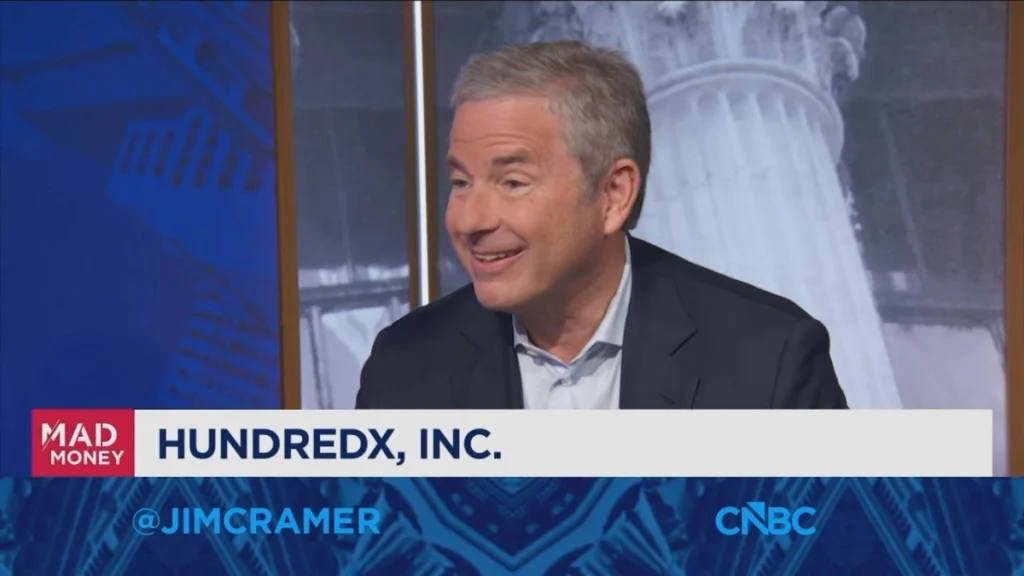
The landscape of consumer preferences in generative AI, video streaming, and wireless communications businesses is changing dramatically, and incumbent leaders are facing unexpected challenges. This dynamic was vividly illustrated in a recent interview on Mad Money, where HundredX founder and CEO Rob Pace analyzed key consumer trends with host Jim Cramer. HundredX, a privately held alternative research company, surveys thousands of consumers based on actual purchase and usage intent, not emotion, providing a unique predictive lens on market evolution.
During the discussion, Pace presented compelling data that reveals significant upheaval in the field of generative AI. For the first time in HundredX data, Anthropic's Claude has surpassed OpenAI's ChatGPT as the preferred AI platform among current users in terms of how likely they are to use it and recommend it to others. This isn't just a subtle change. It marks a notable downfall for a perceived market leader.
Pace unraveled the nuances behind Claude's rise, explaining that while ChatGPT still holds an advantage in user experience metrics such as speed of results, ease of use, chat experience, features, and navigation, consumers are prioritizing different aspects for sustained engagement. “ChatGPT still has the best experience,” Pace acknowledged. “But what we're actually seeing is that people care about results and references, so can they be trusted?” Claude's advantages are evident in areas such as reliability, output quality, robust result references, technical performance, and advanced query capabilities. This suggests that user expectations have matured and moved beyond the initial novelty to demand substantive and reliable performance. Far from being a “fortress” for any single player, the generative AI market has proven to be surprisingly fluid and susceptible to continuous innovation.
Further challenging the AI status quo, Google Gemini has made significant progress since its release in November 2023. This data shows a noticeable narrowing of the gap between Gemini and ChatGPT in future usage intent, indicating that even strong positions can be quickly disrupted by rapid iterations and competitive products. This highlights the high-stakes competition that defines the generative AI sector. Despite hundreds of billions of dollars being invested, market leadership remains highly contested and highly volatile.
Pace said Netflix continues to hold its own in the video streaming space, ranking “first or second in everything we track.” But the broader competitive environment is forcing even this giant to make strategic adjustments. Kramer highlighted Netflix's recent move to include Warner Bros. content as a defense, a view echoed by Pace. But the real disruptor is YouTube.
YouTube is gaining significant traction, especially among younger and more diverse consumer groups. Pace pointed out that the key metrics here are “time share” and “stomach share,” which refers to the total amount of time consumers spend with content. Despite its focus on short-form content versus Netflix's long-form content, YouTube's strong involvement signals a potential future battleground in streaming. This shift suggests that traditional premium subscription models may face increased pressure from ad-supported or creator-driven platforms that attract more consumer attention.
The wireless industry also tells a compelling story about evolving consumer priorities. Historically, Verizon Wireless has been synonymous with superior network quality and coverage. But HundredX data reveals Verizon's lead is shrinking. While Verizon still ranks No. 1 for overall network quality, T-Mobile has effectively closed the gap, offering “adequate” network performance. Value is the decisive factor that drives consumer preferences in this segment.
Mr. Pace emphasized this point. “All we see in our data is value.” T-Mobile's superior products attract consumers through price, plan options, and even an improved in-store experience. In an environment where consumers feel financially pressured, their willingness to switch carriers in search of better value has increased, eroding what was once unwavering loyalty solely to network quality. This indicates that the consumer base is increasingly willing to trade small differences in performance for tangible economic benefits.
Comprehensive insights across all three sectors: generative AI, video streaming, and wireless carriers are accelerating competitive changes driven by evolving consumer expectations. Companies must remain sensitive to these dynamic preferences: the demand for reliability and quality of AI output, the insatiable desire for diverse content and “shared time” in streaming, and the growing emphasis on wireless value. The idea of a stable, unassailable market leader, especially in the fast-moving technology sector, seems to be a relic of the past, replaced by a constant battle for consumer favor where agility and a deep understanding of user needs are paramount.