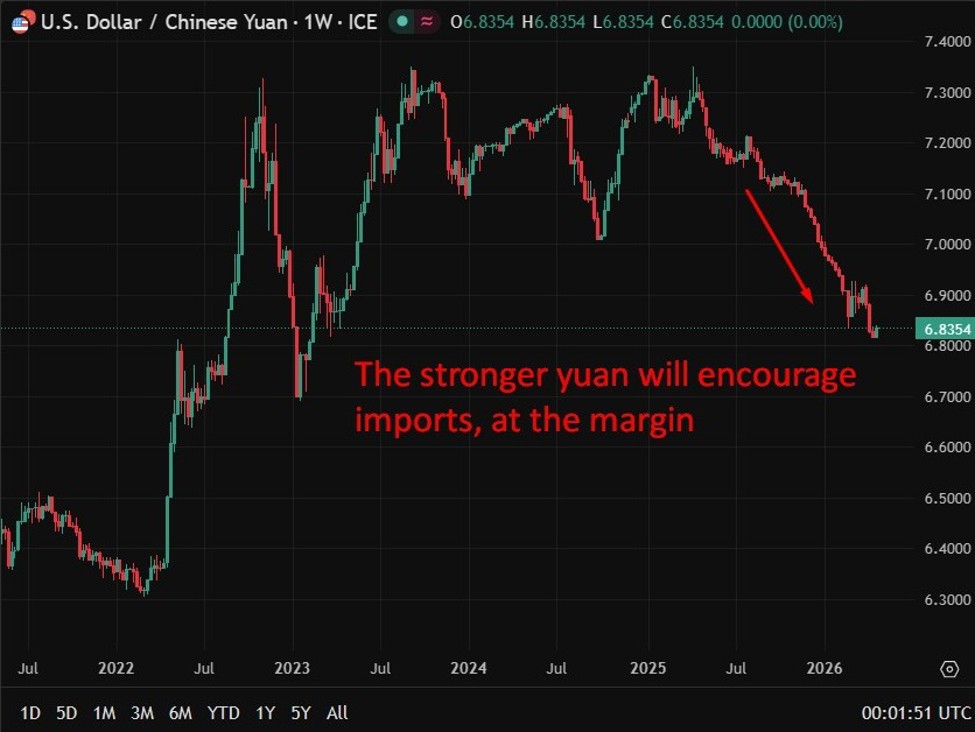
Thanks to a surge in purchases of AI-related chips, China’s import growth is expected to reach a five-year high of 5% in 2026, outpacing export growth for the first time since 2021. (Information via Bloomberg, Gated).
summary
- China’s import growth forecast for 2026 has been revised upward to 5%, the highest level in five years, more than double the 2.4% forecast in March, according to a Bloomberg survey of 17 economists.
- Import growth is expected to outpace export growth for the first time since 2021
- Export growth was also revised upward from 3.6% to 4.9%.
- China’s goods trade surplus is expected to be just over $1.2 trillion, slightly above its record high level in 2025
- Imports of integrated circuits surged 54% in March from a year earlier, accounting for nearly a third of total import growth.
- According to Pantheon Macroeconomics, chip volume increased by only 14%, suggesting that higher prices accounted for much of the increase in value.
- China’s total import volume in the first quarter of 2026 increased by 23% year-on-year. Exports increased by 15%
- Over the past year, the renminbi has appreciated nearly 7% against the dollar, increasing its purchasing power.
- Oil and gas imports are expected to fall by 14% and 18%, respectively, in April due to reduced traffic in the Strait of Hormuz, according to Pantheon Macroeconomics.
- Although China is recognized as the world’s largest supplier of AI-related products, it remains a net importer of advanced chips.
- Rising global demand for EVs and solar panels appears to be a tailwind for Chinese exporters
Economists have sharply revised upward their forecasts for China’s import growth, with foreign purchases expected to outpace export expansion for the first time since 2021, as a global artificial intelligence investment boom fuels a surge in demand for high-end chips and advanced manufacturing equipment.
A Bloomberg poll of 17 economists conducted this month found that China’s imports are expected to rise 5% in 2026, the highest level in five years and more than double the 2.4% increase predicted in March. The revision follows four consecutive years of stagnation and decline in imports and reflects structural changes in China’s trade dynamics driven by China’s increased dependence on cutting-edge technologies, primarily related to AI development.
The unexpected scale of the import surge was revealed in first-quarter trade data that showed imports rose 23% year-on-year and exports rose 15%. According to estimates by Pantheon Macroeconomics, the value of integrated circuits imported by China surged 54% in March from a year earlier, accounting for nearly a third of total import growth, even though imports increased by only 14%. The difference between value and volume growth indicates that the sharp increase in chip prices along with increased demand is a key factor.
The global AI spending boom is expected to reach $2.5 trillion this year and is a major driver of trade across Asia. Although China has emerged as the world’s largest supplier of AI-related products, it remains a net importer of certain key technologies, particularly advanced semiconductors. Taiwan and South Korea, which supply the bulk of China’s AI-related chip imports, have reported sharp increases in export volumes to China in recent months, highlighting how the AI cycle is reshaping regional trade patterns.
Besides chips, several other factors are supporting China’s import growth. Over the past year, the yuan has appreciated nearly 7% against the dollar, increasing purchasing power for Chinese households and businesses. Due to the rise in metal prices, the import value of copper and aluminum products has also soared.
Export growth was also revised upward to 4.9% from previously expected 3.6%, partly reflecting the windfall from the Iran war. Rising global demand for green energy products is encouraging Chinese automakers and solar panel manufacturers to expand further into overseas markets, while China’s supply chains have proven more resilient to energy shocks than in many other Asian countries.
With exports and imports growing roughly in line, China’s goods trade surplus in 2026 is expected to be just over $1.2 trillion, barely above last year’s record level and in sharp contrast to the rapid expansion seen over the past two years.
However, the short-term outlook is not without risks. Reduced traffic through the Strait of Hormuz is expected to weigh on energy import values in coming months, with Pantheon Macroeconomics forecasting a sequential decline in oil and gas import values of 14% and 18%, respectively, in April. Weak domestic consumption also remains a structural drag, and economists say China’s recovery remains heavily dependent on external demand rather than a meaningful revival in household spending.
—
A significant upward revision to China’s import forecasts will have a significant impact on global trade flows and commodity markets. The narrowing of China’s trade surplus lowers one of the key pressure points in international trade relations, but the surplus remains at a historically high level at more than $1.2 trillion. The AI-driven chip import boom is a direct boon for exporters in Taiwan and South Korea, showing that the global AI investment cycle continues to support Asian trade amid the energy disruption caused by the Iran war. The nearly 7% appreciation of the renminbi against the dollar could further increase purchasing power for Chinese buyers and maintain import momentum. On the downside, oil and gas imports are expected to fall by 14-18% quarter-on-quarter in April due to lower Hormuz traffic, creating a short-term headwind that could complicate the picture for import growth in coming months. Regarding energy markets in particular, data confirms that China’s oil demand is being squeezed by both the Hormuz turmoil and weak domestic consumption.