

Since the emergence of ChatGPT in late 2022, the global labor market has been plagued by a peculiar phenomenon of substitution anxiety.
This story is well known. Generative artificial intelligence (AI) will automate white-collar menial jobs and make accountants, copywriters, and programmers obsolete. But three years after this technological revolution began, data suggests that AI is not treating all economies equally. Comparing the Chinese and Singaporean labor markets reveals two fundamentally different paths. One path is where technology acts as a harsh filter to replace workers, and the other is where technology fosters resilience through integration.
Although the U.S. labor market is often the primary focus of empirical analysis, Asian economies provide unique comparative laboratories due to their unique institutional environments and industrial structures. Our research leverages a large dataset consisting of millions of job advertisements from major platforms in China and a comprehensive set of 15 million job postings in Singapore covering nearly all employers in the city-state from 2012 to October 2025.
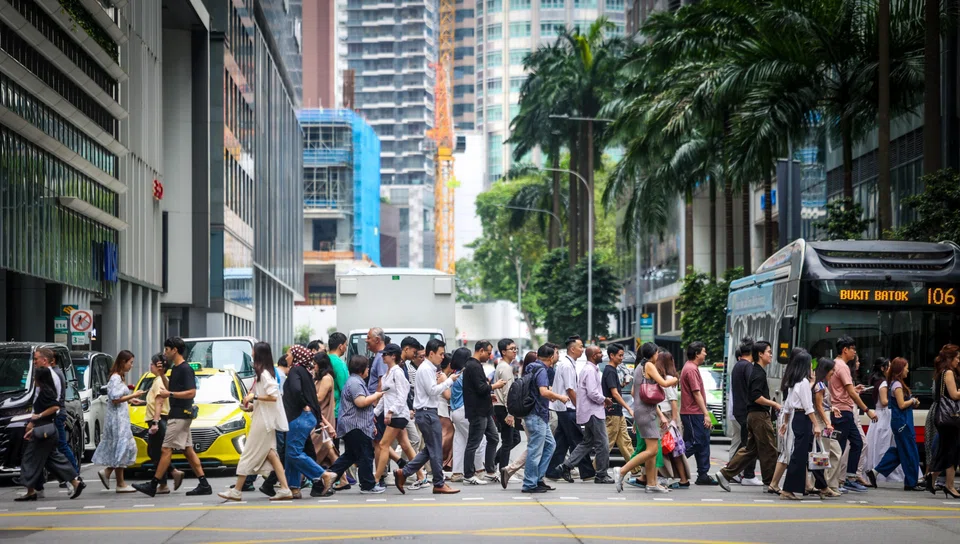
In China, the emergence of large-scale language models (LLMs) certainly served as a blunt instrument of forced migration. Our analysis of the Chinese market reveals that white-collar occupations with high AI exposure, such as accounting, editing, and sales, experienced a clear contraction in hiring demand following the widespread adoption of GenAI. In this context, technology acts as a strict filter, accelerating the elimination of very mundane tasks and raising barriers to entry.
In China, employers have responded to high-exposure jobs by requiring significantly higher education and experience levels, rather than hiring more young, tech-savvy workers, effectively crowding out the mid-career workforce. What is noteworthy is that the “AI-LLM exposure index” for new posts in China has significantly declined from 2023 onwards. This does not indicate a decline in technological relevance. Rather, it suggests that many jobs susceptible to automation have simply been “purged” from the market entirely.
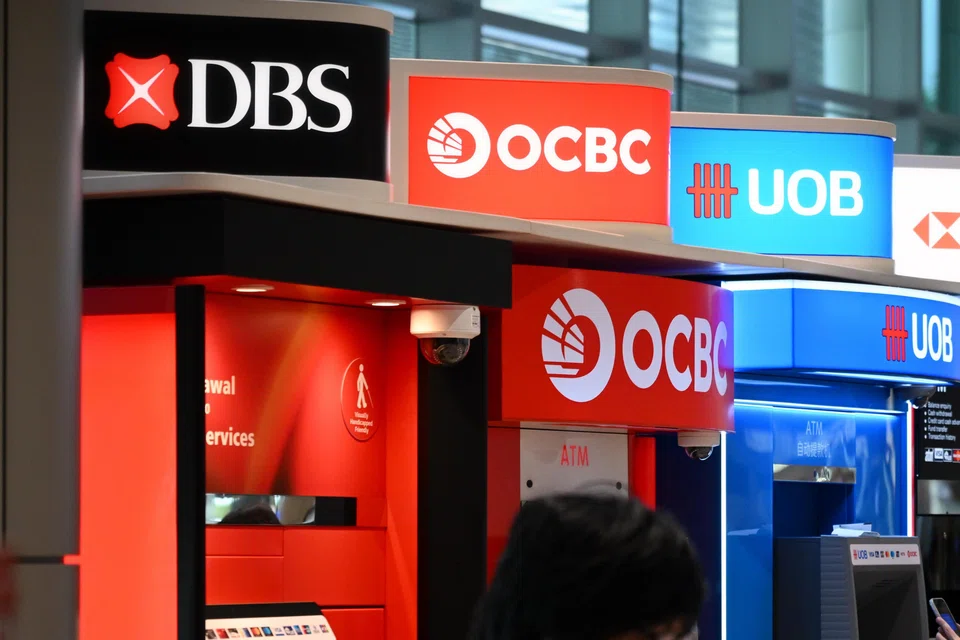
However, the situation is different in Singapore, which has a service-oriented economy, high digitization and a high concentration of multinational headquarters. Despite the rapid evolution of AI, Singapore's labor market shows remarkable structural stability. Unlike China, Singapore's AI exposure index for new jobs remains high and stable. The market did not eliminate these “exposed” jobs. It absorbed the shock.
navigating asia
new world order
Get insights delivered to your inbox.
Why does the discrepancy occur? The answer lies in how companies deploy technology. In Singapore, we observed a clear shift in the type of AI talent that companies are looking for, from “builders” to “integrators.”
From 2018 to 2021, the demand for AI talent in Singapore was dominated by so-called “deep AI” roles – research scientists and algorithm engineers who build models from scratch. This demand cooled in 2022. However, starting in early 2023, new structural trends have emerged. That is the surge in demand for “AI users” and, importantly, “AI integrators.”
AI integrators don't necessarily have a PhD in machine learning. They are experts tasked with embedding existing models into business workflows via APIs, fine-tuning, or search augmentation generation (RAG). By late 2025, the proportion of Singaporean companies hiring in these integration roles had increased significantly. These companies aren't trying to replace humans with chatbots. They are redesigning operations to improve human productivity using AI.
Related items
This distinction between replacement and integration is key to surviving the AI era. Singapore's experience shows that high exposure to AI does not necessarily lead to mass unemployment. As technology moves from an alternative tool for cost reduction to a mechanism for business integration, new employment gaps are created.
The policy imperatives are clear for economies facing the “insecurity of substitution'' seen in China. First, the focus needs to shift from simply developing the underlying model to building the application ecosystem. We need more roles that focus on the “how” of business applications, not just the “what” of model architecture.
Second, employee training needs to be front and center. Gone are the days of memorizing fixed knowledge. Its value now lies in the ability to command AI to solve complex problems and manage uncertainty.
The disagreement between China and Singapore serves as a warning and a blueprint. If we treat AI simply as a replacement for labor, it will certainly act as a harsh filter. But if you treat it as an organizational capability to integrate, it becomes a catalyst for resilience. The machine is here, but it is clearly humans who choose how to use it. caixin global
Decoding Asia Newsletter: A guide to navigating Asia in the new world order. Sign up here to get the Decoding Asia newsletter. Delivered to your inbox. free.


