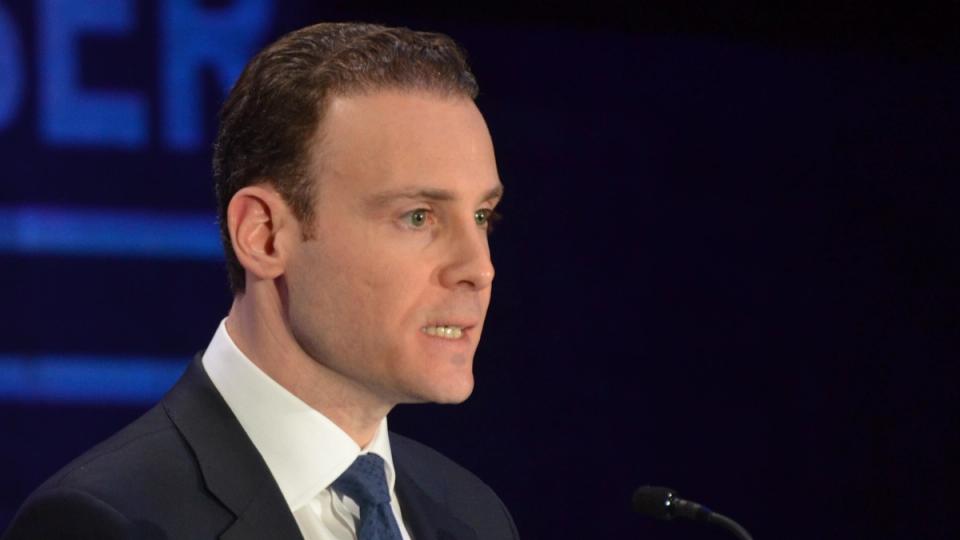
Already known for its aggressive embrace of digital assets, the U.S. Commodity Futures Trading Commission is also turning to artificial intelligence to fill the gap after cutting more than a fifth of its workforce, Chairman Mike Selig said in an interview with CoinDesk.
Selig, who is scheduled to attend Consensus 2026 in Miami next week, said AI and automation can offset job cuts under President Donald Trump’s federal workforce reduction campaign. He said the agency, which is on track to become the United States’ primary regulator in the crypto sector, is also pushing to use the technology to review registration applications and monitor the market.
Selig said the CFTC registration process currently relies on manual submission of documents, so “we are building a system to automate this and make it more efficient.” “AI tools can be used to review applications, flag certain items for staff, make their jobs easier, significantly reduce the time they have to provide feedback, and even reject certain items that are not substantially completed,” he said. “If you have blank spaces, bad descriptions, or things that are clearly wrong coming in, the AI can detect it and reject them or put them at the back of the line.”
Selig said his staff is currently undergoing training to use Microsoft’s CoPilot for the first time, but the agency is “now getting tools that will help us come to conclusions about specific trades and all of that, including reviews of swap data and reviews for market surveillance purposes. That’s why we’re embracing technology.”
The chairman has been at the helm of the U.S. derivatives regulator for four months, jumping into the fray over emerging technologies, including overseeing both crypto and prediction markets.
cryptographic taxonomy
So far, one of Selig’s key efforts is incorporating oversight of the industry, even though no new crypto laws have come out of Congress. To that end, he said the most important action taken to date is joint guidance with the Securities and Exchange Commission to define a digital asset “taxonomy”, a system that defines how each subset of virtual currencies fits within the scope of its regulatory jurisdiction.
“This is a major development that will allow market participants, software developers, and consumers to engage in cryptosystems and cryptoassets with confidence that they will not fall foul of securities laws,” he said, although the Interpretation has not yet been fully adopted as permanent policy. “The situation is clear now,” he said. “We understand our responsibilities at the CFTC and intend to take action to crack down on fraud, manipulation, and insider trading in the crypto markets. We believe this will have a significant impact, along with clarity for consumers and users of the asset class.”
prediction market
But his foray into prediction markets, involving companies like Kalshi, Polymarket, Crypto.com, Coinbase, and Gemini, quickly became the most controversial. Mr. Selig’s steadfast stance that the CFTC is the only regulator relevant to these companies has put him at odds with states that have challenged the companies for violating state gaming laws, particularly in the area of sports betting. He has recently sued several states, including New York, defending the agency’s “exclusive jurisdiction.”
Late last week, the CFTC joined the Justice Department’s case against a U.S. Army Special Forces member accused of placing prediction market bets on military operations in Venezuela in which he participated. Sergeant Gannon Ken Van Dyke, one of the Army’s proudest Green Berets, was arrested and charged with use of classified government information and fraud, and the CFTC itself accused him of insider trading.
Regarding the authorities’ enforcement stance on prediction markets, Selig said: “We are investigating the incident and continue to monitor the news closely.” “We plan to take action against bad actors in the market and we take this very seriously. This is not just lip service and market participants should pay attention.”
Read more: US CFTC chief Selig says AI helped offset headcount cuts at major crypto watchdog