Article Highlights | June 16, 2026
image:
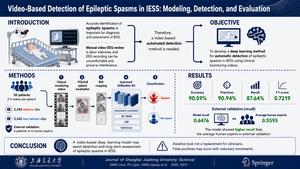
Video-based detection of epileptic seizures in IESS: Modeling, detection, and evaluation.
view more
Credits: Lihui Ding, Lijun Fu, Guang Yang, Lin Wan, Zhijun Chang.
Infantile epileptic spasms are one of the most severe forms of childhood epilepsy, but their diagnosis remains a major clinical challenge.
Today, seizure identification often relies on experts reviewing hours of clinical video recordings. This process is time- and resource-intensive and difficult to scale, especially in regions with limited access to pediatric neurology expertise.
To address this challenge, researchers developed a video-based AI system that can automatically recognize seizure-related movement patterns from patient videos.
The model, trained on a large clinical dataset, achieved detection accuracy of over 90%. An external validation study demonstrated seizure detection sensitivity higher than the average performance of six clinical experts from different medical centers.
The broader significance extends beyond the performance of the algorithm. By converting routine video recordings into scalable screening and monitoring tools, such systems can support early diagnosis, reduce clinician workload, and expand access to specialized neurological evaluations.
AI is not replacing clinicians. Rather, it provides a way to enhance clinical expertise and ensure that important seizure events are less likely to be missed.
#AI in Healthcare #Neurology #Epilepsy #Computer Vision #Digital Health