AI literacy is not about learning how to build machine learning models or write complex code. It simply means understanding what AI can do, where things can go wrong, and how to use it effectively and responsibly.
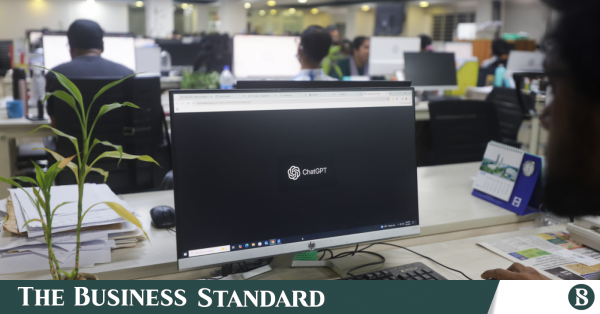
The workers who will succeed in the coming years may not be the most technical, but they will be the ones who know how to combine human judgment with AI assistance. Photo: TBS
“>

The workers who will succeed in the coming years may not be the most technical, but they will be the ones who know how to combine human judgment with AI assistance. Photo: TBS
Artificial intelligence (AI) is no longer just a futuristic concept for engineers and programmers. It is already changing the way people study, work, communicate and make decisions. From translating documents to designing presentations, AI tools are becoming a part of everyday life.
In this new reality, the most important question is no longer whether AI will affect us, but whether the public is prepared for it.
In Bangladesh, AI is often discussed as a technical subject, relevant only to programmers, software developers, and data scientists. That’s wrong. AI literacy is not about learning how to build machine learning models or write complex code. For most people, that simply means understanding what AI can do, where things can go wrong, and how to use it effectively and responsibly.

This is important because AI is rapidly becoming a workplace skill, not just a professional skill. Teachers can use it to create lesson plans and explain difficult topics in simple terms. College students can use it to analyze complex texts, practice presentations, and structure assignments. Small business owners can use it to create promotional content, analyze customer feedback, and plan social media campaigns.
In either case, the user does not need any programming knowledge. They need to know how to ask the right questions, validate the output, and apply tools wisely.
Here Bangladesh faces both opportunities and risks.
The opportunity is clear. AI reduces time spent on repetitive tasks, increases productivity, and makes knowledge more accessible. This is a powerful advantage for a country where millions of people strive to improve their education, skills and employability. Students in Rampur, job seekers in Khulna, and freelancers in Sylhet now have access to tools that help them write better, learn faster, and work smarter.
But the risks are just as real. If AI literacy remains limited to urban, English-speaking, and digitally privileged groups, this technology could exacerbate rather than reduce inequality. Those who know how to use AI effectively will have a distinct advantage in education and employment. Those who do not may be left behind. Not because we lack intelligence, but because we lack access, awareness, and guidance.
That’s why AI literacy must be treated as a public skill, just like digital literacy used to be.
The first step is to change the way you think about AI. If you’re not tech-savvy, don’t be intimidated by the jargon. You don’t have to “become a techie” to benefit from it. All you need to do is start using AI in a practical and familiar way.
If AI literacy remains limited to urban, English-speaking, and digitally privileged groups, this technology could exacerbate rather than reduce inequality. Those who know how to use AI effectively will have a distinct advantage in education and employment. Those who do not may be left behind. Not because we lack intelligence, but because we lack access, awareness, and guidance.
The second step is to learn one important habit: not to automatically treat AI output as correct.
AI can be helpful, but it can also definitely be wrong. Misinformation and biased suggestions may be generated. Misinformation is already easily spread through social media and informal networks in Bangladesh, and this risks making matters worse. Therefore, AI literacy must include critical thinking. People need to learn how to cross-check the output of facts and questions.
Language accessibility is also important. Much of the global conversation about AI remains in English, creating a barrier for many Bangladeshis. For AI learning to be truly inclusive, more efforts are needed to develop Bangla-friendly tools, tutorials, and public training resources. If people can learn how to use AI in their native language, adoption will become more democratic.
Educational institutions have a major role to play. AI literacy should be implemented across disciplines, including journalism, business, social sciences, law, public administration, and even the humanities. Isn’t the goal not to create programmers everywhere, but to create competent citizens and professionals who can work intelligently in a world shaped by AI?
The same goes for the workplace. Employers need to stop viewing AI as a niche technical problem and instead start providing basic AI training to communications, administrative, customer service, research, and administrative staff. The workers who will succeed in the coming years may not be the most technical, but they will be the ones who know how to combine human judgment with AI assistance.