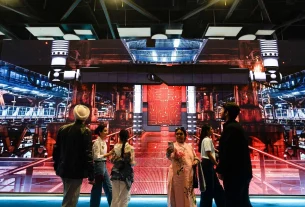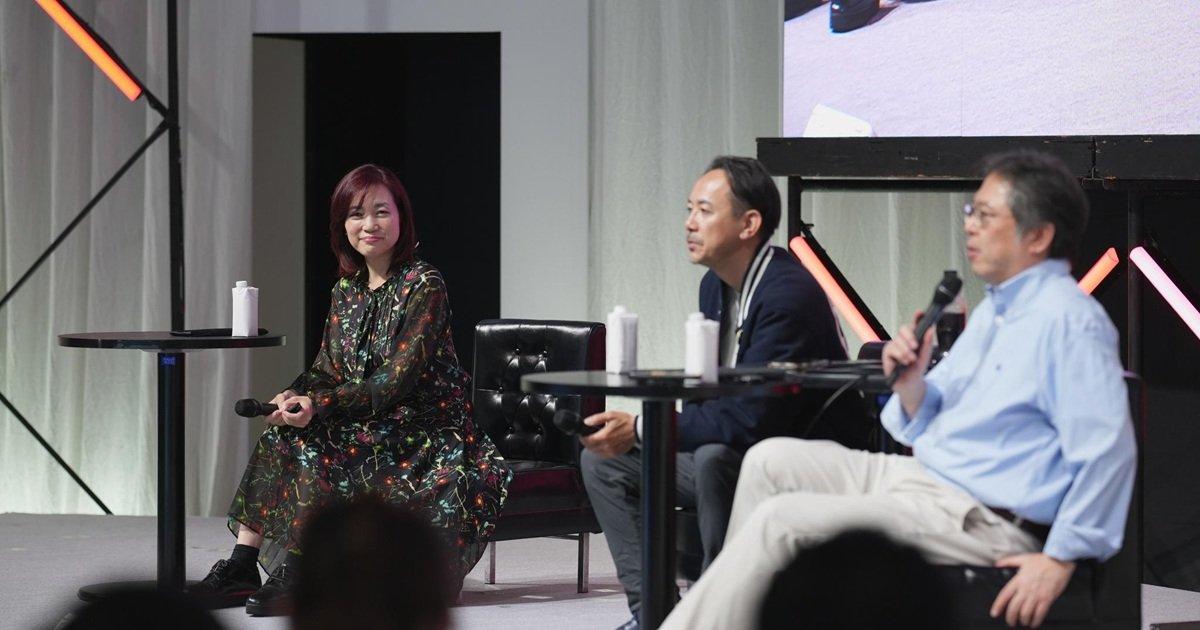
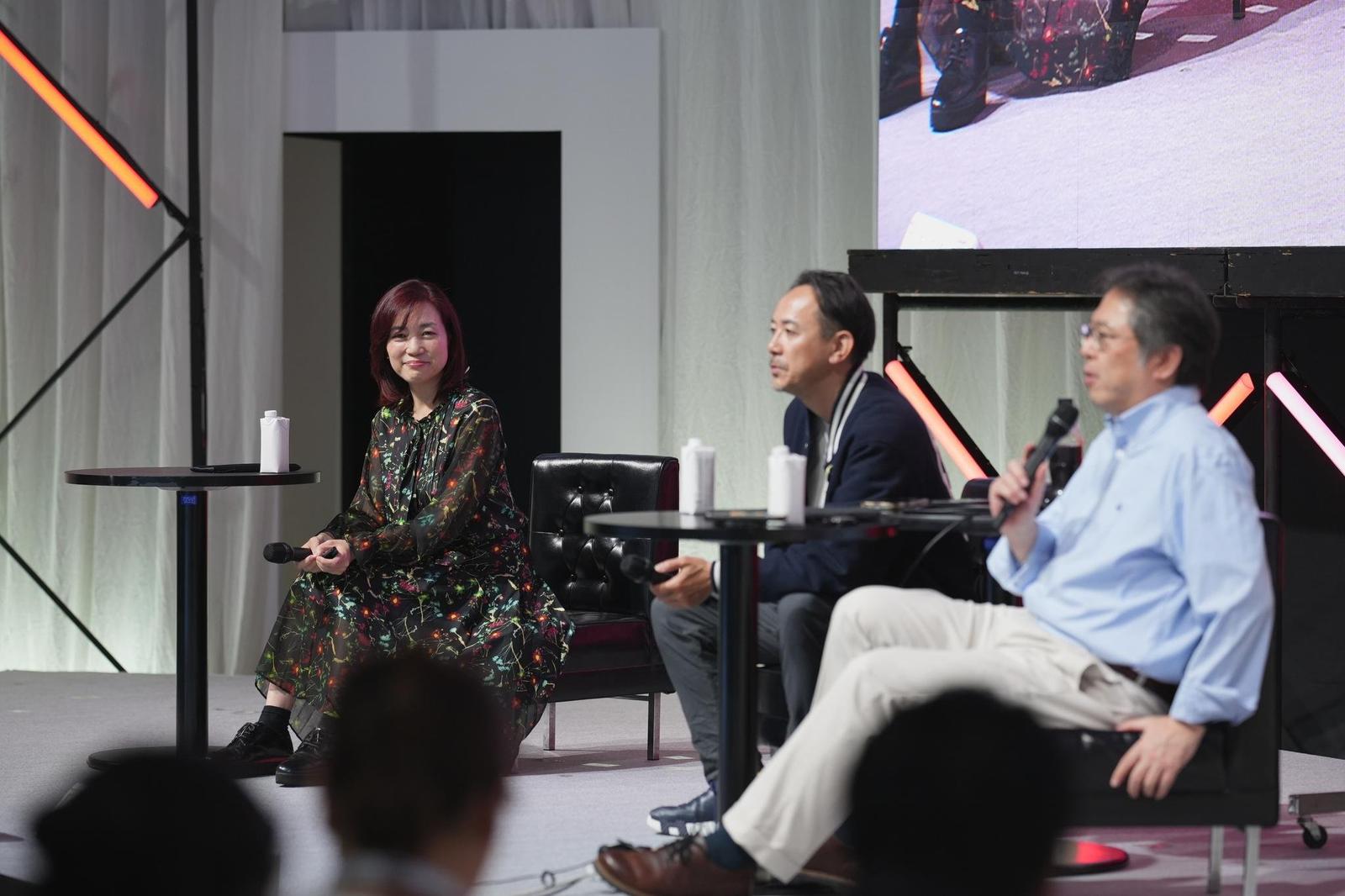
SusHi Tech Tokyo 2026 was held from April 27th to 29th and brought together startups, investors, companies, researchers, and policy makers from around the world to discuss the common goal of achieving sustainable cities through technology. Among the presenters was Motoko Imada, CEO and founder of Mediagene Inc., whose session was titled “What AI Needs and What It Can’t: And Re-creating Humanity Starting from the Limits.” Imada will share insights into the evolving relationship between AI and creativity and its potential impact on the workplace and society at large.
This audio is generated by AI, so the pronunciation and expressions may not be completely accurate. Narration is in English only.
Create space for creativity while leveraging AI
Under the banner of the Tokyo AI Strategy, the Tokyo Metropolitan Government is actively leveraging AI as a core driving force to maximize the city’s potential for each and every citizen. AI was also one of the cutting-edge areas highlighted at SusHi Tech Tokyo 2026, with a focus on how emerging technologies will transform society.
Mediagene has implemented AI tools across the company, and staff use them in many aspects of their work. As a Japan-based company with a group company in Taiwan and partnerships with international media brands, Mediagene operates in Japanese, English, and Chinese, and uses AI for multilingual translation and collaborative content creation. The company is also developing internal content marketing initiatives and media platforms, while continuing to build and integrate its own AI-powered services into daily operations.
“This technology is evolving rapidly, and I think we need to continue to adapt to these advances because suddenly things that seemed impossible just a few days ago are possible,” Imada says. To this end, Mediagene also takes a flexible approach to internal policies regarding the use of AI, understanding that the landscape is constantly changing.
Imada notes that there can sometimes be an “artisan mentality” that insists that certain things should only be done by humans, but she prefers to spend time and energy on tasks that cannot truly be replaced by AI. “We believe it is critical to further leverage AI to make our work faster and more efficient, and free up more time for creativity.”
According to Imada, it’s important to intentionally set aside time for creative thinking and idea generation. she mentions technology to generate ideas, This book, a best-selling classic by advertising executive James Webb Young, characterizes the creative process as absorbing large amounts of information, processing and organizing it internally, and then stepping away for a while.
When you go for a walk, watch a movie, or do something unrelated, new ideas can emerge from everything you take in. “This may not seem like ‘work,’ but if you focus too much on the work itself, ultimately you won’t be able to think clearly,” she explains. “In order to generate creativity, you need to engage in creative activities yourself.” This is a process that cannot be replaced by AI.
The potential of AI to create a more just society
While AI can improve operational efficiency, the broader question of how information and creative work is monetized still requires careful consideration. Producing original content takes a lot of time and effort, and at this stage, large amounts of information are often collected, processed, and commercially exploited by AI systems without a clear mechanism to reward original creators with money. Media Gene is seriously considering how creators can be appropriately compensated in an AI-driven information economy.
Imada says AI has the potential to transform aspects of Japanese education, which have traditionally focused on memorization and getting the correct answer. “Of course, it’s still important to absorb knowledge, but what’s more important is being able to ask ‘why’, formulate meaningful questions, and use that to create something new, whether it’s an idea or a new perspective.”
On the surface, AI may seem to favor younger digital natives who grew up with information technology, but Imada believes AI can level the playing field for older people as well. “If you can’t remember something, you can look it up quickly or retrieve it quickly, so I think experience, the ability to think deeply, and the ability to understand the process are more important,” she says.
In the future, AI could allow all members of society, regardless of gender or age, to have more time for their personal lives. “We may no longer need to prove our worth solely by the amount of time we spend working. AI can take over the aspect of being evaluated by hours worked, while humans are valued more for things like critical thinking and creativity,” Imada explains. “I think a lot of the inequalities could be eliminated if we shifted in that direction.”
Another important aspect to consider is including the perspectives of underrepresented communities when designing and utilizing AI systems, and Imada says care must be taken to eliminate bias in AI. At the same time, she suggests that AI has the potential to more fairly evaluate different perspectives by applying more consistent criteria. “Of course, trying to incorporate ethics into the subject of AI makes things even more complicated, but that’s how I see it.”
A global model of advanced initiatives
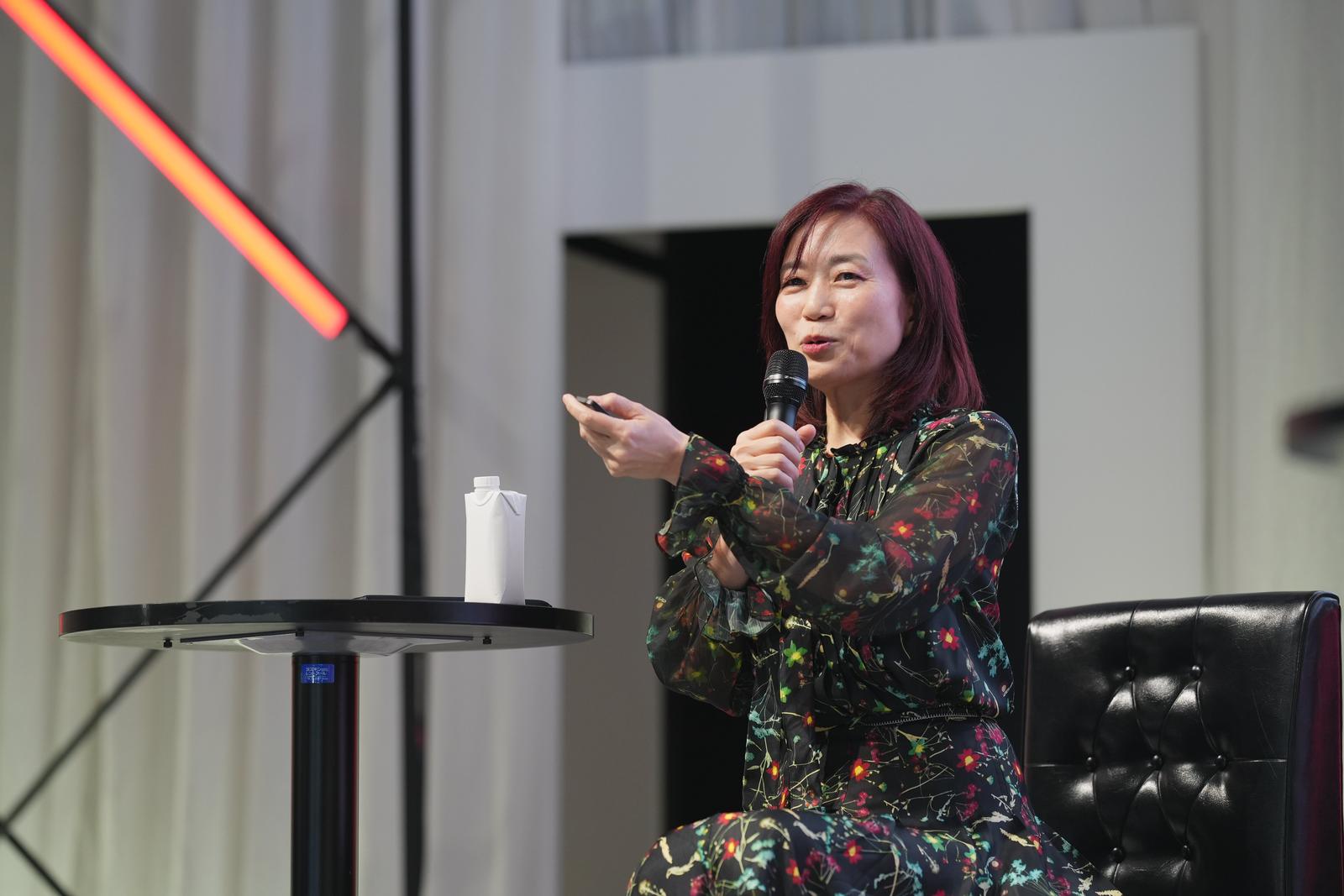
Ms. Imada was appointed as an instructor for the 10th batch of the Tokyo Women’s Acceleration Program (APT Women), a Tokyo metropolitan government program that supports female entrepreneurs in improving their skills and building connections. “While we would like to say that there should be no gender differences, the reality is that women face many life events that men do not experience in the same way, such as childbirth and the responsibilities that come with it,” she points out.
Female professionals often struggle to access information and opportunities in Japan. The overwhelming majority of participants at business events were men, and mothers could not easily attend evening drinking parties where networking usually took place. That’s why Imada believes APT Women is a “really good program” to address those imbalances.
As another sign of positive progress, he pointed to Media Gene’s 100% paternity leave take rate for new fathers as of April 2026, noting that younger generations of husbands and fathers are increasingly keen to participate in housework and childcare as equal partners.
Imada believes initiatives such as APT Women and SusHi Tech Tokyo are examples of recent efforts in Tokyo to support entrepreneurship, innovation, and more inclusive participation in business. At SusHi Tech Tokyo 2026, more than 50% of session speakers were women, with the aim of further expanding opportunities for women to succeed in the future.
Moreover, at a time when Tokyo is attracting international attention from tourists and businesspeople, Imada says SusHi Tech Tokyo is a valuable platform to position Tokyo as a hub that connects global momentum and technological innovation.
“I think AI has the potential to increase unity and inclusiveness in the future, and I would be very happy if Tokyo actively promotes that vision and becomes a global model for such forward-thinking initiatives,” she says. “I hope that Tokyo will always remain a place where new ideas are born.”

SusHi Tech Tokyo (abbreviation for Sustainable High City Tech Tokyo) is a global innovation conference that brings together startups, investors, large companies, cities, and universities from around the world to envision and put into practice the future of cities, with the common goal of realizing sustainable cities through cutting-edge technology.
Sustainable High City Tech Tokyo | Sustainable High City Tech Tokyo
Interview and text: Louise George Kittaka
Photo: Yoko Akiyoshi