Australia has developed a high performance computing (HPC) system that ranks 72nd out of the world's top 500 machines.
The $14.5 million system, known as Virga, is the first of its kind in Australia and is built on Dell PowerEdge XE9640 servers.
The new system is being built by Australia's national research agency, CSIRO, and aims to provide the computing infrastructure needed for AI and machine learning to jump-start the country's industry and economy.
CSIRO built the first CSIRO GPU Cluster in 2009, leading the adoption of GPU-accelerated computing in Australia.
“High-performance computing systems like Virga also play a key role in our robotics and sensor engineering sectors and are vital to the recently launched National Robotics Strategy to make Australian industry more competitive and productive,” CSIRO executive director of Digital, National Facilities and Collections Ellanore Huntington said in a statement.
The U.S. Department of Energy recently made supercomputing history when their Aurora HPC broke the exascale barrier, taking the top two spots among the most powerful systems in the world.
Advanced Computing Systems
The Canberra Data Centre (CDC) is home to an HPC cluster called Virga, named after the meteorological phenomenon where rain evaporates before it hits the ground, inspired by CSIRO research into the physics of rain and clouds.
The Virga computing cluster is equipped with NVIDIA H100 Tensor Core GPUs designed to power deep learning, machine learning and AI applications, with each GPU boasting 94 GB of high-bandwidth memory.
The cluster also includes the Transformer Engine, which dramatically accelerates AI performance and capabilities, making it possible to train large models in days or hours. Additionally, the system is powered by 4th Gen Intel Xeon Scalable processors.
To optimize cooling efficiency and reduce energy consumption, the Virga cluster employs hybrid direct liquid cooling, minimizing reliance on energy-hungry air-cooling systems.
According to CSIRO, this combination of advanced hardware and cooling technology positions Virga computing clusters as a powerful and efficient solution for cutting-edge AI and machine learning workloads.
Virga Cluster Powers AI
CSIRO has relocated more than 50 tonnes of IT equipment from Canberra to a new purpose-built facility to enable the construction of Virga, and CSIRO claims the project has paved the way for future growth in artificial intelligence, machine learning and digital science.
The combined technological innovations of H100 enable industry-leading conversational AI by accelerating Large Language Models (LLMs) by an astounding 30x over the previous generation.
“The deployment of Virga has not only modernised our IT infrastructure but will also deliver huge benefits to our researchers, keeping us at the forefront of high-speed computing and Australian innovation,” CSIRO Chief Technology Officer Angus Macoustra said.
In Australia, accelerated computing offloads certain calculations from a computer's CPU to a co-processor, but GPUs revolutionized this processing in 2008. Nvidia first developed multi-core GPUs in 1999 for gaming and desktop computing, making them programmable for a wide range of tasks by the late 2000s.
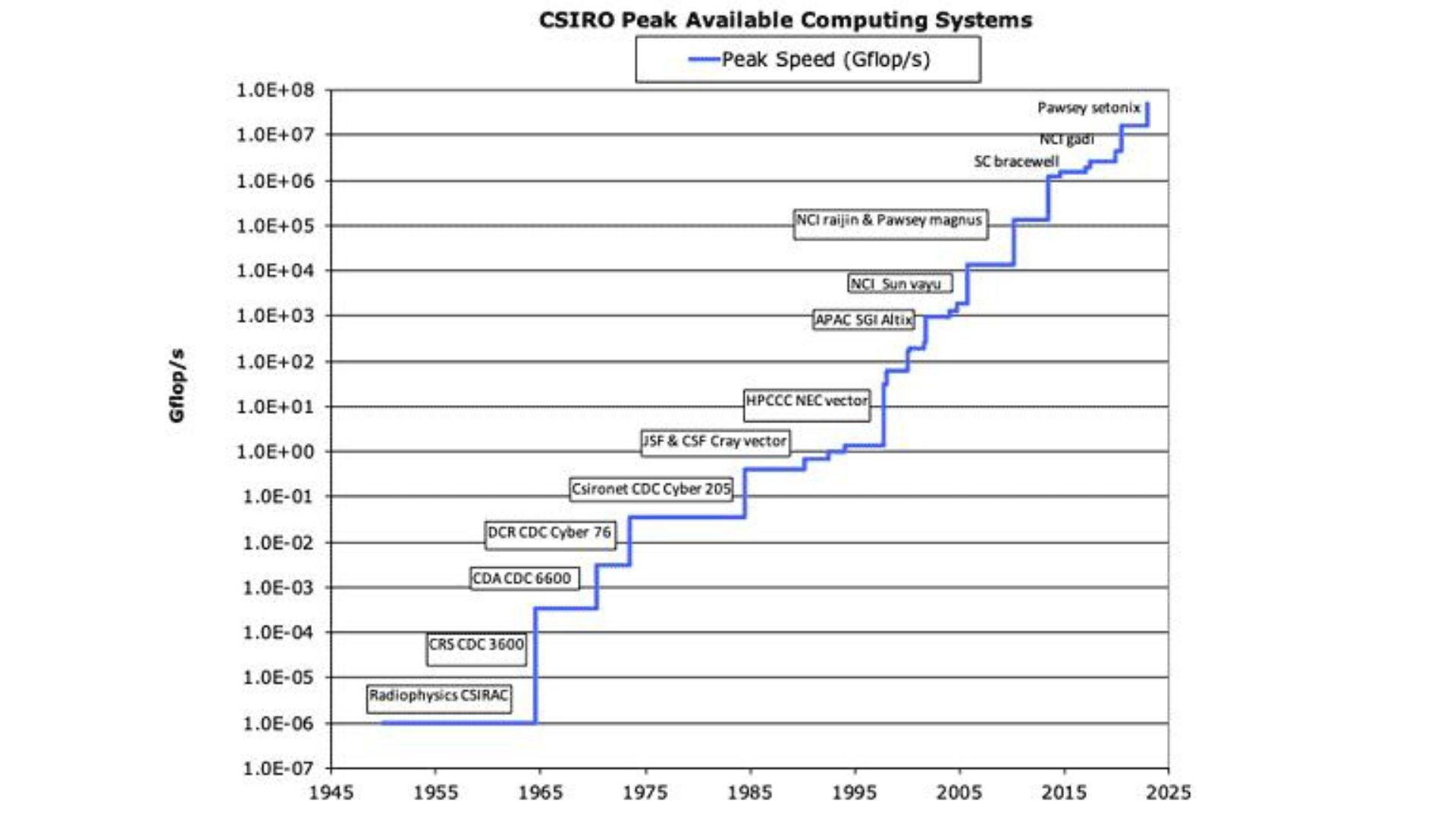
According to CSIRO, the agency's computing history dates back to 1949 with the introduction of Australia's first stored-program electronic digital computer, CSIRAC, and to the introduction of its first supercomputer, the Cray Y-MP, in 1990.
The Virga cluster is now CSIRO's fourth generation of GPU clusters, delivering 60 times faster performance than the first machine from 2009.
About the Editor
Jijo Marail Jijo is an automotive and business journalist based in India. He holds a BA (Hons) in History from St. Stephen's College, University of Delhi and a Postgraduate Diploma in Journalism from the Indian Institute of Mass Communication, Delhi. He has worked for news agencies, national newspapers and automotive magazines. In his spare time, he enjoys off-roading, political debates, travelling and teaching languages.