
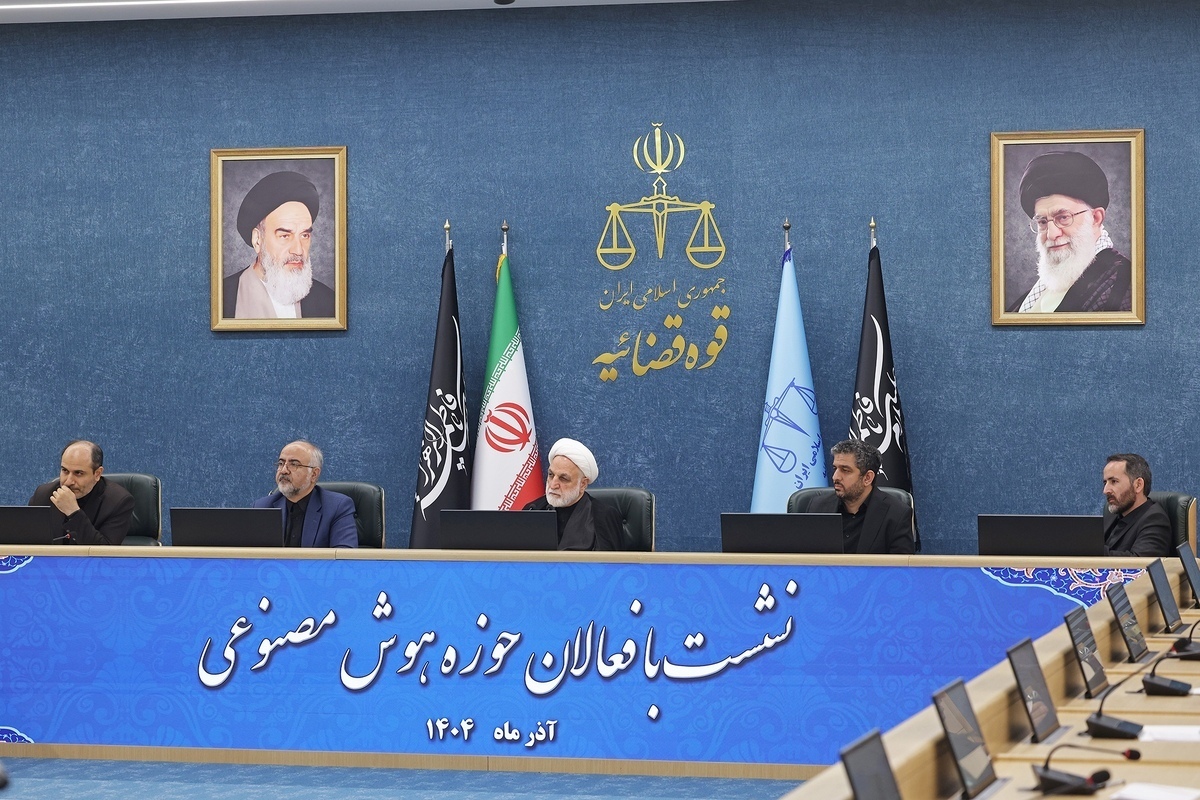
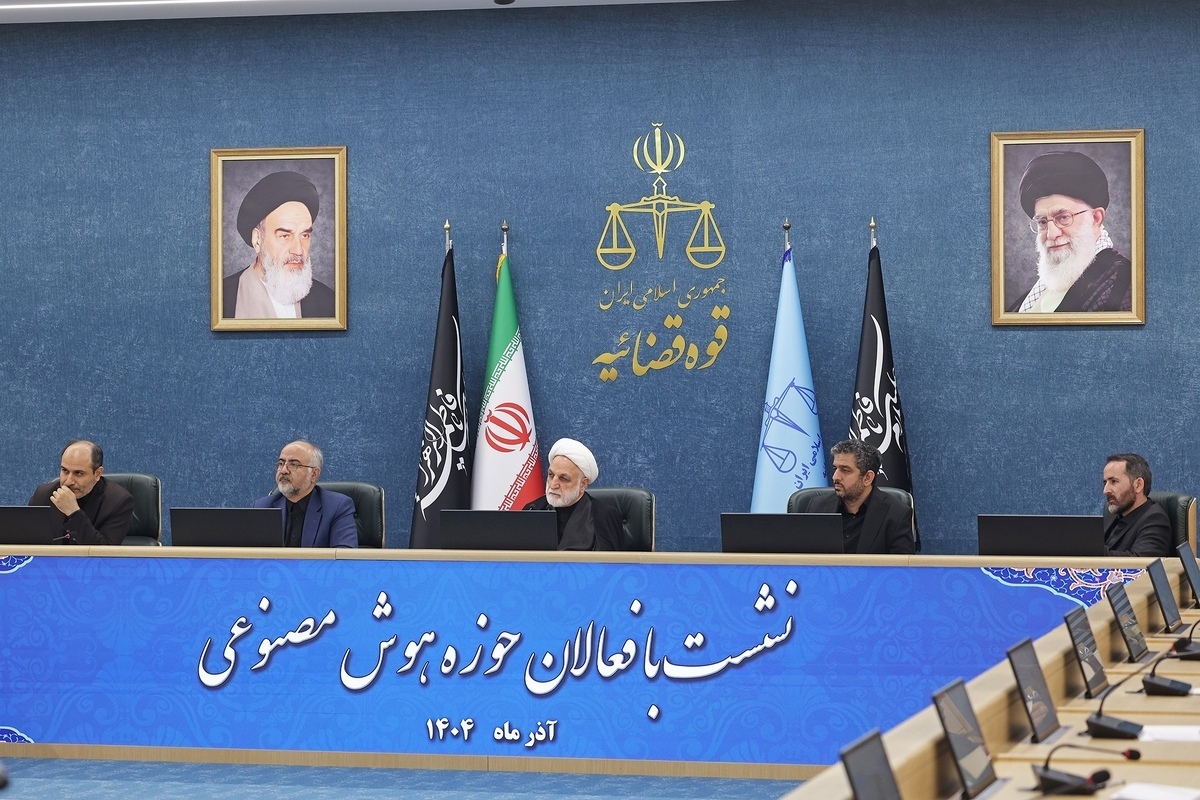
The Attorney General said: “We have no hesitation in supporting you, the elites and experts in the field of artificial intelligence. In return, we ask for your help. Please help us to ensure that people’s legal and judicial cases are handled more quickly and accurately.”
According to the Judicial Media Center, Mohseni Ejei held consultation sessions with a number of experts and activists in the field of artificial intelligence, as a continuation of an ongoing series of meetings with elite groups in the country.
At the conference, the Attorney General highlighted the role of emerging advanced technologies in improving human life across various dimensions, stating:
“System officials, the nation’s intellectual community, and the public in general need a precise and clear understanding of how best to use artificial intelligence. Everyone must realize that the correct application of AI and modern technologies is no longer an option, but a necessity. Without access to these advanced technologies, our governance, progress, independence, and freedom from dependence will face obstacles.”
He went on to say that rapid development of appropriate AI utilization is essential: “In the field of AI applications, we lag far behind developed countries. We must overcome this gap. Time is working against us. Therefore, we must hurry and avoid delays. Every minute is precious, and we should not postpone AI expansion for unnecessary reasons.”
Ejei emphasized that to reach the level of developed countries in the field of AI, Iran needs to work at a faster pace than usual and increase investments in this field.
He further pointed out that AI professionals have a duty to spread awareness among government officials, private sector actors, and the general public. “You, the elites in this field, must ensure that society understands that the development of AI applications is an inevitable necessity and that you must dedicate your time and investment accordingly.”
Ejei added that only a small portion of the Department of Justice’s funding is currently allocated to AI development, which may be because the judiciary is not yet fully aware of the importance and impact of AI in judicial governance.
He emphasized the role of the media, especially the national broadcaster, in raising awareness of AI in the modern world, and suggested that the education system in this field needs to be strengthened. He added that managers and officials will also need to undergo the necessary AI training before assuming their positions.
The Attorney General pointed out the potential risks of AI implementation, saying, “One of the risks of AI is data leakage, which can be a major concern for administrators. We must develop consistent solutions to ensure data security while benefiting from AI. We must also recognize that some risk is acceptable: 5% for 95% benefit. Don’t be afraid to adopt technology when faced with manageable risks.”
He directed AI experts to develop a complete list of needs, challenges and potential risks related to AI development in the country and make that information available to officials and the public.
Mr. Ejei also emphasized the need to strengthen cooperation between the judiciary and AI experts, saying, “We fully support our AI experts. In return, we ask for your support. We ask for your help so that we can process judicial cases faster and more accurately. One of our challenges is that judicial procedures take time. By using AI tools, we hope to reduce processing time and improve accuracy.”
Ejei also touched on the annual process of pardoning eligible prisoners, saying, “The selection of the final list takes a lot of effort and time across the country, but I am personally studying these lists carefully. By leveraging AI tools, we hope to define clearer criteria and speed up the process.”
He pointed to steps the judiciary is taking to support AI development, such as assigning a comprehensive inspection agency to monitor the enforcement of new technologies and laws related to AI. He also mentioned efforts to work with the executive and legislative branches to pass or amend relevant laws based on expert opinion.
He said that although the use of AI in the judicial field is increasing, progress is still insufficient and needs to be accelerated.
Comparing AI to the development of cyberspace, Ejei said: “In 2011, the Supreme Leader warned about the importance and pervasiveness of cyberspace. After 14 years, we must evaluate how much we have benefited from cyberspace and realize that not all shortcomings can be blamed on sanctions or lack of funding. Some failures are due to internal problems.”
Emphasizing the empowerment of the private sector, he said: “The private sector must have more room to play in AI development. I have repeatedly said that the country cannot achieve development, social justice and reduced inequality unless we clarify the country’s approach to the private sector.”


