Ani |
Update date: January 23, 2026 17:14 IST

VMPL
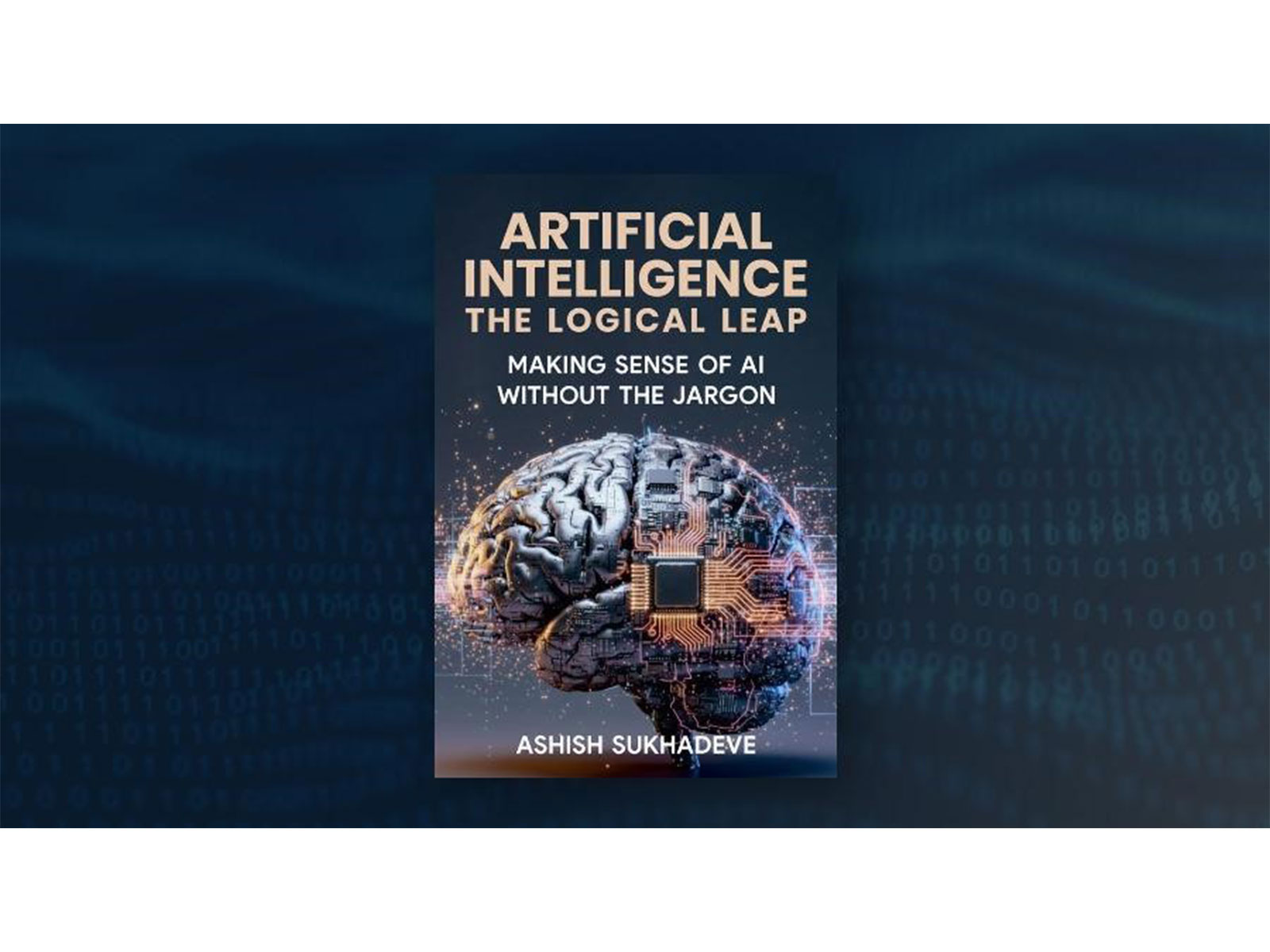
new delhi [India]January 23: Artificial intelligence no longer comes with spectacle. Unlock your phone, filter job applications, flag medical risks, and shape the way your kids learn. But for most people, AI still feels distant, opaque, and vaguely threatening. This gap between use and understanding is at the heart of the book Artificial Intelligence: A Logical Leap, which treats AI not as a myth or miracle, but as a system that is already influencing everyday decision-making.
This book confronts obvious contradictions from the opening pages. Although AI has permeated our daily lives, public understanding has not caught up. Instead of promising chaos or warning of collapse, this book sets a cautious tone. Help readers understand what AI is, how it works, and where its limits begin.
The voice behind the debate
This book is written by Ashish Sukhadeve, Founder and CEO of Analytics Insight. Years of tracking AI, data, and emerging technologies have shaped the perspective of this book. This background shows its restraint. This is a text that avoids hype. Moreover, it doesn’t simplify the problem much.
This concept evolved from a recurring trend that Ashish noticed over the years. Headlines claim that AI will take over, but its actual impact is still very unclear. This book is intended to turn gaps into conversations through transparency and context, rather than hope and panic.
Clarity without comforting illusions
Early chapters focus on the basics. Artificial intelligence appears here as a collection of methods rather than an independent force. This book explains how machines detect patterns, respond to feedback, and improve performance through repetition.
In the chapter entitled “Logical Leap,” the author confronts common misconceptions head-on. AI has no awareness. There is no intention. It does not think or reason like humans. Its output reflects the training data and design constraints. By clearly delineating these boundaries, this book removes exaggerated fears and false confidence. The reader comes up with a realistic mental model rather than a feel-good fantasy.
From concept to result
Once the basics are established, the book moves on to the advanced sections. Healthcare, agriculture, manufacturing, finance, education, energy, and retail are each gaining traction. The discussion remains rooted in the process. This book examines how decision-making is changing, where efficiencies are improved and where risks are increased.
Education is a long-term process and research is ongoing. The author discusses personalized learning, automated assessment, AI tutors, and accessibility tools as the main topics of this book.
On the one hand, the book points out issues of prejudice, over-reliance, and unequal access, while on the other hand it informs the reader through an analysis of movements such as: That is not to glorify the role of automation or to downplay the drawbacks of its absence.
Understand your limitations, not just your abilities
One of the strengths of this book is its ability to explain complexity without technical barriers. The writing avoids code and mathematics. Instead, we use everyday analogies to explain neural networks, deep learning, computer vision, natural language processing, and reinforcement learning.
Failures get just as much attention as successes. Readers will learn why data quality determines outcomes, how bias creeps in early, and where systems fail. This book is full of warnings about blind automation and false trust.
Naturally, there are ethical concerns. Bias, surveillance, deepfakes, privacy, and AI safety are considered developing issues rather than minor concerns. When it comes to the topic of the future of work, the debate remains very real. Work changes, but human judgment, creativity, and accountability must always be present.
Who should read this book
Artificial Intelligence: A Logical Leap is aimed at professionals, educators, policy makers, students, and curious readers who seek deep understanding without technical difficulties. No coding knowledge is required, only attentiveness and curiosity.
Its true accomplishment lies in its respect for its readers. This book assumes intelligence, not expertise. In an era shaped by rapid technological change, this book does not ask readers to predict the future. It asks them to engage thoughtfully. This makes The Logical Leap not only relevant, but necessary.
The book is available on Amazon, Flipkart and Notion Press.
(Advertising Disclaimer: The above press release is provided by VMPL. ANI does not assume any responsibility for its content.)