
00:00 Speaker A
November's jobs report showed the country's unemployment rate rose to 4.6%, adding 64,000 jobs, after government job losses hit employment the previous month. Let's take a look at how AI will and won't impact the job market, and how recruiters feel about it. Martha Gimble, Executive Director and Co-Founder of the Yale Budget Institute, and Corey Katenga, Head of Americas Economics at LinkedIn, will also be joining us. Martha, I'd like to start with you, I said.
00:26 Speaker A
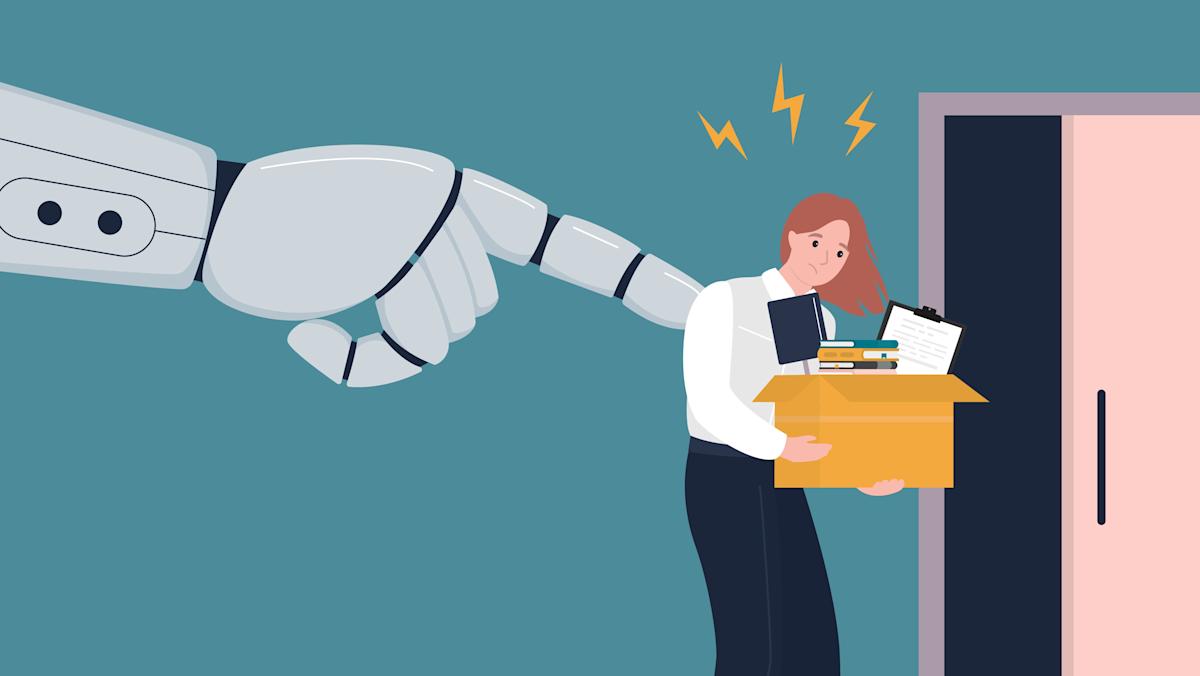
AI or not, I know you tweeted about this and said, don't blame AI for everything that happens. Well, it's not all about AI, but how much of the job movement we're seeing in the job market right now is related to AI?
00:53 martha
There are very few. This is not to say that no one in the United States has had their job affected by AI, but this is clearly not true. Um, but you know, when we at the Budget Institute looked at this, we didn't find any macro impact of AI on the labor market. Well, one of the things I want to say is, you know, the Fed started its rate hike cycle around the same time as the chat GPT announcement. If you had put me into a coma then and woke me up now,
01:30 martha
When I was shown what the labor market looked like, my immediate reaction probably wasn't, “Oh, there's been a massive technological disruption.” It would be like, oh, that would be great, we would have gone through the Fed hiking cycle. That's what it looks like. So I think we all need to take a step back, take a deep breath, and remember that macroeconomic cycles govern almost everything else.
01:53 Speaker A
Well, Martha, what we often see is that when you have these technology trends, there's a lot of buzz about maybe some kind of responsibility for the impact of AI, right?In fact, that may be what's happening in the business cycle. How much of that is still happening?
02:18 martha
Oh, I mean, I think it's very easy and tempting for people to say, oh, we're having layoffs because of AI. Well, if you look at the Challenger announcement data, you can see what the CEO is saying about layoffs. Well, they say AI is responsible for the layoffs, they say AI is responsible for about eight times as many layoffs as tariffs since April. That seems very hard to believe.
02:51 martha
Um, but if you're a CEO, I can understand why you would want to talk positively about investing in productivity, but on the other hand, the macroeconomic situation is very difficult and you have to think about how to deal with it.
03:00 Speaker A
Cory, I'd like to know what you think of this situation through the prism of LinkedIn, where a lot of hiring managers are active and I see a lot of people posting about what's going on at work. How do you think AI is impacting this situation?
03:22 collie
We are in a fairly similar situation. We don't see much of an impact from AI at the macro level. If you look at recruitment on LinkedIn when people are updating their profiles, it's pretty much in line with the real interest rate, which is expected to be higher. Therefore, we do not see any significant impact. It doesn't matter if you look at the share of different job postings, whether they are jobs that are likely to be exposed to AI or jobs that are less likely to be exposed to AI. of
03:51 collie
The trends are quite similar. When looking at recruitment, the trends for the least exposed and most exposed occupations are quite similar, indicating that it must be macro-based. This is a widespread consequence of the fact that monetary policy continues to constrain the economy.
04:09 Speaker A
Guys, this is very interesting, but it also seems like what people are worried about is the future, right? Even if AI isn't having an impact today, there are concerns that it will someday. Youth unemployment is rising, and there is a certain kind of malaise and concern around that group. So Corey, you know, what are we thinking about right now with entry-level positions and is there any way to predict what that's going to be?
04:45 Speaker A
Does it look like the future?
04:47 collie
Currently, entry-level positions are performing as well as experienced positions. Therefore, we do not see a significant difference in the pace of adoption. Even if you look at specific professions that seem to have a lot of use and exposure to AI, like software engineers. So for now, entry level is about the same overall pace as experienced workers. What I'm hopeful about going forward is that we're likely to actually see some recovery when wages for entry-level workers come down.
05:22 collie
This is because it largely depends on the economic situation.
05:32 Speaker A
And Martha, what about you? What do you think will be driving that AI story next year? Will we see more impact?
05:46 martha
So, I agree with everything Corey says. Well, I don't think the full impact of AI on the labor market will be seen or begin to be seen until we get into the next recession. As you know, this is a time when employers often make investments to increase productivity, which means they often lay off workers. Well, let's take a closer look at who can be affected by this.
06:17 martha
I think we also need to keep in mind that technological disruption is, yes, incredibly painful. It also takes time. When new technology is introduced, employers don't immediately figure out what to do with it or adjust their workforces right away. I would like to say that electricity did not change the labor market. The way people figured out what to do with electricity changed the labor market. So we still have to wait for employers to figure out how to deal with it.
06:46 martha
Think about the use of AI and what it will mean for your employees.
06:48 Speaker A
Well, I'd like to ask you about something a little different here, which is a discussion we were having earlier with some economists on the show. That means some tax stimulus is expected to flow into the economy next year. Yes, both for companies and individuals. And I think the question is how do companies use it? Are they going to spend it on, um, recruiting or do they spend it on other things? Um, I want you to respond to this as soon as possible. Corey, it's you first.
07:23 collie
Even if demand starts to increase to some extent, AI is not going to take away many jobs at this point. Therefore, if this actually happens, employment may increase to meet the increased demand. But for many, these tax cuts were already anticipated. Some companies expected it. They have already decided how to spend the money. Therefore, we do not necessarily expect to see a meaningful spike in demand and therefore do not expect to see a change in the employment trends we are currently seeing.
07:59 Speaker A
And Martha, what about you? 20 seconds.
08:00 martha
Our models indicate a very, very modest boost to the economy next year, but we shouldn't get too excited about this.
08:11 Speaker A
fair enough. Thank you so much, Martha and Corey. I really appreciate it.


