
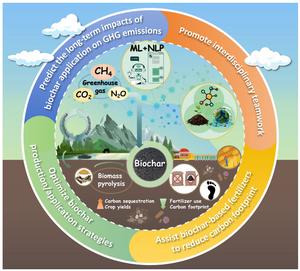
As the world races to meet ambitious climate goals, scientists are turning to an unlikely ally in the fight against global warming: biochar. New research reveals how artificial intelligence could dramatically improve the ability of this carbon-rich material to capture and store carbon, providing a powerful path to carbon neutrality.
Biochar is produced by heating biomass, such as agricultural waste, under low oxygen conditions. It has long been recognized for its ability to enhance soil health while locking in carbon for long periods of time. However, optimizing biochar for maximum climate benefits remains a complex challenge due to the wide range of feedstocks, production conditions, and environmental interactions.
Researchers are now proposing an innovative approach that combines machine learning and natural language processing to accelerate discovery and guide biochar design with unprecedented precision.
“Artificial intelligence allows us to move beyond trial-and-error experimentation,” says one of the study authors. “By integrating machine learning and data-driven insights, we can quickly identify optimal conditions for biochar production and significantly increase the potential for carbon sequestration.”
The research team analyzed approximately 1,800 scientific publications from the past decade to map trends in artificial intelligence applications related to carbon sequestration. Their findings reveal that interest in combining AI and biochar technology is rapidly increasing, with “machine learning” and “forecasting” emerging as key themes. Biochar itself is one of the fastest-growing topics in the field.
Machine learning plays a central role by identifying patterns in complex datasets and predicting how different production parameters will affect biochar performance. For example, advanced algorithms can be used to estimate how factors such as temperature, biomass type, and processing time affect surface area and carbon stability. These properties directly determine how effectively biochar can capture and store carbon dioxide in the soil.
Several studies cited by the authors have demonstrated that AI-based optimization can significantly improve the performance of biochar, even doubling its carbon adsorption capacity under certain conditions. These advances could accelerate the development of highly efficient materials for carbon capture.
Natural language processing adds a new layer of innovation by enabling researchers to extract valuable insights from vast scientific literature. Instead of manually reviewing thousands of studies, AI tools can automatically identify trends, key parameters, and knowledge gaps. This feature not only saves time, but also helps guide future experiments and innovations.
Beyond laboratory research, biochar has real-world climate benefits. When applied to soil, it increases nutrient retention, improves water retention, and supports plant growth. At the same time, it reduces greenhouse gas emissions by stabilizing carbon and influencing microbial processes. Under sustainable scenarios, biochar has the potential to reduce carbon dioxide emissions by up to 0.92 gigatonnes per year, making a significant contribution to global climate strategies.
The integration of artificial intelligence further expands these possibilities. By combining predictive modeling and automated data analysis, researchers can design biochar materials tailored to specific soils, climates, and agricultural systems. This precise approach allows us to maximize both environmental and economic benefits.
Looking ahead, the authors highlight the importance of developing interactive platforms, integrating multiple AI models, and extending these technologies to industrial applications. They also highlight the potential for AI to optimize the entire biochar supply chain, from production to field utilization.
As countries strive to tackle climate change and reduce greenhouse gas emissions, the convergence of biochar and artificial intelligence has become a promising frontier. By harnessing the power of data and advanced algorithms, scientists are forging new paths to turning agricultural waste into a critical tool for climate resilience.
===
Reference magazines: Li, J., Chen, Y., Wang, C. Others. Optimizing biochar for carbon sequestration: A synergistic approach using machine learning and natural language processing. biochar 720 (2025).
https://doi.org/10.1007/s42773-024-00424-0
===
About biochar
biochar (e-ISSN: 2524-7867) is the first journal dedicated to biochar research across agriculture, environmental science, and materials science. We publish original research on biochar production, processing, and applications such as bioenergy, environmental remediation, soil improvement, climate mitigation, water treatment, and sustainability analysis. The journal serves as an innovative and professional platform for researchers around the world to share advances in this rapidly expanding field.
follow us above facebook, ×and blue sky.
Disclaimer: AAAS and EurekAlert! We are not responsible for the accuracy of news releases posted on EurekAlert! Use of Information by Contributing Institutions or via the EurekAlert System.


